

Father’s Day is a special time to show love, respect, and appreciation for fathers and father figures.
The phrase “Happy Father’s Day” is simple and correct, but you may want to say something more personal or meaningful.
Using different expressions can also help you sound more natural in English.
The best choice depends on who you are speaking to, your relationship with the person, and the tone you want to create.
A message to your dad can be warm and emotional, while a message to a manager, client, or colleague should be polite and professional.
In this guide, you will learn 15 other ways to say Happy Father’s Day, including formal, friendly, emotional, and casual alternatives.
You will also see examples and learn when each phrase works best.
What Does “Happy Father’s Day” Mean?
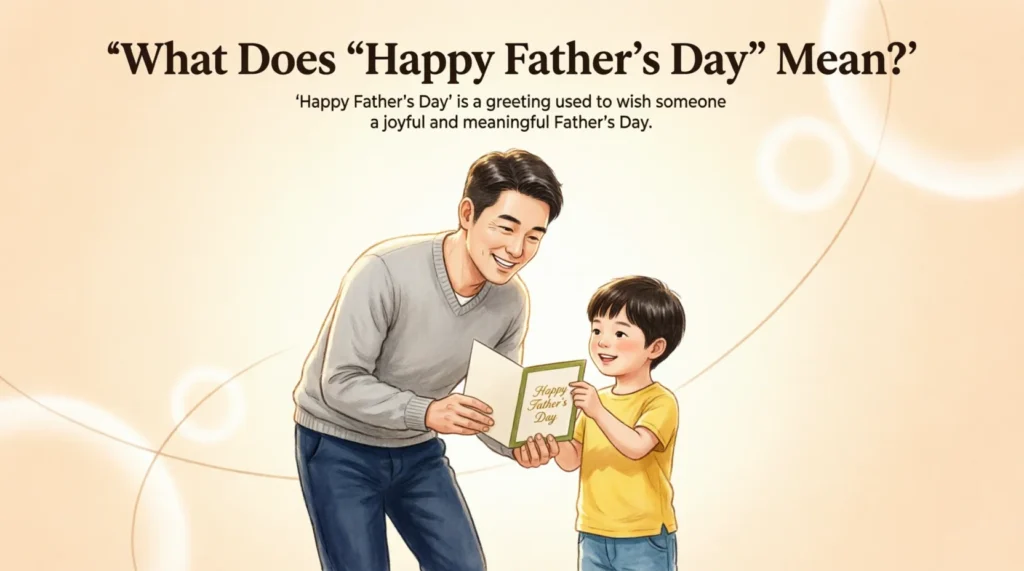
“Happy Father’s Day” is a greeting used to wish someone a joyful and meaningful Father’s Day.
Father’s Day is a day when people recognize and appreciate fathers, stepfathers, grandfathers, and other important father figures. The phrase is commonly used in spoken greetings, text messages, cards, emails, social media posts, and workplace messages.
Grammatically, “Happy Father’s Day” is a shortened greeting. It means something like:
“I hope you have a happy Father’s Day.”
The word “happy” describes the kind of day you hope the person has. “Father’s Day” is the name of the occasion.
The phrase is short, friendly, and widely understood. However, it does not always express exactly how you feel. That is why learning synonyms for Happy Father’s Day and natural alternatives can help you choose words that fit the situation better.
When to Use “Happy Father’s Day”
“Happy Father’s Day” works in almost any normal Father’s Day situation.
You can use it when talking to your own father, sending a text, writing a card, or posting a message online. It is also suitable when greeting a father you know personally.
Formal and Professional Situations
In a workplace, you can use “Happy Father’s Day” when sending a friendly message to a colleague or business contact who celebrates the occasion.
For example:
“Wishing you a very Happy Father’s Day!”
This sounds slightly more polished than a simple greeting.
Informal Situations
With your father, brother, friend, or another close person, you can be more personal.
For example:
“Happy Father’s Day, Dad! I hope you have an amazing day.”
Written Messages
The phrase works well in:
- Father’s Day cards
- Text messages
- Emails
- Social media posts
- Workplace messages
- Greeting cards
- Personal letters
Spoken English
You can simply say:
“Happy Father’s Day!”
You can also add a personal sentence:
“Happy Father’s Day, Dad. Thank you for always being there for me.”
Is It Professional or Polite to Say “Happy Father’s Day”?
Yes. “Happy Father’s Day” is polite and friendly.
However, workplace situations require some awareness. Not everyone celebrates Father’s Day, and not everyone has a positive relationship with their father. For that reason, a professional message should usually stay warm but not overly personal.
For example:
“Wishing you a wonderful Father’s Day.”
This is a safe and professional choice for a colleague.
If you know the person well, you can use a warmer message:
“Hope you have a wonderful Father’s Day with your family!”
In a corporate setting, avoid very emotional language unless you have a close relationship with the person.
The key is to match the tone, relationship, and setting.
Pros and Cons of Using “Happy Father’s Day”
Pros
- Simple: Everyone understands it.
- Natural: It is a common English greeting.
- Friendly: It creates a warm tone.
- Flexible: It works in speech and writing.
- Appropriate: It fits most everyday situations.
- Easy to personalize: You can add a thank-you message.
Cons
- Very common: It may feel less personal.
- Short: It does not explain why the person matters to you.
- Limited emotion: It may not express deep appreciation.
- Less creative: You may want something different for a card or social post.
- Not always suitable: A sensitive workplace situation may call for a more neutral message.
Learning alternatives to Happy Father’s Day gives you more ways to express the same basic idea while changing the tone.
15 Other Ways to Say Happy Father’s Day
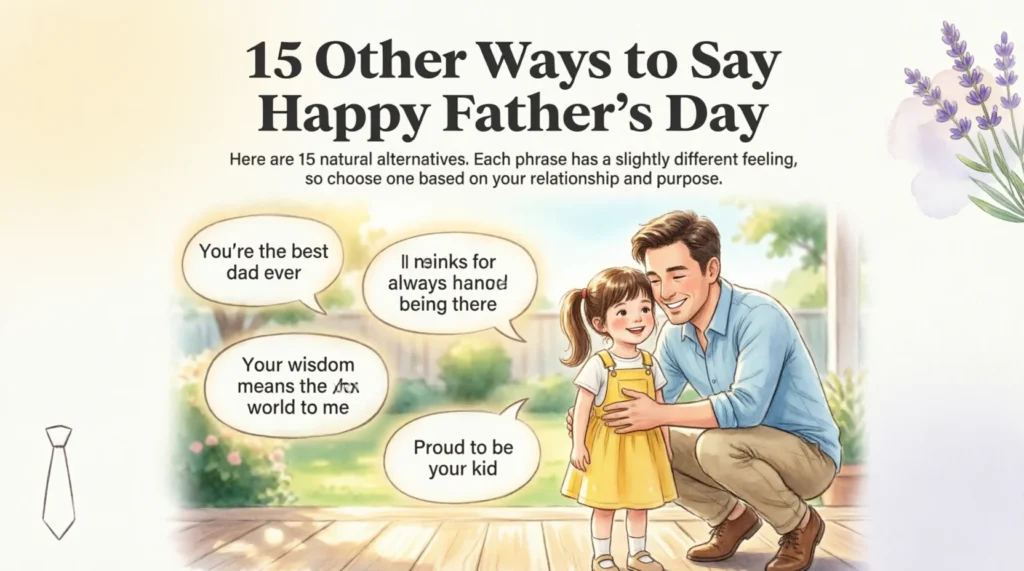
Here are 15 natural alternatives. Each phrase has a slightly different feeling, so choose one based on your relationship and purpose.
1. Wishing You a Wonderful Father’s Day
Meaning: A polite wish for someone to have a great Father’s Day.
Explanation: This is one of the easiest alternatives to “Happy Father’s Day.” It sounds warm but slightly more polished. The phrase is especially useful in written messages.
Example Sentence:
“Wishing you a wonderful Father’s Day filled with happiness and family time.”
Best Use: Formal, Business, Written
Worst Use: Very emotional personal messages where you want to express deep feelings.
Tone: Friendly / Neutral
2. Have a Wonderful Father’s Day
Meaning: A friendly wish that someone enjoys Father’s Day.
Explanation: This phrase sounds natural and conversational. It is a good choice when speaking to a father you know or writing a short message.
Example Sentence:
“Have a wonderful Father’s Day, Dad. You deserve it!”
Best Use: Informal, Casual, Spoken
Worst Use: Very formal business announcements.
Tone: Friendly
3. Wishing You a Very Happy Father’s Day
Meaning: A warmer and slightly more formal version of the standard greeting.
Explanation: Adding “very” makes the greeting more emphatic without making it too emotional. It works well in cards, emails, and workplace messages.
Example Sentence:
“Wishing you a very Happy Father’s Day and a relaxing weekend.”
Best Use: Formal, Business, Written
Worst Use: Extremely casual conversations where a shorter phrase would sound more natural.
Tone: Friendly / Emphatic
4. Have a Great Father’s Day
Meaning: A casual way to wish someone an enjoyable Father’s Day.
Explanation: This is simple and relaxed. It sounds especially natural in texts and quick conversations.
Example Sentence:
“Have a great Father’s Day! Hope you get some time to relax.”
Best Use: Casual, Informal, Spoken
Worst Use: Formal letters or highly professional announcements.
Tone: Friendly
5. Enjoy Your Special Day
Meaning: A wish for someone to enjoy an important or meaningful day.
Explanation: This phrase does not repeat the words “Father’s Day.” That makes it useful when the occasion is already clear from the conversation or message.
Example Sentence:
“Enjoy your special day, Dad. We’re so lucky to have you.”
Best Use: Informal, Personal, Cards
Worst Use: When the reader may not know which special day you mean.
Tone: Warm / Friendly
6. Wishing You a Day Full of Happiness
Meaning: A wish for someone to experience happiness throughout the day.
Explanation: This is a more thoughtful alternative. It works well when you want your message to sound caring without being too emotional.
Example Sentence:
“Wishing you a day full of happiness, laughter, and wonderful memories.”
Best Use: Cards, Written, Personal
Worst Use: Very short business messages where simplicity is preferred.
Tone: Warm / Emphatic
7. Thank You for Being an Amazing Dad
Meaning: A direct expression of appreciation for a father.
Explanation: This is not simply a greeting. It adds a personal thank-you. It is best when speaking to your own father or someone you know well.
Example Sentence:
“Thank you for being an amazing dad. I appreciate everything you do for our family.”
Best Use: Personal, Informal, Cards
Worst Use: Messages to someone whose relationship with you is not personal.
Tone: Emotional / Warm
8. Celebrating You Today, Dad
Meaning: A message saying that you are honoring and appreciating your father on Father’s Day.
Explanation: This phrase feels personal and affectionate. It works especially well in social media captions, cards, and personal messages.
Example Sentence:
“Celebrating you today, Dad, and thanking you for all the love and support you give us.”
Best Use: Personal, Social Media, Cards
Worst Use: Formal business emails.
Tone: Warm / Emotional
9. Thank You for Everything You Do
Meaning: An expression of gratitude for someone’s support, care, and effort.
Explanation: This phrase focuses on appreciation rather than the holiday itself. It can be used alone or together with a Father’s Day greeting.
Example Sentence:
“Thank you for everything you do for our family. Wishing you a wonderful Father’s Day!”
Best Use: Personal, Cards, Messages
Worst Use: Extremely casual situations where a simple greeting is enough.
Tone: Warm / Emotional
10. Sending You My Best Wishes This Father’s Day
Meaning: A polite message expressing good wishes for Father’s Day.
Explanation: This is a polished alternative that works well in written communication. It is useful when you want to sound respectful without becoming too personal.
Example Sentence:
“Sending you my best wishes this Father’s Day. I hope you enjoy a relaxing weekend.”
Best Use: Formal, Business, Written
Worst Use: Very close family conversations where it may sound too formal.
Tone: Formal / Friendly
11. Hope You Have a Fantastic Father’s Day
Meaning: A cheerful wish for someone to have a very enjoyable Father’s Day.
Explanation: “Fantastic” makes the greeting more energetic than “happy.” It is natural in texts, social media posts, and conversations with friends or family.
Example Sentence:
“Hope you have a fantastic Father’s Day, Dad! Enjoy every minute.”
Best Use: Casual, Informal, Social Media
Worst Use: Formal corporate communication.
Tone: Friendly / Emphatic
12. Here’s to an Amazing Father’s Day
Meaning: A cheerful expression celebrating the occasion.
Explanation: “Here’s to” is often used when celebrating someone or something. It gives the message an upbeat and celebratory feeling.
Example Sentence:
“Here’s to an amazing Father’s Day and many more happy memories together!”
Best Use: Casual, Social Media, Personal
Worst Use: Formal business correspondence.
Tone: Friendly / Celebratory
13. Celebrating All the Amazing Dads Today
Meaning: A message honoring fathers in general.
Explanation: This phrase is useful when addressing a group rather than one specific father. It can work well for social media posts, newsletters, or general announcements.
Example Sentence:
“Celebrating all the amazing dads today and thanking them for their love and support.”
Best Use: Social Media, Public Messages, General Announcements
Worst Use: A private message to your own father when you want a personal tone.
Tone: Friendly / Emphatic
14. Sending Love and Appreciation This Father’s Day
Meaning: A warm message showing affection and gratitude.
Explanation: This alternative focuses on both love and appreciation. It is more emotional than the standard greeting and works well for close family relationships.
Example Sentence:
“Sending love and appreciation this Father’s Day to the man who has always supported me.”
Best Use: Personal, Cards, Social Media
Worst Use: Formal workplace communication.
Tone: Emotional / Warm
15. Wishing You a Joyful Father’s Day
Meaning: A wish for someone to experience joy on Father’s Day.
Explanation: “Joyful” gives the greeting a warm and thoughtful feel. It can sound slightly more elegant than “happy” while remaining easy to understand.
Example Sentence:
“Wishing you a joyful Father’s Day surrounded by the people you love.”
Best Use: Formal, Cards, Written Messages
Worst Use: Very casual text messages between close friends if you normally use simple language.
Tone: Warm / Neutral
Best Alternatives to “Happy Father’s Day” at a Glance
| Alternative | Tone | Best Use |
|---|---|---|
| Wishing You a Wonderful Father’s Day | Friendly | Formal & Written |
| Have a Great Father’s Day | Casual | Friends & Family |
| Thank You for Being an Amazing Dad | Emotional | Personal |
| Sending You My Best Wishes This Father’s Day | Formal | Business |
| Hope You Have a Fantastic Father’s Day | Cheerful | Casual |
| Sending Love and Appreciation This Father’s Day | Emotional | Family |
| Wishing You a Joyful Father’s Day | Warm | Cards & Written |
The best phrase depends on the relationship. A heartfelt message is ideal for your father, while a simple and respectful wish is usually better for a colleague.
How to Choose the Right Alternative
Choosing the right phrase is easier when you think about three things: relationship, setting, and emotion.
For Your Father
Use a personal phrase such as:
“Thank you for being an amazing dad.”
or
“Sending love and appreciation this Father’s Day.”
These phrases show more emotion than a basic greeting.
For a Friend
A relaxed phrase works better:
“Hope you have a fantastic Father’s Day!”
It sounds friendly and natural.
For a Colleague
Choose something respectful:
“Wishing you a wonderful Father’s Day.”
It is warm without becoming too personal.
For a Business Contact
Keep the message polished:
“Sending you my best wishes this Father’s Day.”
This avoids overly personal language while still acknowledging the occasion.
For Social Media
You can use a more expressive phrase:
“Celebrating all the amazing dads today!”
This works well for a general audience.
Formal Ways to Say “Happy Father’s Day”
If you are looking specifically for formal ways to say Happy Father’s Day, these are strong choices:
- Wishing you a wonderful Father’s Day.
- Wishing you a very happy Father’s Day.
- Sending you my best wishes this Father’s Day.
- Wishing you a joyful Father’s Day.
- I hope you have a wonderful Father’s Day.
These phrases are polite and professional. They are useful for workplace emails, company messages, professional cards, and messages to clients or colleagues.
Avoid phrases that are too emotional or personal when you do not know the recipient well.
Informal Ways to Say “Happy Father’s Day”
For friends and family, you have more freedom.
Try:
- Have a great Father’s Day!
- Have a wonderful Father’s Day!
- Hope you have a fantastic Father’s Day!
- Enjoy your special day!
- Celebrating you today, Dad!
- Thank you for everything you do!
These expressions sound more relaxed and natural in everyday English.
Common Mistakes to Avoid
When using other ways to say Happy Father’s Day, avoid choosing a phrase only because it sounds fancy. The most important thing is context.
Mistake 1: Being Too Formal With Family
“Please accept my best wishes on the occasion of Father’s Day.”
This is grammatically possible, but it sounds stiff for a message to your dad.
A better choice is:
“Have a wonderful Father’s Day, Dad!”
Mistake 2: Being Too Personal at Work
“You’re the best dad in the world, and your children must adore you!”
This may be too personal for a colleague.
Instead, say:
“Wishing you a wonderful Father’s Day.”
Mistake 3: Using a Phrase Without Context
“Enjoy your special day!”
This is warm, but the reader may not know what occasion you mean.
If necessary, write:
“Enjoy your special Father’s Day!”
Mistake 4: Repeating the Same Words
Using “Happy Father’s Day” several times in one message can sound repetitive. You can combine a greeting with appreciation.
For example:
“Happy Father’s Day, Dad! Thank you for everything you do for our family.”
This sounds more personal and natural.
Why Learn Different Ways to Say “Happy Father’s Day”?
Learning alternatives is useful for English learners because English often gives you several ways to express the same basic idea.
For example, “Happy Father’s Day” is correct, but “Wishing you a wonderful Father’s Day” sounds a little more polished. “Thank you for being an amazing dad” adds gratitude. “Have a fantastic Father’s Day” sounds more energetic.
These small differences help you control your tone.
This is also useful for professionals. In business communication, word choice matters. You may want to sound warm without sounding too familiar.
For English learners, learning phrases in groups is often more useful than memorizing individual words. Instead of learning only “happy,” you can learn complete expressions such as “wishing you a wonderful…” and use the pattern in different situations.
Frequently Asked Questions
1. What is another way to say “Happy Father’s Day”?
Some natural alternatives are “Wishing you a wonderful Father’s Day,” “Have a great Father’s Day,” and “Wishing you a joyful Father’s Day.” For a more personal message, try “Thank you for being an amazing dad.”
2. What is a formal way to say “Happy Father’s Day”?
“Wishing you a wonderful Father’s Day” is a strong formal option. “Sending you my best wishes this Father’s Day” is also suitable for professional communication.
3. How can I wish my dad a Happy Father’s Day?
You can make the message more personal by adding appreciation. For example: “Happy Father’s Day, Dad! Thank you for always supporting me.”
4. What can I say instead of “Happy Father’s Day” to a colleague?
Try “Wishing you a wonderful Father’s Day” or “I hope you have a great Father’s Day.” Both are friendly and respectful.
5. What is a heartfelt way to say “Happy Father’s Day”?
A heartfelt option is “Thank you for everything you do. Sending you love and appreciation this Father’s Day.” It focuses on gratitude rather than only the holiday greeting.
Conclusion
Learning other ways to say Happy Father’s Day gives you more choices and helps you express yourself naturally.
A simple phrase such as “Have a great Father’s Day” is perfect for casual conversations, while “Wishing you a wonderful Father’s Day” works well in formal settings.
For fathers and close family members, more personal phrases like “Thank you for being an amazing dad” can show deeper appreciation.
The best expression depends on your relationship, audience, and tone. Try different phrases in cards, texts, emails, and conversations.
With practice, you will sound more fluent, confident, and natural in English.

Alden Rowen is the author behind Meanings Path, sharing clear and reliable insights into the meanings, origins, and significance of words, names, and phrases. His goal is to make language simple, useful, and easy to understand.