
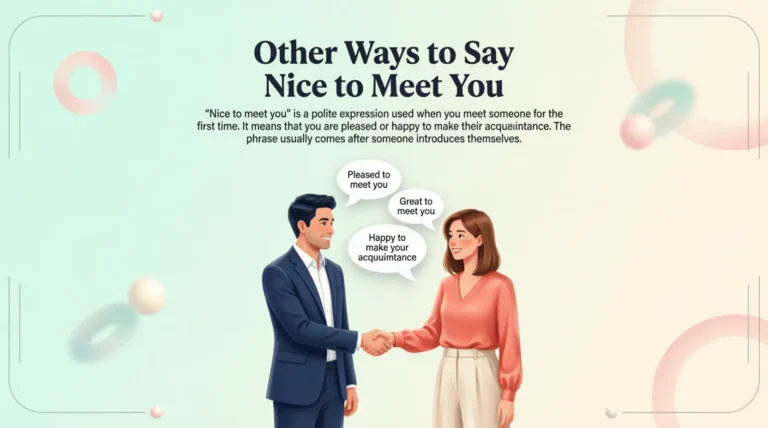
Meeting someone for the first time is an important moment. Saying “Nice to meet you” is one of the easiest ways to show politeness and friendliness.
It works well in many situations, from casual conversations to business meetings.
However, using the same phrase every time can sometimes sound repetitive.
Learning different expressions can help you sound more natural and confident in English.
There are many other ways to say nice to meet you.
Some are formal and suitable for clients, interviews, and professional events.
Others are warm and casual for friends, classmates, or social situations.
The right phrase can also show excitement, respect, or genuine interest.
In this guide, you will learn 22 alternatives to nice to meet you, including their meanings, examples, tones, and best uses.
These synonyms for nice to meet you can help English learners and professionals choose the right words for every new introduction.
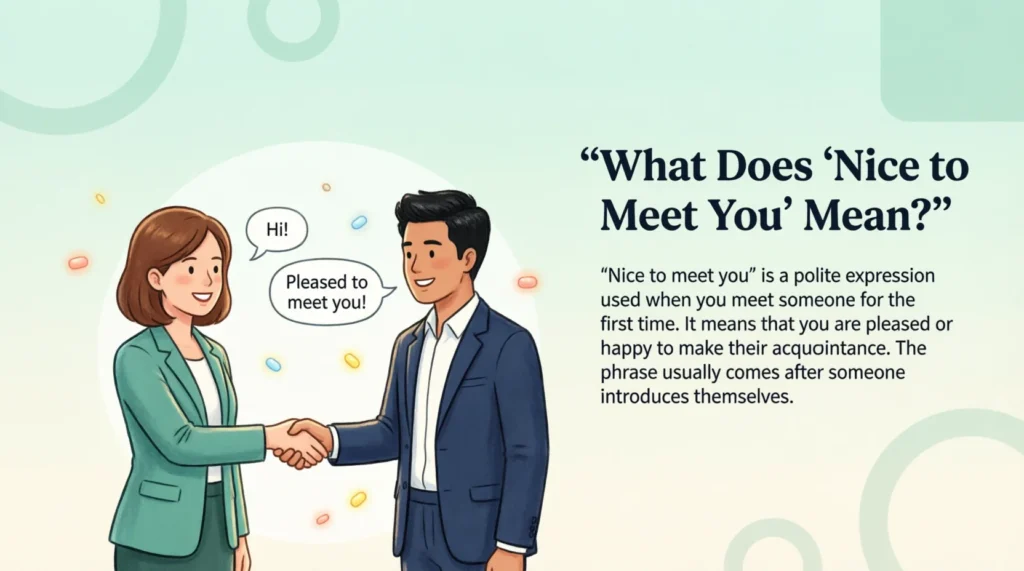
What Does “Nice to Meet You” Mean?
“Nice to meet you” is a polite expression used when you meet someone for the first time. It means that you are pleased or happy to make their acquaintance.
The phrase usually comes after someone introduces themselves.
Example:
“Hi, I’m Sarah.”
“Hi, Sarah. Nice to meet you.”
It is commonly used in spoken English. You can also use it in written communication after being introduced through email or another message.
The word “nice” expresses a positive feeling. “To meet you” explains the reason for that feeling. The phrase is friendly, polite, and neutral, which makes it useful in many situations.
When to Use “Nice to Meet You”
You can use “Nice to meet you” in many everyday situations.
Formal Situations
The phrase is acceptable in professional settings. You can use it when meeting:
- A manager
- A new client
- A business partner
- A teacher
- An interviewer
- A colleague
- A professional contact
For very formal situations, you may prefer alternatives such as “It’s a pleasure to meet you” or “It’s a pleasure making your acquaintance.”
Informal Situations
With friends, classmates, neighbors, or friends of friends, “Nice to meet you” sounds natural and friendly.
You can also make it warmer by saying:
“It’s great to meet you!”
Written Communication
You can use the phrase in emails and online messages after someone introduces you.
For example:
“Thank you for the introduction. Nice to meet you, James. I look forward to working with you.”
Spoken Communication
The phrase is especially common in face-to-face conversations. It can also be used during video calls, phone introductions, conferences, and networking events.
Is It Professional and Polite to Say “Nice to Meet You”?
Yes. “Nice to meet you” is professional, polite, and safe in most workplace situations.
It does not sound too formal or too casual. This makes it a useful phrase for English learners.
However, context matters. When meeting an important client, executive, or senior professional, a more formal phrase may create a stronger impression.
For example:
Neutral:
“Nice to meet you.”
More professional:
“It’s a pleasure to meet you.”
Warm and professional:
“It’s great to finally meet you.”
The best choice depends on your relationship with the person and the situation.
Pros and Cons of Using “Nice to Meet You”
Pros
- Simple: It is easy for English learners to remember.
- Polite: It shows good manners.
- Natural: Native speakers use it often.
- Flexible: It works in formal and informal situations.
- Safe: It is unlikely to sound rude or inappropriate.
Cons
- Common: You may hear it very often.
- Less expressive: It does not always show strong excitement.
- Not highly formal: Some business situations may call for a more polished phrase.
- Can feel repetitive: Using it in every introduction can limit your vocabulary.
Learning formal ways to say nice to meet you and friendly alternatives gives you more control over your tone.
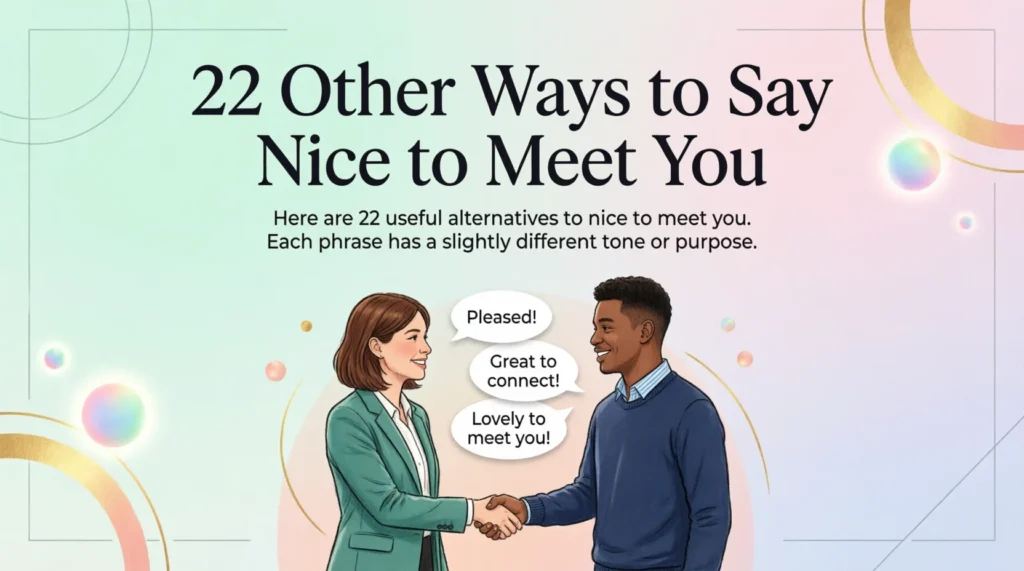
22 Other Ways to Say Nice to Meet You
Here are 22 useful alternatives to nice to meet you. Each phrase has a slightly different tone or purpose.
1. It’s a Pleasure to Meet You
Meaning: I am very pleased to meet you.
Explanation: This is one of the best formal alternatives. It sounds respectful and professional without being overly complicated.
Example Sentence:
“It’s a pleasure to meet you, Mr. Wilson.”
Best Use: Formal / Business
Worst Use: Very casual conversations with close friends
Tone: Formal
2. It’s Great to Meet You
Meaning: I am very happy to meet you.
Explanation: This phrase is friendly but still professional. It works well when meeting a colleague, customer, or new contact.
Example Sentence:
“It’s great to meet you, Sarah. I’ve heard wonderful things about your work.”
Best Use: Business / Friendly
Worst Use: Highly formal ceremonies
Tone: Friendly
3. It’s Wonderful to Meet You
Meaning: I am very happy and pleased to meet you.
Explanation: “Wonderful” adds more warmth and enthusiasm than “nice.” It is useful when you genuinely feel excited about meeting someone.
Example Sentence:
“It’s wonderful to meet you. Thank you for taking the time to speak with me.”
Best Use: Friendly / Professional
Worst Use: Very casual situations where it may sound overly enthusiastic
Tone: Friendly
4. It’s a Pleasure Making Your Acquaintance
Meaning: I am pleased to become acquainted with you.
Explanation: This is a highly formal expression. It is grammatically correct but less common in everyday modern English.
Example Sentence:
“It’s a pleasure making your acquaintance, Professor Adams.”
Best Use: Formal
Worst Use: Casual conversations
Tone: Formal
5. I’m Pleased to Meet You
Meaning: I am happy to meet you.
Explanation: This phrase is polite and slightly more formal than “Nice to meet you.” It can work well in professional introductions.
Example Sentence:
“I’m pleased to meet you, and I look forward to working together.”
Best Use: Formal / Business
Worst Use: Very relaxed conversations with close friends
Tone: Formal
6. I’m Glad to Meet You
Meaning: I am happy that we have met.
Explanation: This phrase sounds warm and sincere. It is simple enough for everyday English.
Example Sentence:
“I’m glad to meet you. I’ve heard a lot about your company.”
Best Use: Friendly / Business
Worst Use: Extremely formal introductions
Tone: Friendly
7. Great to Finally Meet You
Meaning: I am happy to meet you after knowing about you or communicating with you before.
Explanation: Use this when you have spoken online, by phone, or through another person before meeting face-to-face.
Example Sentence:
“Great to finally meet you! We’ve been emailing for months.”
Best Use: Friendly / Business
Worst Use: When you have never heard of the person before
Tone: Friendly
8. It’s Great Meeting You
Meaning: I am enjoying meeting you.
Explanation: This version can sound natural during or near the end of a meeting. It focuses on the experience of meeting the person.
Example Sentence:
“It’s great meeting you. I hope we can work together soon.”
Best Use: Friendly / Business
Worst Use: Very formal written introductions
Tone: Friendly
9. I’m Happy to Meet You
Meaning: I am happy about meeting you.
Explanation: This is easy to understand and expresses a positive feeling directly.
Example Sentence:
“I’m happy to meet you and learn more about your project.”
Best Use: Friendly / Casual
Worst Use: Formal executive introductions where a more polished phrase is preferred
Tone: Friendly
10. Good to Meet You
Meaning: It is good to meet you.
Explanation: This is a shorter and more relaxed version of “Nice to meet you.” It is common in spoken English.
Example Sentence:
“Good to meet you, Mike. I’m glad you could join us.”
Best Use: Casual / Business
Worst Use: Very formal ceremonies or official letters
Tone: Neutral
11. Lovely to Meet You
Meaning: I am very pleased to meet you.
Explanation: This phrase sounds warm and personable. It is especially common in friendly British English.
Example Sentence:
“Lovely to meet you, Emma. I hope you enjoy the conference.”
Best Use: Friendly / Casual
Worst Use: Highly formal corporate writing
Tone: Friendly
12. It’s Good to Finally Meet You
Meaning: I am pleased to meet you after knowing or communicating with you before.
Explanation: Use this when a first face-to-face meeting happens after previous online or telephone contact.
Example Sentence:
“It’s good to finally meet you in person.”
Best Use: Business / Friendly
Worst Use: A first meeting with someone you have never encountered before
Tone: Neutral
13. I’ve Been Looking Forward to Meeting You
Meaning: I have been excited or pleased about meeting you.
Explanation: This phrase shows preparation and genuine interest. It is especially useful when you have arranged the meeting in advance.
Example Sentence:
“I’ve been looking forward to meeting you and discussing the new project.”
Best Use: Business / Professional
Worst Use: Quick, unplanned introductions
Tone: Warm
14. I’m Delighted to Meet You
Meaning: I am very pleased and happy to meet you.
Explanation: “Delighted” is stronger than “nice.” It can sound polished and professional.
Example Sentence:
“I’m delighted to meet you. Thank you for joining us today.”
Best Use: Formal / Business
Worst Use: Very casual conversations where it may sound too formal
Tone: Formal
15. I’m Thrilled to Meet You
Meaning: I am extremely excited to meet you.
Explanation: This phrase expresses strong enthusiasm. Use it when you truly feel excited.
Example Sentence:
“I’m thrilled to meet you. I’ve followed your work for years.”
Best Use: Friendly / Enthusiastic
Worst Use: Routine business introductions where strong emotion may seem excessive
Tone: Emphatic
16. It’s Fantastic to Meet You
Meaning: I am very happy to meet you.
Explanation: This is an energetic alternative. It works well in friendly professional environments.
Example Sentence:
“It’s fantastic to meet you. I’m excited to hear your ideas.”
Best Use: Friendly / Business
Worst Use: Formal legal or official settings
Tone: Emphatic
17. It’s Lovely Meeting You
Meaning: I am pleased to have met you.
Explanation: This phrase can be especially natural toward the end of a conversation or meeting.
Example Sentence:
“It’s been lovely meeting you. Have a safe trip home.”
Best Use: Friendly / Social
Worst Use: Highly formal business correspondence
Tone: Friendly
18. I’m Honored to Meet You
Meaning: I feel great respect or privilege in meeting you.
Explanation: This phrase is much stronger than “Nice to meet you.” Use it when meeting someone you greatly respect or admire.
Example Sentence:
“I’m honored to meet you. Your work has inspired many people.”
Best Use: Formal / Respectful
Worst Use: Ordinary introductions where the strong wording may feel excessive
Tone: Emphatic
19. It’s an Honor to Meet You
Meaning: Meeting you is a special privilege.
Explanation: This expression shows deep respect. It should be used when the situation genuinely calls for strong respect.
Example Sentence:
“It’s an honor to meet you, Dr. Carter.”
Best Use: Formal / Respectful
Worst Use: Casual introductions
Tone: Formal / Emphatic
20. I’m Happy We Could Meet
Meaning: I am pleased that we had the opportunity to meet.
Explanation: This phrase focuses on the opportunity to meet rather than the introduction itself. It is useful in business meetings.
Example Sentence:
“I’m happy we could meet and discuss the partnership.”
Best Use: Business / Professional
Worst Use: Very quick casual introductions
Tone: Neutral
21. It’s a Pleasure Having You Here
Meaning: I am pleased that you are here.
Explanation: This is not a direct replacement in every situation, but it is useful when you are welcoming someone to an event, office, meeting, or organization.
Example Sentence:
“It’s a pleasure having you here today. Please make yourself comfortable.”
Best Use: Formal / Business
Worst Use: Simple introductions between two people
Tone: Formal
22. I’m Delighted We Could Meet
Meaning: I am very pleased that we had the chance to meet.
Explanation: This is a polished phrase for professional meetings. It works especially well after arranging a meeting in advance.
Example Sentence:
“I’m delighted we could meet today and discuss the next steps.”
Best Use: Business / Formal
Worst Use: Casual conversations with close friends
Tone: Formal
Quick Comparison of the Best Alternatives
| Alternative | Tone | Best Setting |
|---|---|---|
| It’s a pleasure to meet you | Formal | Business |
| It’s great to meet you | Friendly | Business & Social |
| I’m pleased to meet you | Formal | Professional |
| Good to meet you | Neutral | Casual & Business |
| Lovely to meet you | Friendly | Social |
| I’m delighted to meet you | Formal | Professional |
| I’ve been looking forward to meeting you | Warm | Business & Networking |
Choosing the right phrase is not only about grammar. It is also about tone. A phrase like “Good to meet you” feels relaxed, while “It’s an honor to meet you” shows much stronger respect.
How to Choose the Right Alternative
If you are unsure which expression to use, think about three things: the person, the setting, and your relationship.
For a Job Interview
Use a professional phrase:
“It’s a pleasure to meet you.”
or
“I’m pleased to meet you.”
These expressions sound respectful and confident.
For a Business Client
Try:
“It’s great to meet you.”
or
“I’ve been looking forward to meeting you.”
Both sound professional without being too stiff.
For a Friend of a Friend
A relaxed phrase works better:
“Good to meet you.”
or
“It’s great to meet you.”
For Someone You Admire
A stronger expression may be appropriate:
“I’m honored to meet you.”
or
“It’s an honor to meet you.”
Use these carefully because they express strong respect.
After Meeting Someone Online
If you have already communicated by email or video call, try:
“It’s great to finally meet you.”
This clearly tells the person that you are happy to meet them in person.
Common Mistakes to Avoid
English learners sometimes use these expressions in situations where they do not fit.
Mistake 1: Using Very Formal Language With Everyone
Saying “It’s a pleasure making your acquaintance” to every new person can sound unnatural.
Use simpler language in normal conversations.
Mistake 2: Using Strong Expressions Without Meaning Them
“I’m thrilled to meet you” suggests strong excitement. Do not use it when a simple introduction is all that is needed.
Mistake 3: Forgetting the Situation
A business meeting and a casual party have different communication styles.
Always match your words to the setting.
Mistake 4: Confusing “Meet” and “Met”
When meeting someone for the first time, say:
“Nice to meet you.”
After the meeting, you can say:
“Nice to have met you.”
The second expression refers to the completed meeting.
FAQs
1. What is another way to say “nice to meet you”?
Some common alternatives include “It’s a pleasure to meet you,” “It’s great to meet you,” “Good to meet you,” and “I’m pleased to meet you.”
2. What is a formal way to say “nice to meet you”?
“It’s a pleasure to meet you” is one of the best formal alternatives. “I’m delighted to meet you” is another polished choice.
3. What is a casual way to say “nice to meet you”?
You can say “Good to meet you,” “It’s great to meet you,” or “Lovely to meet you.”
4. Can I say “nice to meet you” in a business email?
Yes. It is polite and professional. For example: “Nice to meet you, and I look forward to working with you.”
5. What can I say instead of “nice to meet you” after meeting online?
Try “It’s great to finally meet you” or “It’s good to finally meet you.” These phrases work well when you have communicated before meeting in person.
Conclusion
Knowing other ways to say nice to meet you can make your English more flexible and natural.
The best phrase depends on the situation and the relationship.
Use “It’s a pleasure to meet you” for formal settings, “It’s great to meet you” for friendly professional situations, and “Good to meet you” for relaxed conversations.
Stronger phrases such as “I’m honored to meet you” should be saved for special situations.
By learning these alternatives to nice to meet you, you can communicate with greater confidence and choose words that match the tone of every introduction.

Alden Rowen is the author behind Meanings Path, sharing clear and reliable insights into the meanings, origins, and significance of words, names, and phrases. His goal is to make language simple, useful, and easy to understand.