“Have a great day” is a warm and common way to wish someone a good day.
You can use it with friends, coworkers, customers, teachers, and even strangers.
However, using the same phrase every time can feel repetitive.
Learning other ways to say have a great day helps you sound more natural, friendly, and confident in English.
The right alternative also depends on the situation.
A phrase like “Enjoy the rest of your day” works well at work, while “Have an awesome day!” sounds more casual.
Some expressions are better for emails, while others fit spoken conversations.
In this guide, you will learn 16 alternatives to “have a great day,” along with their meanings, examples, tones, and best uses.
These synonyms for have a great day will help you choose the right words for both formal and informal communication.
What Does “Have a Great Day” Mean?
“Have a great day” is a polite expression used to wish someone a pleasant, happy, or successful day.
It is usually said when ending a conversation, meeting, phone call, email, or customer interaction.
Grammar Explanation
The phrase uses the verb “have” in the imperative form. Here, “have” does not mean possession. It means experience or enjoy.
For example:
- Have a great day!
- Have a wonderful weekend!
- Have a safe trip!
The phrase is grammatically correct and very natural in everyday English.
When to Use “Have a Great Day”
You can use “have a great day” in many situations.
Formal Situations
It works well with customers, clients, coworkers, and professional contacts.
Example:
“Thank you for your time. Have a great day.”
Informal Situations
You can easily use it with friends, family, classmates, or neighbors.
Example:
“See you tomorrow! Have a great day!”
Written Communication
The phrase is common in emails, messages, and customer service replies.
Example:
“Thank you for contacting us. Have a great day!”
Spoken English
It is especially common when ending a conversation.
Example:
“Thanks for stopping by. Have a great day!”
Because the phrase is flexible, it is one of the safest everyday expressions in English.
Is It Professional or Polite to Say “Have a Great Day”?
Yes. “Have a great day” is both polite and professional in most situations.
It is especially useful in customer service, business emails, reception desks, sales conversations, and workplace communication.
However, the exact wording can change the tone.
For example:
- Have a great day. — Neutral and polite
- Have a wonderful day. — Warm and positive
- Enjoy the rest of your day. — Professional and natural
- Have an awesome day! — Friendly and casual
- Wishing you a wonderful day. — More formal and polished
In a formal business email, avoid overly casual phrases such as “Have an amazing day, buddy!” unless you know the person well.
The key is to match your words to the relationship and setting.
Pros and Cons of Using “Have a Great Day”
Pros
- Simple: Easy for English learners to use.
- Polite: It usually sounds respectful.
- Friendly: It creates a positive ending.
- Flexible: It works in spoken and written English.
- Professional: It is suitable for many workplace situations.
- Natural: Native speakers use it often.
Cons
- Repetitive: Using it in every conversation can sound routine.
- Less personal: It may feel generic in some situations.
- Limited emotion: It does not always show excitement or warmth.
- Context matters: A more specific phrase may sound better.
Learning alternatives gives you more control over your tone.
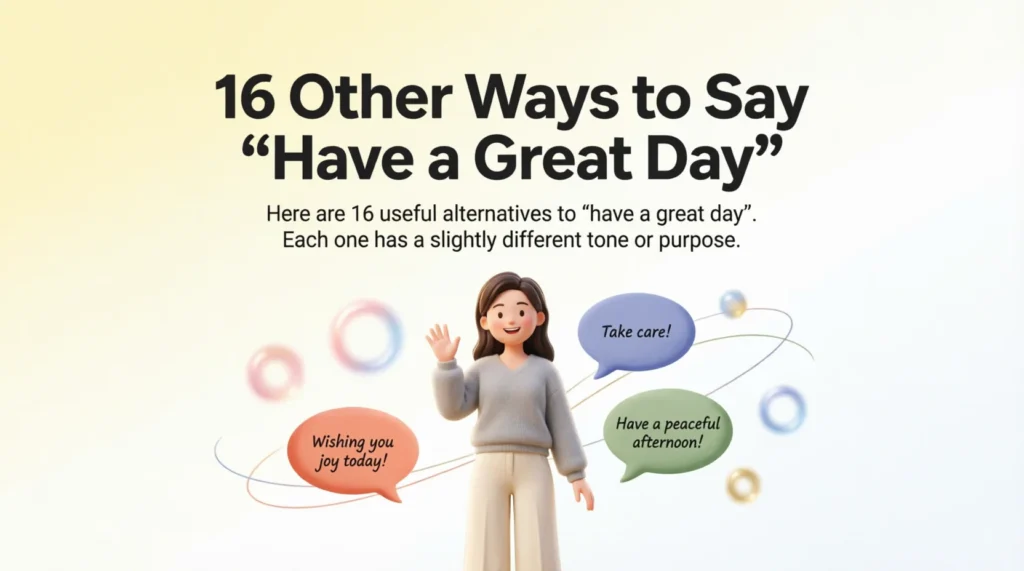
16 Other Ways to Say “Have a Great Day”
Here are 16 useful alternatives to “have a great day”. Each one has a slightly different tone or purpose.
1. Have a Wonderful Day
Phrase: Have a wonderful day!
Meaning: A warm wish for someone to enjoy their day.
Explanation: This is very close to “have a great day,” but wonderful can sound a little warmer and more enthusiastic. It is still suitable for professional communication.
Example Sentence:
“Thank you for visiting our office. Have a wonderful day!”
Best Use: Formal, Business, Friendly
Worst Use: Very serious situations where a cheerful closing may feel inappropriate.
Tone: Friendly / Positive
2. Enjoy Your Day
Phrase: Enjoy your day!
Meaning: A wish that someone has a pleasant and enjoyable day.
Explanation: This is short and natural. It is especially common in spoken English. It can sound more relaxed than “have a great day.”
Example Sentence:
“Your order will arrive this afternoon. Enjoy your day!”
Best Use: Casual, Business, Customer Service
Worst Use: Highly formal letters where a more polished closing is expected.
Tone: Friendly / Neutral
3. Have a Good One
Phrase: Have a good one!
Meaning: Have a good day or have a good time.
Explanation: This is a casual expression. “One” refers to the period of time ahead, often the day. It is common in everyday spoken English.
Example Sentence:
“Thanks for your help. Have a good one!”
Best Use: Informal, Casual
Worst Use: Formal business letters or communication with someone you do not know well.
Tone: Casual / Friendly
4. Enjoy the Rest of Your Day
Phrase: Enjoy the rest of your day.
Meaning: Have a pleasant time during the remaining part of your day.
Explanation: This is one of the best formal ways to say have a great day. It works particularly well when you are speaking to someone later in the day.
Example Sentence:
“Thank you for meeting with me. Enjoy the rest of your day.”
Best Use: Formal, Business, Customer Service
Worst Use: Early in the morning when “the rest of your day” may sound less natural.
Tone: Professional / Friendly
5. Wishing You a Wonderful Day
Phrase: Wishing you a wonderful day.
Meaning: Expressing a warm hope that someone has a pleasant day.
Explanation: This sounds polished and thoughtful. It is especially useful in written communication, including professional emails and customer messages.
Example Sentence:
“Thank you for your continued support. Wishing you a wonderful day.”
Best Use: Formal, Business, Written
Worst Use: Very casual conversations with close friends.
Tone: Formal / Warm
6. Have an Amazing Day
Phrase: Have an amazing day!
Meaning: A strong and enthusiastic wish for someone to have a very good day.
Explanation: Amazing adds more energy than great. It is useful when you want to sound excited, cheerful, or encouraging.
Example Sentence:
“Good luck with your presentation. Have an amazing day!”
Best Use: Friendly, Informal, Encouraging
Worst Use: Highly formal corporate correspondence.
Tone: Enthusiastic / Friendly
7. Have a Fantastic Day
Phrase: Have a fantastic day!
Meaning: A cheerful wish for someone to have an excellent day.
Explanation: This phrase is upbeat and expressive. It can make a conversation feel more positive without sounding too unusual.
Example Sentence:
“Thanks for coming in today. Have a fantastic day!”
Best Use: Friendly, Customer Service, Casual
Worst Use: Serious or sensitive conversations.
Tone: Emphatic / Friendly
8. Take Care and Have a Great Day
Phrase: Take care and have a great day!
Meaning: A friendly goodbye combined with a positive wish.
Explanation: Adding “take care” makes the closing feel more personal. It works well when you want to end a friendly conversation.
Example Sentence:
“I’ll talk to you tomorrow. Take care and have a great day!”
Best Use: Friendly, Casual, Informal
Worst Use: Very formal business documents.
Tone: Warm / Friendly
9. Hope You Have a Great Day
Phrase: Hope you have a great day!
Meaning: Expressing a friendly hope that someone enjoys their day.
Explanation: This sounds slightly more personal than a direct command. It is common in texts, chats, emails, and everyday speech.
Example Sentence:
“Thanks for letting me know. Hope you have a great day!”
Best Use: Friendly, Informal, Business
Worst Use: Formal documents that require very traditional language.
Tone: Friendly / Warm
10. Have a Lovely Day
Phrase: Have a lovely day!
Meaning: A warm wish for someone to have a pleasant day.
Explanation: Lovely sounds gentle and friendly. It is especially common in British English, although people in other English-speaking regions understand it easily.
Example Sentence:
“Thank you for coming in. Have a lovely day!”
Best Use: Friendly, Polite, Customer Service
Worst Use: Very casual conversations where it may sound slightly formal or gentle.
Tone: Warm / Polite
11. Make the Most of Your Day
Phrase: Make the most of your day!
Meaning: Use your time well and enjoy the opportunities your day brings.
Explanation: This is not a direct synonym, but it communicates a positive wish. It can sound encouraging and motivating.
Example Sentence:
“You have a lot planned today, so make the most of your day!”
Best Use: Encouraging, Friendly, Motivational
Worst Use: Situations where someone needs sympathy or emotional support.
Tone: Encouraging / Positive
12. Enjoy Your Day Ahead
Phrase: Enjoy your day ahead!
Meaning: Have a pleasant day in the time that is coming.
Explanation: This expression can work when someone is about to start their day or move on to their next activities. However, “Have a great day” or “Enjoy your day” is usually more natural in everyday English.
Example Sentence:
“Thanks for your message. Enjoy your day ahead!”
Best Use: Friendly, Written, Customer Communication
Worst Use: Very natural spoken conversations where a simpler phrase would sound better.
Tone: Friendly / Neutral
13. Have a Beautiful Day
Phrase: Have a beautiful day!
Meaning: A warm wish for someone to experience a pleasant and positive day.
Explanation: This phrase sounds more expressive and emotional than “have a great day.” It can be lovely in personal messages but may be too warm for some corporate situations.
Example Sentence:
“Thank you for always being so kind. Have a beautiful day!”
Best Use: Personal, Friendly, Inspirational
Worst Use: Strictly formal corporate communication.
Tone: Warm / Emotional
14. Enjoy the Rest of Your Week
Phrase: Enjoy the rest of your week!
Meaning: A wish that someone has a pleasant remaining week.
Explanation: This is useful when the conversation happens before the weekend but you want to refer to the whole week rather than just today.
Example Sentence:
“Thank you for your help. Enjoy the rest of your week!”
Best Use: Business, Professional, Friendly
Worst Use: When it is already the weekend.
Tone: Professional / Friendly
15. Have a Fantastic Rest of Your Day
Phrase: Have a fantastic rest of your day!
Meaning: A very positive wish for the remaining part of someone’s day.
Explanation: This combines the warmth of “fantastic” with the practical phrase “rest of your day.” It is useful in customer service and workplace conversations.
Example Sentence:
“Thanks for calling our support team. Have a fantastic rest of your day!”
Best Use: Business, Customer Service, Friendly
Worst Use: Serious or formal situations where strong enthusiasm may not fit.
Tone: Enthusiastic / Friendly
16. Wishing You a Great Day Ahead
Phrase: Wishing you a great day ahead.
Meaning: Expressing hope that someone has a good day in the time ahead.
Explanation: This sounds polished and positive. It works especially well in written communication, although “Have a great day” is more natural in many everyday spoken situations.
Example Sentence:
“Thank you for your interest in our services. Wishing you a great day ahead.”
Best Use: Business, Formal, Written
Worst Use: Very casual conversations where it may sound overly polished.
Tone: Formal / Positive
Quick Comparison of the Best Alternatives
| Alternative | Tone | Best For |
|---|---|---|
| Enjoy your day | Friendly | Everyday conversations |
| Enjoy the rest of your day | Professional | Work and customer service |
| Have a wonderful day | Warm | Professional and personal |
| Have a good one | Casual | Friends and casual chats |
| Wishing you a wonderful day | Formal | Emails and written messages |
| Have an amazing day | Enthusiastic | Friends and encouragement |
| Have a lovely day | Warm | Polite everyday English |
How to Choose the Right Alternative
The best alternative depends on who you are talking to, where you are talking, and the feeling you want to create.
For Work
Choose:
- Enjoy the rest of your day.
- Have a wonderful day.
- Wishing you a wonderful day.
These options sound professional without being cold.
For Friends
Choose:
- Have a good one!
- Have an amazing day!
- Have a fantastic day!
- Take care and have a great day!
These expressions sound more relaxed and personal.
For Customers
Choose:
- Enjoy your day!
- Have a wonderful day!
- Enjoy the rest of your day.
They are friendly while still maintaining good customer-service etiquette.
For Emails
Choose:
- Wishing you a wonderful day.
- Have a wonderful day.
- Wishing you a great day ahead.
These sound polished and natural in written English.
Frequently Asked Questions
What is another way to say “have a great day”?
Some common alternatives are “Have a wonderful day,” “Enjoy your day,” “Have an amazing day,” and “Enjoy the rest of your day.”
What is a formal way to say “have a great day”?
“Enjoy the rest of your day” and “Wishing you a wonderful day” are good formal alternatives, especially in professional communication.
What is a casual way to say “have a great day”?
You can say “Have a good one!”, “Have an awesome day!”, or “Have a fantastic day!” with friends and people you know well.
Can I say “have a great day” in a business email?
Yes. “Have a great day” is polite and professional enough for most business emails. It is a common friendly closing.
Is “have a good one” professional?
It can be acceptable in relaxed workplaces, but it is mainly casual. For formal clients or professional emails, “Enjoy the rest of your day” is a safer choice.
Conclusion
Knowing other ways to say have a great day gives you more freedom in English.
You do not need to use the same phrase every time you end a conversation.
Choose words that match the person, setting, and tone.
Use “Enjoy the rest of your day” for professional situations, “Have a good one” with friends, and “Wishing you a wonderful day” in polished written communication.
Small changes like these can make your English sound more natural and confident.
Try a few of these alternatives to have a great day in your daily conversations and emails.
Over time, choosing the right expression will become easier and more natural.

Alden Rowen is the author behind Meanings Path, sharing clear and reliable insights into the meanings, origins, and significance of words, names, and phrases. His goal is to make language simple, useful, and easy to understand.