
Saying “I am happy for you” is a simple way to show that you feel glad about another person’s success, good news, or happy moment.
It is correct, polite, and common in English.
However, using the same phrase again and again can sound repetitive.
Learning other ways to say I am happy for you can help you sound more natural and expressive.
The best phrase depends on the situation.
You may want to sound warm with a friend, polite with a coworker, or professional in a work email.
Some alternatives show excitement, while others show sincere support.
In this guide, you will learn 17 alternatives to “I am happy for you”, with meanings, examples, tones, and the best situations for using them.
What Does “I Am Happy for You” Mean?
“I am happy for you” means that you feel pleased about something good that has happened to another person.
For example:
“You got the job? I am happy for you!”
Here, the speaker is not saying that they personally became happy because of the job. They are saying they feel glad about the other person’s success.
Grammar Explanation
The phrase follows this structure:
I + am + happy + for + person
- I = subject
- am = form of the verb “to be”
- happy = adjective
- for you = shows who the good feeling is directed toward
You can change the subject:
- I am happy for you.
- We are happy for you.
- She is happy for you.
- They are happy for you.
You can also make it more emotional:
“I’m so happy for you!”
The word “so” adds warmth and excitement.
When to Use “I Am Happy for You”
“I am happy for you” works in many everyday situations. It is especially useful when someone shares good news with you.
With Friends
You can use it when a friend gets a new job, graduates, gets engaged, moves into a new home, or reaches a personal goal.
“You finally finished your degree! I’m so happy for you.”
This sounds warm and supportive.
With Family
The phrase is also natural with family members.
“You worked hard for this promotion. I’m really happy for you.”
At Work
You can use it with coworkers when the situation is friendly.
“Congratulations on your promotion. I’m very happy for you.”
For a formal workplace email, however, “Congratulations on your achievement” or “I’m delighted to hear the news” may sound more polished.
In Writing
The phrase works in emails, messages, cards, social media comments, and letters.
In Spoken English
It is very natural in conversations because it is short and easy to understand.
Is It Professional or Polite to Say “I Am Happy for You”?
Yes. “I am happy for you” is polite and positive. It does not sound rude or inappropriate.
However, the exact wording can affect how professional you sound.
For example:
“I’m happy for you!”
This sounds friendly and personal.
“I’m very happy for you and wish you continued success.”
This sounds more professional.
In business communication, you may want to choose a phrase that focuses on the person’s achievement.
For example:
- Congratulations on your achievement.
- That is wonderful news.
- I’m delighted to hear that.
- You should be very proud of yourself.
- I’m pleased to see your hard work paying off.
The relationship also matters. A close friend may appreciate an emotional phrase such as “I couldn’t be happier for you!” A manager or client may prefer something more measured.
Pros and Cons of Using “I Am Happy for You”
Pros
- Simple: English learners can use it easily.
- Clear: The meaning is easy to understand.
- Polite: It is appropriate in most friendly situations.
- Positive: It shows support for another person.
- Flexible: It works in both speech and writing.
- Natural: Native speakers commonly use the phrase.
Cons
- Repetitive: Using it too often can make your language sound predictable.
- Less specific: It does not explain why you feel happy.
- Limited emotion: Stronger alternatives can show more excitement.
- Less formal: Some business situations need more professional wording.
- Less personal: A specific compliment can sometimes feel more sincere.
17 Other Ways to Say “I Am Happy for You”
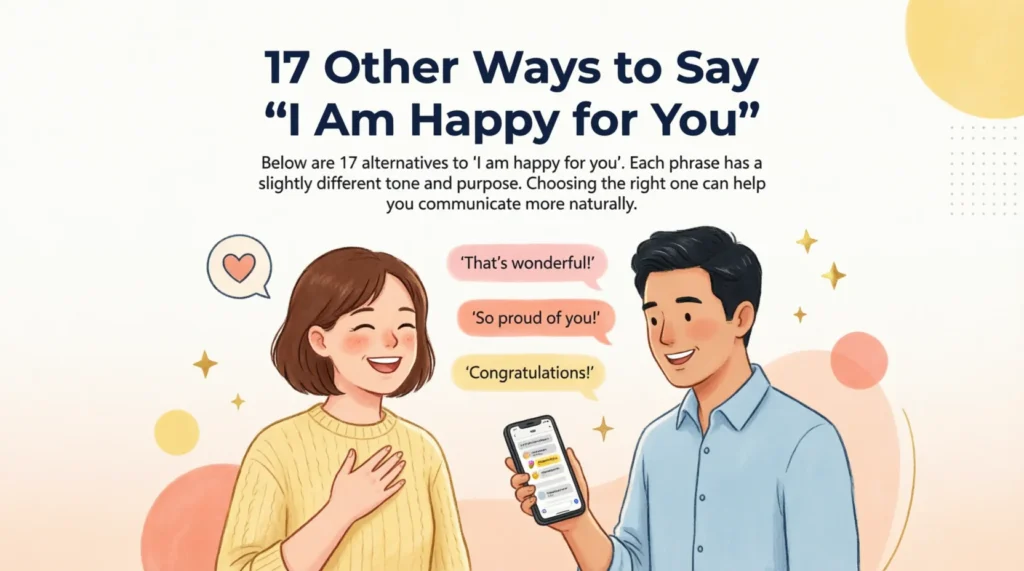
Below are 17 alternatives to “I am happy for you”. Each phrase has a slightly different tone and purpose. Choosing the right one can help you communicate more naturally.
1. I’m So Happy for You
Meaning: You feel very pleased about another person’s good news.
Explanation: This is one of the closest alternatives to the original phrase. Adding “so” makes the emotion stronger. It is especially common when someone shares exciting personal news.
Example Sentence:
“You got your dream job? I’m so happy for you!”
Best Use: Informal, Casual, Friendly
Worst Use: Very formal business documents
Tone: Friendly
2. I’m Really Happy for You
Meaning: You genuinely feel pleased about someone’s situation.
Explanation: “Really” adds sincerity without making the sentence overly emotional. It is useful when you want to sound warm but natural.
Example Sentence:
“You worked hard for this promotion, and I’m really happy for you.”
Best Use: Friendly, Informal, Personal
Worst Use: Highly formal announcements
Tone: Warm
3. I’m Delighted for You
Meaning: You are very pleased about another person’s good news.
Explanation: “Delighted” sounds more polished than “happy.” It is a useful choice when you want to sound warm and slightly formal.
Example Sentence:
“I’m delighted for you and wish you every success in your new role.”
Best Use: Formal, Business, Professional
Worst Use: Very casual conversations where a relaxed tone is expected
Tone: Formal
4. I’m Thrilled for You
Meaning: You are extremely excited and happy about someone’s success.
Explanation: “Thrilled” shows strong positive emotion. Use it when the news is especially exciting.
Example Sentence:
“You’re moving to your dream city? I’m thrilled for you!”
Best Use: Casual, Friendly, Informal
Worst Use: Serious or highly formal corporate messages
Tone: Emphatic
5. I Couldn’t Be Happier for You
Meaning: You are extremely happy about what happened to someone.
Explanation: This phrase strongly emphasizes your support. It does not mean you are unhappy. It means you cannot imagine feeling happier about the person’s good news.
Example Sentence:
“You finally achieved your goal. I couldn’t be happier for you.”
Best Use: Casual, Personal, Emotional
Worst Use: Formal reports or technical writing
Tone: Emphatic
6. Congratulations!
Meaning: You are acknowledging and celebrating someone’s achievement or good news.
Explanation: This is one of the simplest alternatives to “I am happy for you.” It works well when someone has achieved something important.
Example Sentence:
“Congratulations on your promotion! You deserve it.”
Best Use: Formal, Informal, Business, Casual
Worst Use: Situations where the person has not actually achieved or received anything
Tone: Positive
7. I’m Glad to Hear That
Meaning: You are pleased about the information someone has shared.
Explanation: This phrase is useful when responding to news. It is often less emotional than “I’m thrilled for you,” so it can fit many situations.
Example Sentence:
“I’m glad to hear that your presentation went well.”
Best Use: Neutral, Professional, Friendly
Worst Use: Extremely exciting celebrations where stronger emotion is expected
Tone: Neutral
8. That’s Wonderful News
Meaning: The information is very good or pleasing.
Explanation: This is a useful response when someone tells you about a positive development. It focuses on the news rather than directly saying how you feel.
Example Sentence:
“You’ve been accepted into the program? That’s wonderful news!”
Best Use: Professional, Friendly, Spoken, Written
Worst Use: Bad or sensitive news
Tone: Friendly
9. I’m Pleased for You
Meaning: You feel pleased about another person’s success or situation.
Explanation: This is a more polished version of “I am happy for you.” It can work well in professional communication, although it may sound slightly more formal.
Example Sentence:
“I’m pleased for you and your team after such a successful project.”
Best Use: Formal, Business, Professional
Worst Use: Very emotional moments with close friends
Tone: Formal
10. You Deserve It
Meaning: You believe the person has earned the good result.
Explanation: This phrase does more than express happiness. It recognizes the person’s effort, talent, or hard work.
Example Sentence:
“Congratulations on the award. You deserve it!”
Best Use: Friendly, Casual, Professional
Worst Use: When you do not know whether the person earned the result
Tone: Supportive
11. I’m Excited for You
Meaning: You feel excited about another person’s future or experience.
Explanation: This phrase is common when something positive is about to happen. It is slightly different from “I’m happy for you” because it often focuses on what comes next.
Example Sentence:
“Your first day at the new company is tomorrow. I’m excited for you!”
Best Use: Casual, Friendly, Personal
Worst Use: Very formal business writing
Tone: Enthusiastic
12. I’m Glad Things Worked Out for You
Meaning: You are pleased that a difficult situation ended well.
Explanation: Use this phrase when someone has faced a problem, delay, or difficult period and finally gets a positive result.
Example Sentence:
“You found a new apartment so quickly. I’m glad things worked out for you.”
Best Use: Friendly, Casual, Supportive
Worst Use: Simple achievements that did not involve a challenge
Tone: Warm
13. You Must Be So Happy
Meaning: You believe the other person is feeling very pleased.
Explanation: This phrase focuses on the person’s emotions rather than your own. It can be a natural response to exciting personal news.
Example Sentence:
“You passed the exam with the highest score? You must be so happy!”
Best Use: Casual, Friendly, Spoken
Worst Use: Situations where you are unsure how the person feels
Tone: Friendly
14. I’m Proud of You
Meaning: You feel proud because of what someone has achieved or done.
Explanation: This is stronger and more personal than simply saying “I am happy for you.” It recognizes effort, growth, courage, or achievement.
Example Sentence:
“You kept working even when it was difficult. I’m proud of you.”
Best Use: Personal, Friendly, Family, Encouraging
Worst Use: Formal business situations where the relationship is distant
Tone: Warm, Emotional
15. That’s Fantastic!
Meaning: You think the news or achievement is excellent.
Explanation: This short phrase shows excitement. It is especially natural in spoken English and casual messages.
Example Sentence:
“You got the scholarship? That’s fantastic!”
Best Use: Casual, Friendly, Informal
Worst Use: Very formal letters or sensitive situations
Tone: Emphatic
16. I’m So Glad for You
Meaning: You feel very pleased about another person’s good situation.
Explanation: This is a warm alternative that sounds natural with friends and family. It can also show relief when something has finally gone well.
Example Sentence:
“After everything you went through, I’m so glad for you.”
Best Use: Casual, Friendly, Personal
Worst Use: Formal corporate communication
Tone: Warm
17. I’m Happy to See You Succeed
Meaning: You feel pleased when you see someone achieve a goal.
Explanation: This phrase is more specific than “I am happy for you.” It directly connects your positive feeling to the person’s success. It can work especially well in professional settings.
Example Sentence:
“You have put a lot of effort into this project, and I’m happy to see you succeed.”
Best Use: Business, Professional, Formal
Worst Use: Casual situations where a shorter phrase would sound more natural
Tone: Professional
Quick Comparison of the Best Alternatives
| Alternative | Tone | Best Setting |
|---|---|---|
| I’m So Happy for You | Friendly | Friends and family |
| I’m Delighted for You | Formal | Business and professional |
| I’m Thrilled for You | Emphatic | Exciting personal news |
| Congratulations! | Neutral | Work or personal achievements |
| I’m Glad to Hear That | Neutral | Everyday conversation |
| I’m Proud of You | Emotional | Family and close relationships |
| I’m Happy to See You Succeed | Professional | Workplace |
The key difference is emotion and context. You do not need to choose the most complicated phrase. Choose the one that matches your relationship with the person and the importance of the news.
How to Choose the Right Alternative
If you are talking to a close friend, phrases such as “I’m so happy for you,” “I’m thrilled for you,” and “I couldn’t be happier for you” sound natural.
For a coworker, “Congratulations!”, “I’m pleased for you,” or “I’m happy to see you succeed” may be better.
For a manager, client, or professional contact, keep your wording respectful and clear:
“Congratulations on this achievement. I’m delighted for you and wish you continued success.”
If someone has overcome a difficult situation, try:
“I’m glad things worked out for you.”
If you want to recognize effort, try:
“You deserve it.”
This small change in wording can make your English sound more thoughtful and natural.
Common Mistakes English Learners Should Avoid
One common mistake is choosing a phrase based only on its dictionary meaning. Two phrases can have similar meanings but different emotional effects.
For example:
“Congratulations!” celebrates an achievement.
“I’m proud of you.” expresses personal admiration.
“I’m thrilled for you.” shows strong excitement.
“I’m pleased for you.” sounds more formal.
Another mistake is using very emotional language in a formal setting. Saying “I couldn’t be happier for you!!!” may be perfect in a message to a friend, but it may not fit a formal business email.
Also, remember that “You deserve it” can sometimes sound negative if the context is unclear. In some situations, it could imply that the person deserved something bad. Make sure the surrounding message makes your positive meaning clear.
Frequently Asked Questions
What is another way to say “I am happy for you”?
Some common alternatives are “I’m so happy for you,” “I’m delighted for you,” “I’m thrilled for you,” “Congratulations,” and “I’m glad to hear that.”
What is a formal way to say “I am happy for you”?
Good formal options include “I’m delighted for you,” “I’m pleased for you,” and “I’m happy to see you succeed.”
What is a casual way to say “I am happy for you”?
Try “I’m so happy for you,” “I’m thrilled for you,” “That’s fantastic!” or “I couldn’t be happier for you.”
Can I say “I am happy for you” at work?
Yes. It is polite and acceptable at work. However, “Congratulations on your achievement” or “I’m delighted to hear the news” may sound more professional in formal communication.
What is the difference between “I’m happy for you” and “I’m proud of you”?
“I’m happy for you” means you feel glad about someone’s good news. “I’m proud of you” shows admiration for the person’s effort, behavior, growth, or achievement. The second phrase is usually more personal.
Conclusion
Learning other ways to say I am happy for you can make your English more natural, flexible, and expressive.
The basic phrase is perfectly correct, but different situations call for different levels of warmth, excitement, and formality.
Use “I’m so happy for you” with friends, “Congratulations!” for achievements, and “I’m delighted for you” in more professional situations.
If you want to praise someone’s effort, “You deserve it” or “I’m proud of you” may be stronger choices.
The goal is not to memorize every phrase.
Instead, learn how each one feels and choose the wording that best matches the person, situation, and emotion.

Alden Rowen is the author behind Meanings Path, sharing clear and reliable insights into the meanings, origins, and significance of words, names, and phrases. His goal is to make language simple, useful, and easy to understand.