
The phrase “how I roll” is a casual way to describe how someone normally behaves, lives, works, or likes to do things.
For example, “I like to keep things simple. That’s how I roll.” The phrase sounds relaxed and confident, but it may not fit every situation.
Learning other ways to say how I roll can help you choose words that match your audience, setting, and tone.
This is useful for English learners, professionals, students, and anyone who wants to sound more natural.
In this guide, you will learn 18 alternatives to how I roll, from friendly everyday expressions to more professional choices.
You will also see examples, meanings, tone notes, and situations where each phrase works best.
What Does “How I Roll” Mean?
“How I roll” is an informal expression that means the way I usually behave, live, work, make choices, or do things.
The word “roll” does not mean physically rolling in this expression. It is slang-like, figurative language. The phrase is often used to describe a person’s habits, style, attitude, or personal way of doing something.
For example:
- “I always arrive early. That’s how I roll.”
- “I like working late at night. That’s how I roll.”
- “I keep my desk very organized. It’s just how I roll.”
The phrase usually appears in spoken English, text messages, social media posts, and casual writing.
Grammatically, “how I roll” is a clause. It can stand after phrases such as “that’s”, “this is”, or “you know.”
The most common pattern is:
That’s how I roll.
It often adds a playful, confident, or slightly humorous feeling.
When to Use “How I Roll”
“How I roll” works best in informal or relaxed communication.
You can use it with friends, family, classmates, or coworkers when the workplace culture is casual. It can also work well in social media captions, personal conversations, and humorous comments.
Informal conversation
You might say:
“I always make a plan before a trip. That’s how I roll.”
This sounds natural and friendly.
Texting and social media
The phrase is common in casual digital communication.
“Coffee first, emails later. That’s how I roll.”
It can make a message sound relaxed and personal.
Casual workplace communication
In a friendly office, you might say:
“I like to finish my tasks before lunch. That’s how I roll.”
However, you should consider your workplace culture before using slang-like expressions.
Formal writing
Avoid “how I roll” in formal reports, academic papers, official documents, and serious business communication. In these settings, expressions such as “my usual approach” or “the way I typically work” are better.
Is It Professional or Polite to Say “How I Roll”?
“How I roll” is polite, but it is informal.
It is not normally rude or offensive. The main issue is tone. It can sound playful, relaxed, or humorous rather than professional.
For example:
“I like to double-check every report. That’s how I roll.”
This is friendly, but it may sound too casual in a formal meeting.
A more professional version would be:
“I usually double-check every report before submitting it.”
In business emails, presentations, interviews, and formal reports, choose a more neutral expression.
However, “how I roll” can be a good choice when you want to show personality. It can make casual communication sound more natural and confident.
The key is to match your language to the audience.
Pros and Cons of Using “How I Roll”
Pros
- It sounds natural: Native speakers use it in casual conversation.
- It shows personality: The phrase can make you sound relaxed and confident.
- It is short: You can express a personal style without a long explanation.
- It can be humorous: It often adds a playful touch.
- It works well in casual English: It fits conversations, texts, captions, and friendly chats.
Cons
- It is informal: It may not suit professional or academic writing.
- It can sound playful: This may be wrong for serious situations.
- Some learners may misunderstand it: “Roll” has a literal meaning too.
- It depends on context: The exact idea can change depending on the sentence.
- It may sound too casual in business settings: A professional alternative may be clearer.
18 Other Ways to Say “How I Roll”
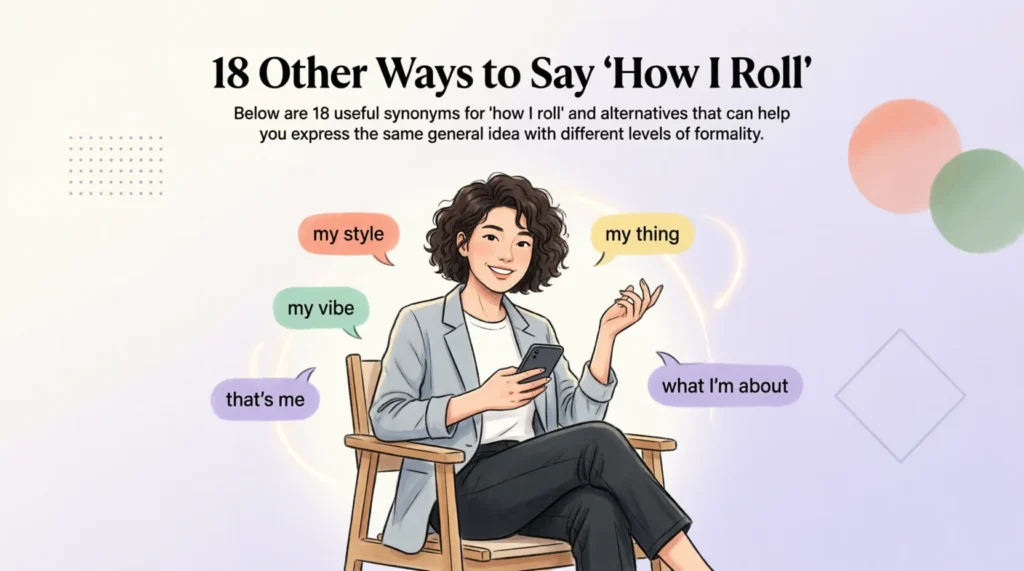
Below are 18 useful synonyms for “how I roll” and alternatives that can help you express the same general idea with different levels of formality.
1. That’s How I Do Things
Phrase: That’s how I do things.
Meaning: This means that a particular action is your normal way of doing something.
Explanation: This is one of the closest and easiest alternatives to “how I roll.” It keeps the same basic meaning but sounds clearer and less slangy. You can use it in many everyday situations.
Example Sentence: “I always prepare everything the night before. That’s how I do things.”
Best Use: Informal, Casual, Neutral
Worst Use: Very formal reports where more precise language is needed
Tone: Neutral / Friendly
2. That’s My Style
Phrase: That’s my style.
Meaning: This means that something reflects your personal way, taste, or manner.
Explanation: “That’s my style” is useful when talking about your personality, habits, fashion, work method, or creative choices. It can sound confident without being too casual.
Example Sentence: “I prefer simple designs with clean lines. That’s my style.”
Best Use: Casual, Creative, Informal
Worst Use: Situations where you need to describe a specific professional procedure
Tone: Friendly / Confident
3. That’s My Way
Phrase: That’s my way.
Meaning: This means that something is your personal way of doing or handling things.
Explanation: This phrase is short and flexible. It can describe your habits, decisions, or personal approach. Depending on context, it may sound thoughtful or firm.
Example Sentence: “I like to listen before I give advice. That’s my way.”
Best Use: Informal, Personal, Casual
Worst Use: Technical business writing
Tone: Neutral / Personal
4. That’s How I Do It
Phrase: That’s how I do it.
Meaning: This means that this is your normal method of doing something.
Explanation: This is a simple phrase for English learners. It is especially useful when someone asks why you are doing something in a particular way.
Example Sentence: “I always check the numbers twice. That’s how I do it.”
Best Use: Informal, Spoken, Casual
Worst Use: Formal reports
Tone: Neutral / Confident
5. That’s My Approach
Phrase: That’s my approach.
Meaning: This means that this is the method or attitude you normally use.
Explanation: This is one of the best formal ways to say “how I roll.” It works especially well when discussing work, problem-solving, leadership, or decision-making.
Example Sentence: “I prefer to understand the problem first. That’s my approach.”
Best Use: Business, Professional, Formal
Worst Use: Very playful conversations where a casual tone is expected
Tone: Professional / Neutral
6. That’s How I Usually Work
Phrase: That’s how I usually work.
Meaning: This means that something is your normal way of working.
Explanation: This alternative is excellent in professional settings. It clearly explains your work habits without slang.
Example Sentence: “I review my priorities every morning. That’s how I usually work.”
Best Use: Business, Professional, Workplace
Worst Use: Humorous social media captions
Tone: Professional / Neutral
7. That’s My Usual Approach
Phrase: That’s my usual approach.
Meaning: This means that something is the method you normally use.
Explanation: This is a polished alternative to “how I roll.” It is especially useful when discussing professional decisions, projects, or problem-solving.
Example Sentence: “I gather all the facts before making a decision. That’s my usual approach.”
Best Use: Formal, Business, Academic
Worst Use: Very casual texting
Tone: Formal / Neutral
8. That’s Just Me
Phrase: That’s just me.
Meaning: This means that a behavior or preference is part of your personality.
Explanation: “That’s just me” is more personal than “that’s how I roll.” It works when you want to explain a habit or characteristic without sounding overly serious.
Example Sentence: “I like everything organized before I start. That’s just me.”
Best Use: Casual, Personal, Friendly
Worst Use: Formal business documents
Tone: Friendly / Personal
9. That’s My Thing
Phrase: That’s my thing.
Meaning: This means that something is a personal interest, habit, or specialty.
Explanation: This is a casual phrase. It is useful when talking about hobbies, interests, or activities that you enjoy.
Example Sentence: “I love finding small local restaurants. That’s my thing.”
Best Use: Informal, Casual, Social
Worst Use: Formal interviews or official documents
Tone: Friendly / Casual
10. That’s How I Like to Do Things
Phrase: That’s how I like to do things.
Meaning: This means that a particular method is your preferred way of doing something.
Explanation: This phrase is clear and polite. It focuses on personal preference rather than personality or attitude.
Example Sentence: “I like to finish one task before starting another. That’s how I like to do things.”
Best Use: Casual, Workplace, Neutral
Worst Use: Extremely formal technical writing
Tone: Neutral / Friendly
11. That’s My M.O.
Phrase: That’s my M.O.
Meaning: This means that something is your usual method or pattern of behavior.
Explanation: M.O. stands for modus operandi, a Latin term meaning a particular method of working or operating. In everyday English, “my M.O.” can describe someone’s typical way of doing things. It is more colorful than a standard professional phrase.
Example Sentence: “I usually research everything before I make a choice. That’s my M.O.”
Best Use: Informal, Conversational, Humorous
Worst Use: Simple learner writing where the abbreviation may confuse readers
Tone: Casual / Confident
12. That’s My Usual Style
Phrase: That’s my usual style.
Meaning: This means that something is the way you normally behave, communicate, work, or create.
Explanation: This is a useful middle-ground phrase. It is less slangy than “how I roll” but still personal and natural.
Example Sentence: “I keep my presentations simple and visual. That’s my usual style.”
Best Use: Workplace, Casual, Creative
Worst Use: Situations requiring a highly specific technical description
Tone: Neutral / Professional
13. That’s My Preferred Way
Phrase: That’s my preferred way.
Meaning: This means that you like or choose this method more than others.
Explanation: This phrase is useful when you want to sound polite and professional. It focuses on preference rather than personality.
Example Sentence: “I prefer to receive the agenda before the meeting. That’s my preferred way.”
Best Use: Business, Professional, Formal
Worst Use: Friendly jokes or relaxed conversations where it may sound too formal
Tone: Formal / Polite
14. That’s How I Operate
Phrase: That’s how I operate.
Meaning: This means that this is your normal way of working or behaving.
Explanation: This phrase is stronger than some of the other alternatives. It can describe a person’s work habits, principles, or general behavior.
Example Sentence: “I like to keep my promises. That’s how I operate.”
Best Use: Professional, Informal, Personal
Worst Use: Situations where you want to sound especially warm or gentle
Tone: Neutral / Emphatic
15. That’s My Standard Practice
Phrase: That’s my standard practice.
Meaning: This means that something is a normal or established part of the way you work.
Explanation: This is a strong professional alternative to “how I roll.” It is especially useful when discussing workplace procedures or repeated actions.
Example Sentence: “I check every document before sending it. That’s my standard practice.”
Best Use: Business, Formal, Professional
Worst Use: Casual conversations with close friends
Tone: Formal / Professional
16. That’s the Way I Am
Phrase: That’s the way I am.
Meaning: This means that a behavior or personality trait is a normal part of who you are.
Explanation: This phrase focuses more on personality than method. It can sound accepting, confident, or firm depending on your voice.
Example Sentence: “I tend to think carefully before I speak. That’s the way I am.”
Best Use: Personal, Casual, Conversational
Worst Use: Business procedures or formal instructions
Tone: Personal / Neutral
17. That’s My Usual Routine
Phrase: That’s my usual routine.
Meaning: This means that something is part of what you normally do.
Explanation: Use this phrase when describing repeated activities or habits. It is more specific than “how I roll” because it focuses on routine.
Example Sentence: “I exercise before breakfast. That’s my usual routine.”
Best Use: Casual, Personal, Neutral
Worst Use: Describing personality or attitude when no routine is involved
Tone: Neutral / Friendly
18. That’s How I Prefer to Work
Phrase: That’s how I prefer to work.
Meaning: This means that a certain method is the way you like to work.
Explanation: This is one of the strongest professional alternatives to “how I roll.” It clearly communicates your preference without sounding casual or slangy.
Example Sentence: “I prefer to set clear goals before starting a project. That’s how I prefer to work.”
Best Use: Business, Interviews, Workplace, Professional
Worst Use: Very casual conversations where a shorter phrase would sound more natural
Tone: Professional / Neutral
Quick Comparison of Top Alternatives
| Alternative | Tone | Best Setting |
|---|---|---|
| That’s how I do things | Neutral | Everyday conversation |
| That’s my style | Friendly | Casual and creative settings |
| That’s my approach | Professional | Business and work |
| That’s just me | Friendly | Personal conversations |
| That’s how I operate | Emphatic | Work and personal statements |
| That’s my standard practice | Formal | Business and professional writing |
| That’s how I prefer to work | Professional | Workplace and interviews |
The best choice depends on what you want to communicate. If you want a casual replacement, “that’s how I do things” is easy and natural. If you want a professional replacement, “that’s my approach” or “that’s how I prefer to work” is usually better.
Frequently Asked Questions
1. What is another way to say “how I roll”?
Some common alternatives are “that’s how I do things,” “that’s my style,” “that’s my approach,” and “that’s just me.” The best option depends on the situation and tone.
2. Is “how I roll” formal English?
No. “How I roll” is informal English. It is suitable for casual conversation, texting, social media, and friendly communication, but it is usually not the best choice for formal writing.
3. What is a professional way to say “how I roll”?
Good professional alternatives include “that’s my approach,” “that’s how I usually work,” “that’s my usual approach,” and “that’s how I prefer to work.”
4. Does “how I roll” mean how I behave?
Yes. It can mean the way you normally behave, work, live, or make choices. The exact meaning depends on the context.
5. Can I use “how I roll” at work?
You can use it in a relaxed workplace if the culture is informal. However, in formal meetings, interviews, reports, and professional emails, a more neutral phrase is safer.
Conclusion
Learning other ways to say how I roll gives you more control over your English.
The original phrase is friendly, casual, and often playful, but it does not fit every situation.
For everyday conversation, phrases such as “that’s how I do things” and “that’s my style” sound natural.
For professional settings, “that’s my approach” and “that’s how I prefer to work” are stronger choices.
Try using different alternatives based on your audience and purpose.
The more expressions you learn, the easier it becomes to sound fluent, clear, and confident in both casual and professional English.

Alden Rowen is the author behind Meanings Path, sharing clear and reliable insights into the meanings, origins, and significance of words, names, and phrases. His goal is to make language simple, useful, and easy to understand.