
Asking “How did you sleep?” is a simple way to show care and interest in someone’s well-being.
It is common after a night’s sleep, especially when talking to family, friends, partners, coworkers, or children.
However, using the same question every time can make your English sound repetitive.
Learning other ways to say how did you sleep can help you sound more natural, friendly, polite, and confident.
The best phrase depends on who you are talking to and the situation.
Some alternatives are warm and personal, while others are more casual or professional.
In this guide, you will learn 16 alternatives to “How did you sleep?”, their meanings, examples, tones, and best uses.
You will also learn which phrases work well in formal and informal English.
What Does “How Did You Sleep?” Mean?
“How did you sleep?” is a question about the quality of someone’s sleep during the previous night or sleeping period.
It usually means:
- Did you sleep well?
- Was your sleep comfortable?
- Did you get enough rest?
- Did anything disturb your sleep?
The phrase uses the simple past tense because the sleeping happened in the past.
For example:
How did you sleep last night?
Here, “did” is the past-tense helping verb, while “sleep” stays in its base form.
The question is grammatically correct and very natural in everyday English. It can sound caring, friendly, or neutral depending on your relationship with the person.
You can also add words such as last night, yesterday, or after the trip to make the context clearer.
When to Use “How Did You Sleep?”
“How did you sleep?” is mainly used in spoken English, but it can also appear in text messages and informal written communication.
Informal conversations
It is very common with friends, family members, children, and people you know well.
Example:
“Good morning! How did you sleep?”
This sounds warm and natural.
Caring conversations
You may ask someone this after they were sick, tired, stressed, or traveling.
Example:
“You looked tired yesterday. How did you sleep?”
The question shows concern.
Romantic conversations
Partners may use it as a gentle morning question.
Example:
“Good morning, love. How did you sleep?”
The phrase can sound affectionate when used in a close relationship.
Professional situations
It is grammatically correct, but it is not always the best choice at work. Asking a close coworker may be fine, but asking a manager, client, or new business contact about their sleep can feel too personal.
A more neutral question such as “How are you feeling this morning?” may work better in a professional setting.
Is It Professional or Polite to Say “How Did You Sleep?”
Yes, “How did you sleep?” is polite, but it is usually personal rather than professional.
The phrase is not rude. However, sleep is a private topic for some people. In a workplace, the relationship and context matter.
For example, asking a close coworker:
“How did you sleep after the long flight?”
can sound thoughtful.
But asking a new client:
“How did you sleep last night?”
may feel unnecessarily personal.
For business communication, choose a more neutral question when possible.
Good professional alternatives include:
- How are you feeling this morning?
- I hope you had a restful night.
- I hope you’re feeling refreshed today.
- Did you get some rest?
These phrases show care without asking for personal details.
Pros and Cons of Using “How Did You Sleep?”
Pros
- Simple: English learners can use it easily.
- Natural: Native speakers commonly understand it.
- Friendly: It can show genuine concern.
- Flexible: It works in spoken English and text messages.
- Direct: The listener immediately understands the question.
Cons
- Can sound personal: Sleep can be a private topic.
- May become repetitive: Using it every morning can feel predictable.
- Less suitable for formal business settings: A client may prefer a neutral greeting.
- Context matters: The same question can sound caring or intrusive depending on the relationship.
- It does not always ask about rest: Someone may have slept for eight hours but still feel tired.
Learning synonyms for “how did you sleep?” gives you more ways to express the same basic idea without repeating one sentence.
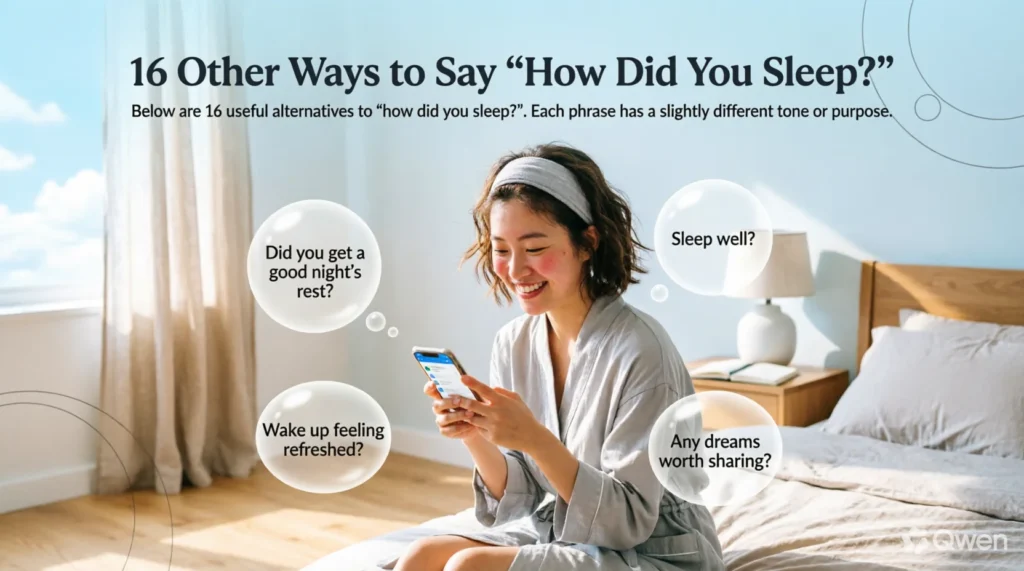
16 Other Ways to Say “How Did You Sleep?”
Below are 16 useful alternatives to “how did you sleep?”. Each phrase has a slightly different tone or purpose.
1. Did You Sleep Well?
Meaning: This asks whether someone had good or comfortable sleep.
Explanation:
“Did you sleep well?” is one of the most natural alternatives to “How did you sleep?”. It is short, clear, and easy for English learners.
It usually expects an answer such as:
“Yes, I slept really well.”
or:
“Not really. I kept waking up.”
Example Sentence:
“Good morning! Did you sleep well?”
Best Use: Informal, Casual, Friendly
Worst Use: Very formal business correspondence
Tone: Friendly / Neutral
2. Did You Get a Good Night’s Sleep?
Meaning: This asks whether someone had a restful night.
Explanation:
This phrase is slightly longer but very natural. It focuses on whether the person’s entire night was restful.
It is especially useful when you know the person was tired or needed rest.
Example Sentence:
“You had a long day yesterday. Did you get a good night’s sleep?”
Best Use: Casual, Friendly, Spoken English
Worst Use: Highly formal business writing
Tone: Friendly
3. Did You Sleep Okay?
Meaning: This asks whether someone’s sleep was satisfactory.
Explanation:
“Did you sleep okay?” is casual and relaxed. It can also show concern because okay leaves room for the person to say that something went wrong.
It is common in everyday conversations.
Example Sentence:
“You seemed worried last night. Did you sleep okay?”
Best Use: Casual, Informal
Worst Use: Formal letters or official emails
Tone: Friendly / Neutral
4. How Was Your Sleep?
Meaning: This asks about the overall quality of someone’s sleep.
Explanation:
“How was your sleep?” is a direct alternative that focuses on the experience of sleeping.
It can be useful when you want to know whether someone slept comfortably, woke up often, or had trouble falling asleep.
Example Sentence:
“How was your sleep after traveling all day?”
Best Use: Informal, Friendly
Worst Use: Formal corporate communication
Tone: Neutral / Friendly
5. Did You Get Enough Rest?
Meaning: This asks whether someone rested enough to feel recovered.
Explanation:
This question is not exactly the same as asking about sleep. Someone can sleep for several hours but still not feel rested.
It is useful when someone looks tired or has had a busy schedule.
Example Sentence:
“You have a busy day ahead. Did you get enough rest?”
Best Use: Friendly, Casual, Professional
Worst Use: When you specifically need to ask about sleep quality
Tone: Friendly / Neutral
6. Did You Have a Restful Night?
Meaning: This asks whether the person had a peaceful and refreshing night.
Explanation:
“Restful” means helping someone relax and recover. This phrase sounds warmer and slightly more polished than “Did you sleep well?”
It can work well when speaking politely.
Example Sentence:
“I hope you had a restful night before today’s meeting.”
Best Use: Professional, Polite, Formal
Worst Use: Very casual conversations where a simple phrase would sound more natural
Tone: Polite / Formal
7. I Hope You Slept Well.
Meaning: This expresses a wish that someone had good sleep.
Explanation:
This is not a direct question. Instead, it is a polite statement.
It is useful when you do not want to ask someone to describe their sleep. It can sound warm without being too personal.
Example Sentence:
“Good morning. I hope you slept well.”
Best Use: Professional, Polite, Friendly
Worst Use: When you need a direct answer about their sleep
Tone: Friendly / Polite
8. Did You Rest Well?
Meaning: This asks whether someone had a good period of rest.
Explanation:
“Did you rest well?” is broader than “Did you sleep well?”. Rest can include sleep, relaxation, or simply taking time away from work.
It is useful when you know someone had time to recover.
Example Sentence:
“You had a stressful week. Did you rest well over the weekend?”
Best Use: Casual, Friendly, Professional
Worst Use: When you specifically need information about sleeping
Tone: Friendly / Neutral
9. How Are You Feeling This Morning?
Meaning: This asks about someone’s physical or emotional state after waking up.
Explanation:
This is an excellent alternative when you want to show concern without directly asking about sleep.
It works especially well in professional or polite situations.
Example Sentence:
“Good morning. How are you feeling this morning?”
Best Use: Professional, Polite, Friendly
Worst Use: When the only thing you want to know is whether they slept well
Tone: Polite / Neutral
10. Feeling Refreshed This Morning?
Meaning: This asks whether someone feels rested and energetic after sleeping.
Explanation:
This is a shorter conversational question. The full version is:
“Are you feeling refreshed this morning?”
The shorter version sounds relaxed and friendly.
Example Sentence:
“Feeling refreshed this morning after a good night’s sleep?”
Best Use: Casual, Friendly
Worst Use: Formal documents or official emails
Tone: Friendly / Casual
11. Did You Sleep Comfortably?
Meaning: This asks whether someone was physically comfortable while sleeping.
Explanation:
This question focuses on comfort rather than simply asking whether the person slept.
It may be useful when someone slept somewhere unfamiliar, such as a hotel, guest room, or during travel.
Example Sentence:
“Did you sleep comfortably in the guest room?”
Best Use: Friendly, Travel, Hospitality
Worst Use: Very casual conversations where it may sound slightly formal
Tone: Neutral / Polite
12. Was Your Night Restful?
Meaning: This asks whether the person’s night was peaceful and refreshing.
Explanation:
This is a polished alternative to “How did you sleep?”. It can sound thoughtful and considerate.
It is especially useful when speaking politely to someone you do not know very well.
Example Sentence:
“Was your night restful before the conference?”
Best Use: Formal, Polite, Professional
Worst Use: Very casual texting with close friends
Tone: Formal / Polite
13. Did You Get Some Rest?
Meaning: This asks whether someone managed to rest despite being busy or tired.
Explanation:
This phrase is especially useful when someone has had a stressful day, traveled, worked late, or cared for someone.
It does not necessarily mean sleep.
Example Sentence:
“You were working late last night. Did you get some rest?”
Best Use: Casual, Friendly, Professional
Worst Use: When asking specifically about sleep quality
Tone: Caring / Neutral
14. How Was Your Night?
Meaning: This asks generally about someone’s night.
Explanation:
“How was your night?” is broader than “How did you sleep?”. The person may talk about their sleep, dreams, problems, or anything else that happened during the night.
Because of this, context is important.
Example Sentence:
“Morning! How was your night?”
Best Use: Casual, Friendly
Worst Use: Formal business communication
Tone: Friendly / Casual
15. Did You Have a Good Night’s Sleep?
Meaning: This asks whether someone had high-quality sleep.
Explanation:
This is a warm and natural phrase. It is especially common when someone needed to recover from tiredness.
It sounds slightly more complete than “Did you sleep well?”
Example Sentence:
“You have an early start today. Did you have a good night’s sleep?”
Best Use: Friendly, Casual, Polite
Worst Use: Highly formal corporate writing
Tone: Friendly / Neutral
16. Are You Well Rested?
Meaning: This asks whether someone feels fully rested after sleeping or taking time to recover.
Explanation:
“Are you well rested?” is useful when the focus is on the person’s condition now rather than the exact quality of their sleep.
It can sound more polished than many casual alternatives.
Example Sentence:
“Are you well rested and ready for the presentation?”
Best Use: Professional, Polite, Formal, Friendly
Worst Use: When you specifically want to know how someone slept
Tone: Neutral / Polite
Quick Comparison of the Best Alternatives
| Alternative | Tone | Best Setting |
|---|---|---|
| Did you sleep well? | Friendly | Everyday conversation |
| Did you get enough rest? | Neutral | Personal or professional |
| Did you have a restful night? | Polite | Professional |
| How are you feeling this morning? | Neutral | Work or personal |
| Did you get some rest? | Caring | Casual or professional |
| Are you well rested? | Polite | Professional |
| How was your night? | Casual | Friends and family |
Which Alternative Should You Choose?
The best alternative depends on your relationship with the listener.
For friends
Choose simple, relaxed phrases:
- Did you sleep well?
- Did you sleep okay?
- How was your night?
These sound natural and easy.
For family
Warm expressions work well:
- Did you get a good night’s sleep?
- Did you get enough rest?
- Did you sleep comfortably?
For a partner
You can use affectionate and caring phrases:
- Did you sleep well?
- How was your night?
- Feeling refreshed this morning?
Your tone matters more than the exact words.
For coworkers
Keep the question neutral:
- Did you get enough rest?
- How are you feeling this morning?
- Are you well rested?
These avoid being too personal.
For clients or business contacts
A direct question about sleep may not always be appropriate. Instead, try:
- I hope you had a restful night.
- I hope you’re feeling refreshed today.
- How are you feeling this morning?
These sound polite and professional.
Common Mistakes English Learners Make
When learning formal ways to say “how did you sleep?”, it is important to understand that not every synonym works in every situation.
Mistake 1: Using “How did you slept?”
This is incorrect.
Because did already shows past tense, use the base verb:
Correct:
How did you sleep?
Incorrect:
How did you slept?
Mistake 2: Thinking every alternative means exactly the same thing
The phrases are similar, but their meanings can differ.
“Did you sleep well?” focuses on sleep quality.
“Did you get enough rest?” focuses on recovery.
“How are you feeling this morning?” focuses on the person’s current condition.
Mistake 3: Using personal questions in every workplace situation
A phrase can be grammatically correct but still feel too personal.
With a client or new colleague, “I hope you had a restful night” may be safer than “How did you sleep?”
Mistake 4: Making formal English too complicated
You do not need difficult vocabulary to sound professional.
Simple phrases such as “I hope you had a restful night” are clear and polite.
Frequently Asked Questions
1. What is another way to say “How did you sleep?”
A common alternative is “Did you sleep well?”. Other options include “Did you get enough rest?”, “How was your night?”, and “Are you well rested?”
2. What is a professional way to say “How did you sleep?”
In professional English, try “I hope you had a restful night” or “How are you feeling this morning?” These sound polite and less personal.
3. What is a casual way to ask how someone slept?
You can say “Did you sleep okay?”, “Did you sleep well?”, or “How was your night?”
4. Is “How did you sleep?” grammatically correct?
Yes. “How did you sleep?” is grammatically correct and very common in everyday English.
5. Is “Did you sleep well?” more natural than “How did you sleep?”
Both are natural. “Did you sleep well?” is often more direct, while “How did you sleep?” invites a broader answer about the person’s sleeping experience.
Conclusion
Knowing other ways to say “how did you sleep?” can make your English sound more natural and flexible. “Did you sleep well?” is one of the easiest everyday alternatives, while phrases such as “Did you have a restful night?” and “Are you well rested?” can sound more polished.
The right choice depends on the person, setting, and tone.
With friends, casual phrases work well.
At work, neutral and polite expressions are often better.
Do not worry about using difficult vocabulary.
Start with simple alternatives and practice them in real conversations.
The more phrases you know, the easier it becomes to express yourself naturally and confidently.

Alden Rowen is the author behind Meanings Path, sharing clear and reliable insights into the meanings, origins, and significance of words, names, and phrases. His goal is to make language simple, useful, and easy to understand.