
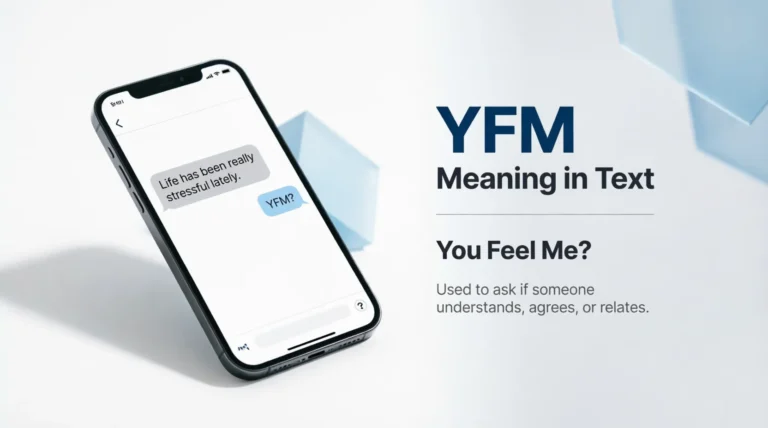
If you’ve come across YFM in a text message, social media comment, or online chat, you’re probably wondering what it means.
The most common meaning of YFM in texting is “You Feel Me?” It’s a casual way to ask whether someone understands, agrees with, or relates to what was just said.
People often use YFM in friendly conversations, group chats, gaming communities, and social media platforms like TikTok, Instagram, Snapchat, and WhatsApp.
Depending on the conversation, it can sound playful, confident, serious, or even slightly challenging.
In this guide, you’ll learn the meaning of YFM in text, its full form, where it came from, how people use it across different platforms, possible alternative meanings, common mistakes, realistic chat examples, and the best ways to reply.
| Term | Most Common Meaning | Full Form | Typical Tone | Common Usage |
|---|---|---|---|---|
| YFM | You Feel Me? | You Feel Me? | Casual, friendly, confident | Texting, social media, chats, gaming |
Quick Answer:
YFM usually means “You Feel Me?” It asks whether someone understands, agrees with, or relates to what another person is saying.
What Does YFM Mean in Text & Chat?
In everyday texting, YFM is shorthand for “You Feel Me?”
Rather than asking if someone literally has feelings, it’s another way of saying:
- Do you understand?
- Do you agree?
- Can you relate?
- Does that make sense?
The phrase often appears after someone shares an opinion, gives advice, tells a story, or explains their feelings.
The exact tone depends on the conversation.
Friendly and Casual
Friends often use YFM to make conversations feel more natural.
Person A: “Late-night drives help me clear my mind. YFM?”
Person B: “Definitely! They’re so relaxing. 😊”
Here, YFM simply asks whether the other person relates.
Serious
Someone may use it after explaining something important.
Person A: “Trust takes time to build. YFM?”
Person B: “Yeah, I completely understand.”
Slightly Challenging
Sometimes YFM adds emphasis.
Person A: “I’ve worked hard for this, YFM?”
Person B: “I get what you’re saying.”
In these situations, punctuation, emojis, and the relationship between the speakers help determine whether the phrase feels supportive, confident, or slightly confrontational.
Full Form, Stands For & Short Meaning of YFM
The most widely accepted expansion is:
YFM = You Feel Me?
This expression has been part of spoken English for years before becoming a common text abbreviation.
Short Meaning
In simple words, YFM means:
- “Do you understand?”
- “Can you relate?”
- “Are you with me?”
- “Do you agree?”
Unlike formal questions, YFM sounds conversational and relaxed.
| Abbreviation | Meaning | Used For |
|---|---|---|
| YFM | You Feel Me? | Asking for understanding or agreement |
It isn’t normally used in professional emails or formal business conversations. Instead, you’ll mostly see it between friends, classmates, teammates, or online communities.
Origin, History & First Known Use of YFM
The phrase “You feel me?” became popular in spoken English long before texting abbreviations were common. It has been widely heard in everyday conversation, music, entertainment, sports interviews, and internet culture.
As texting became faster, people shortened many common phrases into initials. YFM naturally emerged as a quick way to write “You Feel Me?” without typing the entire question.
There is no confirmed source or exact year when the abbreviation first appeared. Like many internet slang terms, it spread gradually through online conversations rather than being officially created by one person.
Today, YFM is recognized mainly in:
- Text messages
- Group chats
- Social media comments
- Gaming chats
- Online forums
Because slang evolves naturally, some communities may use it more often than others.

How People Use YFM in Daily Conversations
People usually place YFM at the end of a sentence to check whether others understand their point.
Asking for Agreement
Person A: “Saving money now makes life easier later, YFM?”
Person B: “Absolutely.”
Sharing Feelings
Person A: “Sometimes you just need a break from everything. YFM?”
Person B: “I really do.”
Telling a Story
Person A: “That movie ending surprised everyone. YFM?”
Person B: “Totally didn’t expect it.”
Adding Confidence
Sometimes people use YFM simply to reinforce what they’ve already said.
The tone becomes:
- Friendly with 😊
- Enthusiastic with 🔥
- Serious without emojis
- Slightly sarcastic depending on the wording
Context always matters more than the abbreviation itself.
YFM Meaning Across WhatsApp, Instagram, TikTok & Snapchat
The meaning of YFM usually stays the same across major platforms.
| Platform | Common Meaning | Tone |
|---|---|---|
| You Feel Me? | Friendly, conversational | |
| You Feel Me? | Casual, expressive | |
| TikTok | You Feel Me? | Trendy, relatable |
| Snapchat | You Feel Me? | Informal, playful |
Friends often use YFM during longer conversations or after explaining something.
You’ll see it in captions, comments, or replies where creators want followers to relate.
TikTok
Videos sometimes end with YFM to encourage viewers to connect with the message.
Snapchat
Because conversations are usually quick and casual, YFM fits naturally.
Although the platform changes, the meaning generally does not.
Different Meanings of YFM in Other Fields
While “You Feel Me?” is the most common texting meaning, YFM can occasionally represent something different depending on the context.
Examples include:
- Internal company abbreviations
- School organizations
- Community groups
- Project names
- Usernames or brand names
If YFM appears in a workplace document, medical record, technical discussion, or organization name, it may have nothing to do with texting slang.
Always use the surrounding context to identify the intended meaning.
Common Confusions, Mistakes & Wrong Interpretations
One common mistake is assuming every appearance of YFM means the same thing.
Confusing It with an Organization
Sometimes YFM is simply part of a business, club, or online username.
Assuming It Is Rude
By itself, YFM is not offensive.
However, depending on wording and punctuation, it can sound:
- Friendly
- Confident
- Playful
- Serious
- Slightly confrontational
Reading Too Much into It
Most of the time, someone using YFM simply wants to know whether you understand what they mean.
Similar Terms, Alternatives & Related Slang
Several expressions communicate a similar idea.
| Term | Meaning |
|---|---|
| YKWIM | You Know What I Mean? |
| IMO | In My Opinion |
| TBH | To Be Honest |
| FR | For Real |
| IYKYK | If You Know, You Know |
People also write the full phrase instead of the abbreviation:
- You feel me?
- Know what I mean?
- Get me?
- Makes sense?
- Right?
Each carries a slightly different tone, but all invite agreement or understanding.
Examples of YFM in Real Chat Situations
Friendly Conversation
Person A: “Weekend mornings with coffee are the best, YFM?”
Person B: “Absolutely! ☕”
Meaning: Looking for shared appreciation.
Serious Conversation
Person A: “Respect has to go both ways. YFM?”
Person B: “I agree completely.”
Meaning: Seeking understanding.
Playful Conversation
Person A: “Pizza always wins, YFM? 😂”
Person B: “No argument from me! 🍕”
Meaning: Lighthearted agreement.
Slightly Sarcastic
Person A: “Apparently five minutes means thirty now. YFM?”
Person B: “Sadly… yes. 😅”
Meaning: Sharing frustration with humor.
How to Reply When Someone Says YFM
There isn’t one correct response. Your reply depends on whether you agree, disagree, or need clarification.
| Situation | Good Reply |
|---|---|
| You agree | “Yeah, I get you.” |
| You relate | “Definitely, I feel the same.” |
| You’re unsure | “Can you explain a little more?” |
| You disagree politely | “I understand your point, but I see it differently.” |
| They’re joking | “Haha, I know exactly what you mean! 😂” |
Examples:
Person A: “Hard work pays off eventually, YFM?”
Serious Reply:
“Yes, I completely agree.”
Playful Reply:
“Always! 😄”
Confused Reply:
“I’m not sure. What do you mean?”
Respectful Disagreement:
“I understand, but my experience has been different.”
Is YFM Still Popular? Trends & Online Usage
YFM continues to appear in casual online conversations, although its popularity varies by age group, region, and online community.
Many people today still prefer typing the full phrase “You feel me?” instead of the abbreviation. Others use voice messages, emojis, or newer slang depending on the platform they use.
Like many internet abbreviations, YFM is best understood as casual conversational language rather than a universal texting shortcut.
If you see it online, the surrounding conversation usually makes its meaning clear.
Frequently Asked Questions
What does YFM mean in text messages?
It usually means “You Feel Me?” and asks whether someone understands or agrees with what’s being said.
Is YFM positive or negative?
Neither. Its tone depends entirely on the conversation. It can sound friendly, supportive, serious, playful, or slightly challenging.
How should I reply to YFM?
You can reply with agreement (“Yeah, I get you.”), ask for clarification, or politely share a different opinion.
Does YFM mean the same thing on TikTok and Snapchat?
Most of the time, yes. Across major social media platforms, it usually means “You Feel Me?”
Is YFM formal?
No. It’s informal internet slang and is best suited for casual conversations rather than professional communication.
Can YFM have other meanings?
Yes. Outside texting, YFM may stand for organization names, projects, or internal abbreviations. Always consider the context.
Conclusion
The most common YFM meaning in text is “You Feel Me?” It’s a casual way to ask whether someone understands, agrees with, or relates to what you’ve just said.
You’ll often see it in text messages, social media posts, gaming chats, and conversations between friends.
Although YFM is usually friendly and informal, its tone can shift depending on the words around it, punctuation, emojis, and the relationship between the people talking.
In some situations, it may also represent something entirely different, especially outside online messaging, so context is always important.
Understanding abbreviations like YFM makes digital conversations easier to follow and helps you respond naturally.
If you’re curious about more texting slang, exploring related internet abbreviations can make online communication even simpler.

Alden Rowen is the author behind Meanings Path, sharing clear and reliable insights into the meanings, origins, and significance of words, names, and phrases. His goal is to make language simple, useful, and easy to understand.