
Saying “have a safe trip” is a kind and common way to wish someone well before they travel.
It shows that you care about their safety and hope they reach their destination without problems.
But using the same phrase every time can feel repetitive.
Learning other ways to say have a safe trip can help you sound more natural, warm, professional, or friendly.
The best phrase depends on who you are speaking to and where you are going to use it.
You may want a formal message for a coworker, a warm phrase for a friend, or a casual goodbye for a family member.
In this guide, you will learn 19 useful alternatives to “have a safe trip”, with meanings, examples, tones, and the best situations for each phrase.
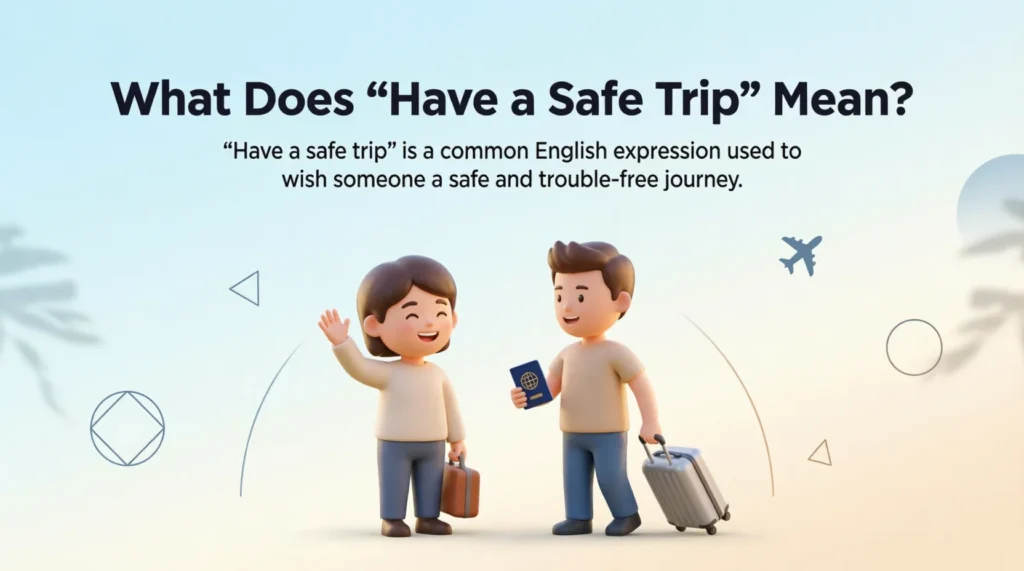
What Does “Have a Safe Trip” Mean?
“Have a safe trip” is a common English expression used to wish someone a safe and trouble-free journey.
The phrase contains:
- Have — an imperative verb used to give a friendly wish or good hope.
- A safe trip — the noun phrase describing the journey.
For example:
Have a safe trip! I’ll see you when you get back.
It does not mean that the speaker is giving an instruction about how to travel. Instead, it is a polite and caring way to express a good wish.
You can use it before a short drive, a flight, a train journey, a road trip, or even a long international vacation.
When to Use “Have a Safe Trip”
“Have a safe trip” works in many situations because it is simple and polite. You can say it when a friend is leaving, when a coworker is traveling for work, or when a family member is going on vacation.
Formal use
You can use it with coworkers, clients, managers, or professional contacts.
Example:
Have a safe trip, and I look forward to speaking with you next week.
Informal use
With friends and family, it sounds warm and natural.
Example:
Have a safe trip! Text me when you arrive.
Written use
It works well in emails, text messages, cards, and social media messages.
Example:
Wishing you a safe trip and a wonderful vacation!
Spoken use
It is especially common when saying goodbye to someone who is leaving.
Example:
Alright, take care. Have a safe trip!
The phrase is flexible, but you can choose a different expression when you want to show more excitement, warmth, concern, or professionalism.
Is It Professional/Polite to Say “Have a Safe Trip”?
Yes. “Have a safe trip” is both polite and professional.
It does not sound too formal, so it works well in everyday workplace communication. You can say it to a coworker, manager, business partner, or client.
For a more polished business message, you can add another positive wish:
Have a safe trip, and I hope you have a productive week.
Or:
Wishing you a safe and pleasant journey.
The second example sounds more formal and is useful in business emails or professional letters.
One small point matters: avoid making the phrase sound overly worried. If someone is simply taking a normal business flight, saying something extremely serious about danger may sound strange. In most professional situations, a simple and positive expression is best.
Pros and Cons of Using “Have a Safe Trip”
Pros
- Easy to understand: English learners and native speakers understand it immediately.
- Polite: It shows care without being too personal.
- Versatile: You can use it in formal and informal situations.
- Natural: It is a normal phrase in everyday English.
- Short: It works well in texts, emails, and spoken conversations.
Cons
- Common: It can sound repetitive if you use it often.
- Not very personal: It may not express much emotion.
- Limited tone: It does not strongly show excitement, affection, or celebration.
- Less expressive: Sometimes a more specific phrase fits the situation better.
That is why learning synonyms for “have a safe trip” can make your English more varied and natural.

19 Other Ways to Say “Have a Safe Trip”
1. Safe travels!
Meaning: A short wish for someone’s journey to be safe.
Explanation: “Safe travels!” is one of the most popular alternatives to “have a safe trip.” It sounds friendly, natural, and slightly more modern. It can refer to almost any type of travel.
Example Sentence:
Safe travels! I hope you have a great time in London.
Best Use: Informal, casual, friendly, and general travel situations.
Worst Use: Very formal documents where a more traditional phrase is expected.
Tone: Friendly
2. Wishing you a safe journey.
Meaning: A polite wish that someone has a safe journey.
Explanation: This is a more polished alternative. It is especially useful when writing to someone in a professional setting or when you want your message to sound thoughtful.
Example Sentence:
Wishing you a safe journey and a successful conference.
Best Use: Formal, business, written communication.
Worst Use: Very casual conversations with close friends, where it may sound slightly formal.
Tone: Formal
3. Have a pleasant journey.
Meaning: A wish for someone to have a comfortable and enjoyable trip.
Explanation: This phrase focuses on the overall travel experience, not only safety. “Pleasant” suggests comfort, ease, and enjoyment.
Example Sentence:
Have a pleasant journey, and we hope to see you again soon.
Best Use: Formal, business, customer service.
Worst Use: Very casual text messages where shorter language feels more natural.
Tone: Formal
4. Take care on your trip.
Meaning: A caring request or wish for someone to stay safe while traveling.
Explanation: This phrase sounds personal and warm. “Take care” is often used when someone is leaving, so adding “on your trip” makes the travel context clear.
Example Sentence:
Take care on your trip, and let me know when you arrive.
Best Use: Friends, family, coworkers.
Worst Use: Highly formal business writing.
Tone: Friendly
5. Travel safely.
Meaning: A direct wish or reminder to stay safe while traveling.
Explanation: “Travel safely” is simple and clear. It can sound slightly more direct than “have a safe trip.” It is useful when safety is the main concern.
Example Sentence:
Travel safely, and don’t forget to call when you get there.
Best Use: Casual, friendly, spoken English.
Worst Use: Very emotional or celebratory situations where you want to express more warmth.
Tone: Neutral
6. Wishing you safe travels.
Meaning: A warm wish for a safe journey.
Explanation: This is a slightly more polished version of “Safe travels!” It works especially well in written messages. It can sound caring without becoming overly personal.
Example Sentence:
Wishing you safe travels and a wonderful vacation.
Best Use: Written, formal, business, friendly.
Worst Use: Extremely casual conversations where a quick “Safe travels!” is enough.
Tone: Friendly
7. Enjoy your trip!
Meaning: A wish that someone has fun and enjoys their journey.
Explanation: Unlike “have a safe trip,” this phrase focuses on enjoyment rather than safety. It is perfect when someone is going on vacation or visiting an exciting place.
Example Sentence:
Enjoy your trip! I hope you get to see all the places on your list.
Best Use: Casual, friendly, vacation-related conversations.
Worst Use: Situations where safety is the main concern.
Tone: Friendly
8. Hope you have a smooth journey.
Meaning: A wish that the trip happens without delays, problems, or stress.
Explanation: “Smooth journey” suggests an easy travel experience. It is useful for flights, road trips, train journeys, and business travel.
Example Sentence:
Hope you have a smooth journey and arrive on time.
Best Use: Business, friendly, professional.
Worst Use: Situations where you only want to express excitement.
Tone: Neutral
9. Bon voyage!
Meaning: A traditional expression meaning “have a good journey.”
Explanation: “Bon voyage!” comes from French, but it is also used in English. It often sounds cheerful and a little playful.
Example Sentence:
Bon voyage! Have an amazing time in Paris.
Best Use: Friendly, casual, travel-related occasions.
Worst Use: Very serious corporate communication.
Tone: Friendly
10. Have a good journey.
Meaning: A wish for someone to have a good trip.
Explanation: This is a simple alternative that focuses on the overall experience. It is easy for English learners to use and works in many everyday situations.
Example Sentence:
Have a good journey, and I hope everything goes well.
Best Use: Casual, neutral, spoken English.
Worst Use: Formal business letters when a more polished phrase would fit better.
Tone: Neutral
11. Hope you get there safely.
Meaning: A wish that someone reaches their destination safely.
Explanation: This phrase focuses on arrival rather than the entire trip. It sounds natural when someone is driving or traveling a long distance.
Example Sentence:
Hope you get there safely. Send me a message when you arrive.
Best Use: Friends, family, coworkers, road trips.
Worst Use: Formal announcements or ceremonial writing.
Tone: Friendly
12. Have a safe flight.
Meaning: A wish for someone to have a safe airplane journey.
Explanation: Use this when you know the person is flying. It is more specific than “have a safe trip.”
Example Sentence:
Have a safe flight! Enjoy your time in New York.
Best Use: Casual, friendly, business travel.
Worst Use: When the person is traveling by car, train, or bus.
Tone: Friendly
13. Have a safe drive.
Meaning: A wish that someone drives safely.
Explanation: This phrase is ideal for road trips or shorter journeys by car. It directly matches the type of transportation.
Example Sentence:
Have a safe drive home. The roads may be busy tonight.
Best Use: Casual, family, friends, coworkers.
Worst Use: Air or train travel.
Tone: Friendly
14. I hope you have a safe journey.
Meaning: A personal and polite wish for safe travel.
Explanation: Adding “I hope” makes the sentence sound more personal. It can work in both professional and personal communication.
Example Sentence:
I hope you have a safe journey and a successful meeting.
Best Use: Business, professional emails, friendly communication.
Worst Use: Very short messages where a simple phrase is better.
Tone: Neutral
15. Wishing you a smooth and safe trip.
Meaning: A wish for safe travel without delays or problems.
Explanation: This combines two positive ideas: safety and a smooth experience. It is useful when someone has a busy travel schedule.
Example Sentence:
Wishing you a smooth and safe trip to the conference.
Best Use: Business, formal, written communication.
Worst Use: Highly casual conversations where it may sound too polished.
Tone: Formal
16. Take care and enjoy your trip!
Meaning: A warm wish for safety and enjoyment.
Explanation: This phrase combines care with a positive travel wish. It is a good choice when you want your goodbye to feel more personal.
Example Sentence:
Take care and enjoy your trip! I can’t wait to hear about it.
Best Use: Friends, family, close coworkers.
Worst Use: Formal business letters.
Tone: Friendly
17. Wishing you a wonderful trip.
Meaning: A wish that someone has a very enjoyable journey.
Explanation: This expression focuses on happiness and enjoyment rather than safety. It is especially suitable for vacations, holidays, and special trips.
Example Sentence:
Wishing you a wonderful trip and lots of great memories.
Best Use: Friendly, personal, written messages.
Worst Use: Situations where the main concern is safe arrival.
Tone: Friendly
18. Have a safe and enjoyable journey.
Meaning: A wish for both safety and a pleasant travel experience.
Explanation: This is a balanced phrase. It combines the meaning of “have a safe trip” with the idea of enjoying the journey.
Example Sentence:
Have a safe and enjoyable journey, and we look forward to welcoming you back.
Best Use: Formal, business, customer communication.
Worst Use: Very casual texting with close friends.
Tone: Formal
19. Get there safely!
Meaning: A short wish that someone reaches their destination without problems.
Explanation: This is natural and conversational. It is especially common when saying goodbye to someone who is driving or leaving for a nearby destination.
Example Sentence:
Get there safely! Give me a call when you arrive.
Best Use: Casual, spoken English, friends, and family.
Worst Use: Formal business correspondence.
Tone: Friendly
Quick Comparison of the Best Alternatives
| Alternative | Tone | Best Setting | Main Focus |
|---|---|---|---|
| Safe travels! | Friendly | Casual | Safety |
| Wishing you a safe journey. | Formal | Business | Safety |
| Enjoy your trip! | Friendly | Casual | Enjoyment |
| Hope you have a smooth journey. | Neutral | Business/Friendly | Easy travel |
| Have a safe and enjoyable journey. | Formal | Professional | Safety + enjoyment |
| Get there safely! | Friendly | Casual | Safe arrival |
| Wishing you safe travels. | Friendly | Written | Safety |
FAQs
What is the most natural way to say “have a safe trip”?
“Safe travels!” is one of the most natural and common alternatives. It is short, friendly, and works in many everyday situations.
What is a formal way to say “have a safe trip”?
You can say “Wishing you a safe journey” or “Have a safe and enjoyable journey.” Both sound polished and professional.
What can I say to a friend instead of “have a safe trip”?
Try “Safe travels!”, “Take care on your trip!”, “Enjoy your trip!”, or “Get there safely!”
Is “safe travels” grammatically correct?
Yes. “Safe travels” is a standard English expression. It is commonly used as a short good wish before someone travels.
What is another way to say “have a safe trip” in a text?
For a text message, “Safe travels!”, “Get there safely!”, or “Have a safe flight!” are natural choices. Pick the one that matches the person’s type of travel.
Conclusion
Knowing other ways to say have a safe trip can make your English sound more natural and expressive. “Have a safe trip” is already polite and correct, but alternatives such as “Safe travels!”, “Wishing you a safe journey,” and “Get there safely!” let you match your words to the situation.
Use friendly phrases with friends and family, and choose polished expressions for business communication.
The key is to think about your relationship with the listener, the type of trip, and the tone you want.
Try using a different phrase the next time someone travels.
With practice, your English will become more flexible and confident.

Alden Rowen is the author behind Meanings Path, sharing clear and reliable insights into the meanings, origins, and significance of words, names, and phrases. His goal is to make language simple, useful, and easy to understand.