The phrase “Have a great weekend” is a warm and friendly way to wish someone an enjoyable weekend.
It is common in everyday conversations, emails, workplace chats, and social messages.
While it is perfectly natural, using different expressions can make your English sound more fluent and flexible.
Learning other ways to say have a great weekend is useful for English learners and professionals.
Different phrases can show different feelings.
Some sound friendly and casual, while others are better for clients, coworkers, managers, or formal emails.
The right words can also make your message feel more personal.
In this guide, you will learn 24 alternatives to have a great weekend.
Each phrase includes its meaning, explanation, example, best use, worst use, and tone.
These synonyms for have a great weekend will help you choose the right expression for almost any situation in 2026.
What Does “Have a Great Weekend” Mean?
“Have a great weekend” means that you hope someone enjoys their weekend.
The phrase is grammatically correct and uses the imperative form of the verb “have.” Here, “have” does not mean to own something. It means to experience or enjoy something.
For example:
- Have a great weekend!
- I hope you have a great weekend.
- Have a wonderful weekend with your family.
The phrase can be used by itself or as part of a longer sentence. It is usually positive, polite, and friendly.
“Great” is an adjective that describes the weekend as enjoyable or pleasant. You can replace “great” with words such as wonderful, fantastic, relaxing, enjoyable, lovely, or fun to create natural alternatives.
When to Use “Have a Great Weekend”
“Have a great weekend” works in many situations.
Formal Use
You can use it at the end of a professional email when the relationship is friendly but still professional.
Example:
Thank you for your help. Have a great weekend.
It is polite without sounding too formal.
Informal Use
Friends, family members, and classmates can use the phrase freely.
Example:
See you Monday! Have a great weekend!
Written Use
The phrase is common in emails, text messages, workplace chats, newsletters, and social media messages.
Spoken Use
It is also very natural in face-to-face conversations. People often use it when saying goodbye on Friday.
Example:
Thanks for coming in today. Have a great weekend!
Is It Professional or Polite to Say “Have a Great Weekend”?
Yes. “Have a great weekend” is both polite and professional in most workplace situations.
It is especially useful when ending an email or conversation before the weekend. It creates a friendly tone without being too personal.
For example:
Thank you for the update. I’ll review the document on Monday. Have a great weekend.
However, some situations may require a more formal expression. When communicating with a senior executive, new client, or highly formal organization, you may prefer:
I hope you have a pleasant weekend.
For close coworkers or friends, a more casual option may sound better:
Enjoy your weekend!
The best choice depends on your relationship with the person and the situation.
Pros and Cons of Using “Have a Great Weekend”
Pros
- It is simple and natural.
- It works in both spoken and written English.
- It sounds friendly and polite.
- It is suitable for many workplace situations.
- Most English speakers understand it immediately.
- It creates a positive ending to a conversation.
Cons
- It can become repetitive if you use it every Friday.
- It may sound slightly generic in a personal message.
- It does not always show a specific feeling or wish.
- A more formal situation may require a different expression.
- A close friend may prefer something more casual or personal.
24 Other Ways to Say “Have a Great Weekend”
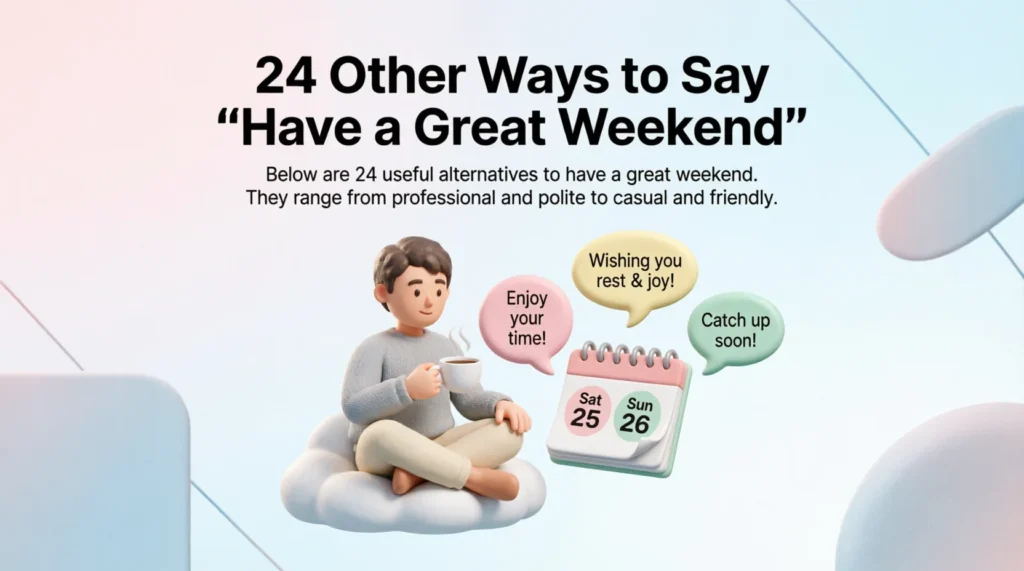
Below are 24 useful alternatives to have a great weekend. They range from professional and polite to casual and friendly.
1. Enjoy Your Weekend
Phrase: Enjoy your weekend!
Meaning: I hope you enjoy your weekend.
Explanation: This is one of the most natural alternatives. It is short, positive, and easy to use.
Example Sentence: Thanks for your help today. Enjoy your weekend!
Best Use: Friendly / Business / Casual
Worst Use: Extremely formal letters or official notices
Tone: Friendly
2. Have a Wonderful Weekend
Phrase: Have a wonderful weekend!
Meaning: I hope your weekend is very enjoyable.
Explanation: “Wonderful” makes the message warmer than “great.” It is still natural and professional.
Example Sentence: Thank you for meeting with me. Have a wonderful weekend!
Best Use: Formal / Friendly / Business
Worst Use: Very serious or highly formal announcements
Tone: Warm
3. Have a Fantastic Weekend
Phrase: Have a fantastic weekend!
Meaning: I hope you have a very enjoyable weekend.
Explanation: “Fantastic” adds more energy and enthusiasm. It is especially common in friendly communication.
Example Sentence: You worked hard this week. Have a fantastic weekend!
Best Use: Casual / Friendly
Worst Use: Highly formal business correspondence
Tone: Enthusiastic
4. Enjoy Your Time Off
Phrase: Enjoy your time off!
Meaning: I hope you enjoy your break from work.
Explanation: This is useful when someone has finished work and is starting a break.
Example Sentence: You have completed everything for today. Enjoy your time off!
Best Use: Business / Workplace
Worst Use: When the person is not actually taking time away from work
Tone: Friendly / Professional
5. Have a Relaxing Weekend
Phrase: Have a relaxing weekend!
Meaning: I hope you get plenty of rest during the weekend.
Explanation: This phrase focuses on rest and peace rather than excitement.
Example Sentence: You have had a busy week, so have a relaxing weekend.
Best Use: Friendly / Workplace
Worst Use: When you want to encourage an exciting activity
Tone: Warm
6. Wishing You a Wonderful Weekend
Phrase: Wishing you a wonderful weekend!
Meaning: I hope your weekend is pleasant and enjoyable.
Explanation: This is a polished expression that works well in emails and written messages.
Example Sentence: Thank you for your continued support. Wishing you a wonderful weekend!
Best Use: Formal / Business / Written
Worst Use: Very casual conversations with close friends
Tone: Polite
7. I Hope You Have a Great Weekend
Phrase: I hope you have a great weekend.
Meaning: I hope your weekend is enjoyable.
Explanation: Adding “I hope” makes the sentence sound thoughtful and complete.
Example Sentence: Thank you for taking the time to speak with me. I hope you have a great weekend.
Best Use: Formal / Business
Worst Use: Short, fast-paced casual conversations where a shorter phrase is better
Tone: Professional / Warm
8. Have a Lovely Weekend
Phrase: Have a lovely weekend!
Meaning: I hope you have a pleasant and enjoyable weekend.
Explanation: “Lovely” sounds warm and gentle. It is especially common in British English.
Example Sentence: It was lovely speaking with you. Have a lovely weekend!
Best Use: Friendly / Formal
Worst Use: Very direct corporate communication when a neutral tone is preferred
Tone: Warm
9. Have a Pleasant Weekend
Phrase: Have a pleasant weekend.
Meaning: I hope your weekend is pleasant.
Explanation: This is a more neutral and formal alternative. It works well with clients and professional contacts.
Example Sentence: Thank you for your assistance. Have a pleasant weekend.
Best Use: Formal / Business
Worst Use: Very close friends
Tone: Formal / Neutral
10. Enjoy the Weekend
Phrase: Enjoy the weekend!
Meaning: I hope you enjoy the weekend.
Explanation: This is a short and natural expression. It can be used when the weekend is already approaching or has started.
Example Sentence: That’s all for today. Enjoy the weekend!
Best Use: Casual / Workplace
Worst Use: Formal letters that require a more polished closing
Tone: Friendly
11. Make the Most of Your Weekend
Phrase: Make the most of your weekend!
Meaning: I hope you use your weekend well and enjoy it fully.
Explanation: This phrase encourages someone to enjoy their free time.
Example Sentence: You deserve a break after such a busy week. Make the most of your weekend!
Best Use: Friendly / Casual
Worst Use: Sensitive situations where encouragement may seem inappropriate
Tone: Encouraging
12. Have a Fun Weekend
Phrase: Have a fun weekend!
Meaning: I hope you have an enjoyable and exciting weekend.
Explanation: This is simple and informal. It works especially well with friends and younger people.
Example Sentence: Have a fun weekend with your friends!
Best Use: Casual / Friendly
Worst Use: Formal business emails
Tone: Casual
13. Enjoy Your Break
Phrase: Enjoy your break!
Meaning: I hope you enjoy your time away from work or normal duties.
Explanation: This can refer to a weekend, holiday, or short break. Context makes the meaning clear.
Example Sentence: Everything is finished for today. Enjoy your break!
Best Use: Workplace / Friendly
Worst Use: When no break is actually happening
Tone: Friendly / Neutral
14. Have a Wonderful Time This Weekend
Phrase: Have a wonderful time this weekend!
Meaning: I hope you enjoy your activities during the weekend.
Explanation: This sounds more personal because it focuses on the person’s experience.
Example Sentence: I hope you have a wonderful time this weekend at the festival.
Best Use: Friendly / Personal
Worst Use: Highly formal corporate emails
Tone: Warm
15. Hope You Have a Fun Weekend
Phrase: Hope you have a fun weekend!
Meaning: I hope your weekend is enjoyable.
Explanation: This is a shortened form of “I hope you have a fun weekend.” It is common in texts and chats.
Example Sentence: Thanks for everything today. Hope you have a fun weekend!
Best Use: Casual / Texting
Worst Use: Formal business letters
Tone: Friendly
16. Have a Restful Weekend
Phrase: Have a restful weekend.
Meaning: I hope your weekend gives you time to rest.
Explanation: This is a thoughtful choice for someone who has had a stressful or busy week.
Example Sentence: You have been working very hard lately. Have a restful weekend.
Best Use: Professional / Friendly
Worst Use: Celebratory messages where an energetic tone is expected
Tone: Caring / Neutral
17. Enjoy Some Well-Deserved Time Off
Phrase: Enjoy some well-deserved time off!
Meaning: I hope you enjoy the break you have earned.
Explanation: This phrase recognizes someone’s hard work. It can make a workplace message feel more personal.
Example Sentence: You handled the project brilliantly. Enjoy some well-deserved time off!
Best Use: Business / Workplace
Worst Use: When you do not know whether the person has time off
Tone: Appreciative
18. Wishing You a Relaxing Weekend
Phrase: Wishing you a relaxing weekend.
Meaning: I hope your weekend is calm and restful.
Explanation: This is a polished alternative that works well in professional emails.
Example Sentence: Thank you for your patience and support. Wishing you a relaxing weekend.
Best Use: Formal / Business
Worst Use: Very casual texting with close friends
Tone: Polite / Warm
19. Have a Good One
Phrase: Have a good one!
Meaning: I hope you have a good time.
Explanation: This is a very casual expression. The exact meaning depends on context, but before the weekend it can mean “have a good weekend.”
Example Sentence: I’ll see you on Monday. Have a good one!
Best Use: Casual / Friendly
Worst Use: Formal business communication
Tone: Casual
20. Take Care and Enjoy Your Weekend
Phrase: Take care and enjoy your weekend!
Meaning: I hope you stay well and enjoy your weekend.
Explanation: This combines a caring goodbye with a weekend wish.
Example Sentence: Thanks for catching up today. Take care and enjoy your weekend!
Best Use: Friendly / Casual
Worst Use: Highly formal correspondence
Tone: Caring / Friendly
21. Enjoy Your Weekend Ahead
Phrase: Enjoy your weekend ahead!
Meaning: I hope you enjoy the coming weekend.
Explanation: This expression is understandable, but “Have a great weekend ahead” or simply “Enjoy your weekend” often sounds more natural. Use it carefully.
Example Sentence: Thanks for the update, and enjoy your weekend ahead.
Best Use: Friendly / Informal
Worst Use: Formal business writing
Tone: Friendly
22. I Hope You Enjoy the Weekend
Phrase: I hope you enjoy the weekend.
Meaning: I hope you have a pleasant weekend.
Explanation: This is a neutral and flexible option. It is especially useful when you want a polite sentence for professional communication.
Example Sentence: Thank you for your quick response. I hope you enjoy the weekend.
Best Use: Formal / Business / Written
Worst Use: Very informal conversations where a shorter phrase feels more natural
Tone: Neutral / Polite
23. Have an Amazing Weekend
Phrase: Have an amazing weekend!
Meaning: I hope your weekend is especially enjoyable.
Explanation: “Amazing” adds excitement and positive energy. It is more expressive than “good” or “pleasant.”
Example Sentence: You finally have some free time. Have an amazing weekend!
Best Use: Friendly / Casual
Worst Use: Very formal professional communication
Tone: Enthusiastic
24. Enjoy Your Weekend and See You Monday
Phrase: Enjoy your weekend and see you Monday!
Meaning: I hope you enjoy your weekend, and I expect to see you on Monday.
Explanation: This is useful at the end of a workweek when you know you will meet the person again on Monday.
Example Sentence: That covers everything for today. Enjoy your weekend and see you Monday!
Best Use: Workplace / Friendly
Worst Use: When you will not see the person on Monday
Tone: Friendly / Professional
Quick Comparison of the Best Alternatives
| Alternative | Tone | Best Setting |
|---|---|---|
| Enjoy your weekend! | Friendly | Everyday / Workplace |
| Have a wonderful weekend! | Warm | Professional / Personal |
| Have a pleasant weekend. | Formal | Business |
| Wishing you a wonderful weekend! | Polite | Emails / Business |
| Have a relaxing weekend! | Caring | Workplace / Personal |
| Have a fun weekend! | Casual | Friends / Texts |
| Enjoy your time off! | Friendly | Workplace |
How to Choose the Right Alternative
Choosing among these other ways to say have a great weekend depends on the person and situation.
For a professional email, try:
- Have a pleasant weekend.
- I hope you have a great weekend.
- Wishing you a wonderful weekend.
- I hope you enjoy the weekend.
For a coworker, you can use:
- Enjoy your weekend!
- Enjoy your time off!
- Have a relaxing weekend!
- Enjoy your weekend and see you Monday!
For a friend, more casual options are natural:
- Have an amazing weekend!
- Have a fun weekend!
- Have a good one!
- Make the most of your weekend!
For someone who has worked very hard, a thoughtful phrase is better:
“Enjoy some well-deserved time off!”
For someone who needs rest, use:
“Have a restful weekend.”
This small change in vocabulary can make your English sound more natural and considerate.
FAQs
1. What is another way to say “have a great weekend”?
“Enjoy your weekend!” is one of the simplest and most natural alternatives. Other choices include “Have a wonderful weekend,” “Have a relaxing weekend,” and “Wishing you a wonderful weekend.”
2. What is a professional way to say “have a great weekend”?
You can say “Have a pleasant weekend,” “I hope you enjoy the weekend,” or “Wishing you a wonderful weekend.” These options work well in professional emails.
3. Is “enjoy your weekend” better than “have a great weekend”?
Neither is always better. “Enjoy your weekend” is shorter and direct, while “Have a great weekend” sounds warm and familiar. Both are natural.
4. How do I say “have a great weekend” in a text?
For texting, try “Have an amazing weekend!”, “Have a fun weekend!”, “Enjoy your weekend!”, or “Have a good one!”
5. What is a formal way to wish someone a good weekend?
“I hope you have a pleasant weekend” is a polite and formal choice. “Wishing you a relaxing weekend” is another professional option.
Conclusion
Learning different alternatives to have a great weekend can make your English more flexible and natural.
The best phrase depends on your audience, relationship, and communication style.
Use “Have a pleasant weekend” for formal situations, “Enjoy your weekend” for everyday communication, and “Have an amazing weekend” with friends.
Small changes in word choice can make your messages sound more thoughtful and confident.
Try these synonyms for have a great weekend in emails, workplace conversations, texts, and everyday speech.
With practice, you will know which expression fits each situation naturally.

Alden Rowen is the author behind Meanings Path, sharing clear and reliable insights into the meanings, origins, and significance of words, names, and phrases. His goal is to make language simple, useful, and easy to understand.