

When someone loses a loved one, finding the right words can be difficult. “I am sorry for your loss” is a common and respectful phrase used to show sympathy.
However, you may sometimes want to use different words that feel more personal, warm, or appropriate for the situation.
Learning other ways to say “I am sorry for your loss” can help you communicate with greater care and confidence.
The right phrase depends on your relationship with the person, the setting, and how formal the message needs to be.
A short text to a close friend may sound different from a sympathy message to a colleague.
In this guide, you will learn 24 alternatives to “I am sorry for your loss”, including formal, professional, friendly, and personal expressions.
These phrases can help you express sympathy naturally while showing genuine respect and kindness.
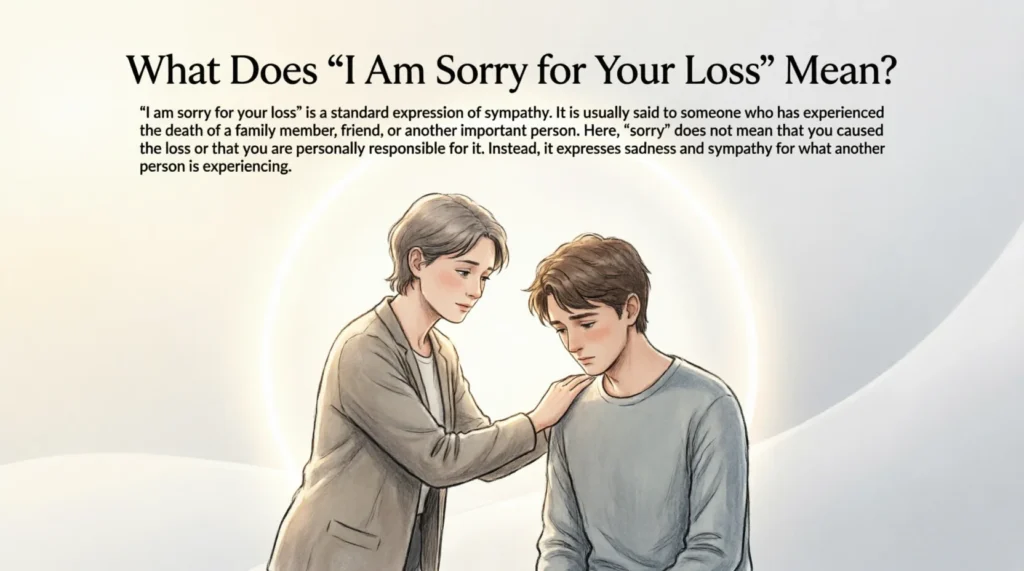
What Does “I Am Sorry for Your Loss” Mean?
“I am sorry for your loss” is a standard expression of sympathy. It is usually said to someone who has experienced the death of a family member, friend, or another important person.
Here, “sorry” does not mean that you caused the loss or that you are personally responsible for it. Instead, it expresses sadness and sympathy for what another person is experiencing.
The phrase is grammatically simple:
- I = subject
- am = form of the verb “to be”
- sorry = adjective expressing sympathy or sadness
- for your loss = phrase identifying the difficult event
For example:
“I am sorry for your loss. Please let me know if there is anything I can do.”
The phrase is widely accepted in both spoken and written English.
When to Use “I Am Sorry for Your Loss”
You can use “I am sorry for your loss” in many situations involving grief.
Formal Situations
The phrase works well in formal sympathy cards, workplace messages, emails, and professional conversations.
Example:
“I am sorry for your loss. Please accept my deepest sympathy during this difficult time.”
Informal Situations
With friends and family, you may want something warmer and more personal.
Example:
“I’m so sorry. I’m thinking about you and your family.”
Written Communication
It is appropriate for:
- Sympathy cards
- Emails
- Text messages
- Social media messages
- Workplace messages
- Condolence notes
Spoken Communication
You can also say it when speaking to someone face-to-face or on the phone.
Because grief is deeply personal, keep your words sincere and avoid making the conversation about yourself.
Is It Professional and Polite to Say “I Am Sorry for Your Loss”?
Yes. “I am sorry for your loss” is professional, polite, and respectful.
It is especially suitable when speaking to a colleague, manager, client, employee, or business contact who has experienced a bereavement.
However, professional communication should usually remain simple. You do not need to give a long speech. A short, sincere message is often more appropriate.
For example:
“I was saddened to hear about your loss. Please accept my sincere condolences.”
This sounds respectful without being overly personal.
In professional settings, avoid phrases that make assumptions about the person’s feelings, beliefs, or grieving process. For example, telling someone that they “should be strong” or that “everything happens for a reason” may not feel comforting.
Pros and Cons of Using “I Am Sorry for Your Loss”
Pros
- It is respectful.
- It is widely understood.
- It works in formal and informal situations.
- It is easy for English learners to use.
- It does not make assumptions about the person’s grief.
- It is appropriate for written and spoken communication.
Cons
- It can sound generic when used without a personal message.
- It may feel repetitive if several people use the same phrase.
- It may not fully express your relationship with the person who is grieving.
- Some situations call for a warmer or more personal message.
Using alternatives can help you choose words that better match the relationship and situation.

24 Other Ways to Say “I Am Sorry for Your Loss”
Below are 24 thoughtful synonyms for “I am sorry for your loss”. Each phrase has a slightly different tone and purpose.
1. Phrase: My deepest condolences
Meaning: A sincere expression of sympathy after someone’s death.
Explanation: “My deepest condolences” is one of the most common formal alternatives. It communicates serious sympathy and respect.
Example Sentence: “Please accept my deepest condolences during this difficult time.”
Best Use: Formal, Business, Written
Worst Use: Very casual conversations with close friends
Tone: Formal
2. Phrase: Please accept my sincere condolences
Meaning: A polite and heartfelt expression of sympathy.
Explanation: This is a strong choice for professional emails, sympathy cards, and messages to someone you do not know very well.
Example Sentence: “Please accept my sincere condolences to you and your family.”
Best Use: Formal, Business
Worst Use: Very casual texting
Tone: Formal
3. Phrase: My thoughts are with you
Meaning: You are thinking about and supporting someone during a difficult time.
Explanation: This phrase is gentle and supportive. It does not focus only on the death but also on the person’s emotional experience.
Example Sentence: “My thoughts are with you and your family during this difficult time.”
Best Use: Formal, Informal, Written
Worst Use: Situations where a very direct condolence is expected
Tone: Warm and Neutral
4. Phrase: You have my deepest sympathy
Meaning: You are expressing strong feelings of sadness and concern.
Explanation: This is a respectful phrase that works well in formal communication. It sounds sincere without being overly personal.
Example Sentence: “You have my deepest sympathy as you and your family go through this difficult time.”
Best Use: Formal, Business
Worst Use: Light or casual conversations
Tone: Formal
5. Phrase: I’m thinking of you
Meaning: You are keeping the grieving person in your thoughts.
Explanation: This short phrase feels personal and caring. It works particularly well with friends, family, and people you know well.
Example Sentence: “I’m thinking of you and hoping you find comfort in the days ahead.”
Best Use: Informal, Casual, Written
Worst Use: Very formal corporate communication by itself
Tone: Friendly
6. Phrase: I’m thinking of you and your family
Meaning: You are showing sympathy and support for the whole family.
Explanation: Adding “and your family” makes the message more inclusive and caring.
Example Sentence: “I’m thinking of you and your family during this heartbreaking time.”
Best Use: Informal, Written
Worst Use: Extremely formal notices
Tone: Warm
7. Phrase: My heart goes out to you
Meaning: You feel deep sympathy for someone’s suffering.
Explanation: This expression is more emotional than a standard condolence. It is best for people you know personally.
Example Sentence: “My heart goes out to you and everyone who loved her.”
Best Use: Informal, Personal
Worst Use: Strictly formal business emails
Tone: Emphatic
8. Phrase: I’m here for you
Meaning: You are offering emotional or practical support.
Explanation: This phrase focuses on support rather than simply expressing sadness. It can be especially comforting when followed by a specific offer of help.
Example Sentence: “I’m here for you if you need someone to talk to.”
Best Use: Informal, Personal
Worst Use: A formal business condolence message by itself
Tone: Friendly
9. Phrase: I’m here if you need anything
Meaning: You are offering help and support.
Explanation: This phrase shows that you are available. It can make a condolence message more useful and personal.
Example Sentence: “I’m so sorry for what you’re going through. I’m here if you need anything.”
Best Use: Informal, Personal
Worst Use: Very distant professional relationships
Tone: Friendly
10. Phrase: I was saddened to hear about your loss
Meaning: You felt sadness after learning about someone’s loss.
Explanation: This is a polished and respectful alternative that works especially well in professional communication.
Example Sentence: “I was saddened to hear about your loss. Please accept my sincere condolences.”
Best Use: Formal, Business, Written
Worst Use: Very casual text messages
Tone: Formal
11. Phrase: I was deeply saddened to hear the news
Meaning: You felt very sad after hearing about someone’s death.
Explanation: The word “deeply” adds emotional weight. Use it when you want to sound especially sincere.
Example Sentence: “I was deeply saddened to hear the news. My thoughts are with you.”
Best Use: Formal, Written
Worst Use: Casual conversations where a simple message is better
Tone: Emphatic
12. Phrase: Please know that I’m thinking of you
Meaning: You want someone to know that they are in your thoughts.
Explanation: This phrase sounds gentle and supportive. It can make a written condolence feel more personal.
Example Sentence: “Please know that I’m thinking of you and your family at this difficult time.”
Best Use: Formal, Informal, Written
Worst Use: Very brief business notices
Tone: Warm
13. Phrase: Sending you my heartfelt condolences
Meaning: You are sending sincere sympathy.
Explanation: “Heartfelt” shows that your feelings are genuine. This phrase works well in cards, emails, and social media messages.
Example Sentence: “Sending you my heartfelt condolences and wishing you peace and comfort.”
Best Use: Formal, Written
Worst Use: Highly casual conversations
Tone: Warm and Formal
14. Phrase: Wishing you peace and comfort
Meaning: You hope the grieving person finds peace and comfort.
Explanation: This is a gentle alternative that focuses on the person’s well-being rather than repeating the word “loss.”
Example Sentence: “Wishing you peace and comfort as you remember your loved one.”
Best Use: Formal, Written, Personal
Worst Use: Very direct spoken conversations when a personal response is needed first
Tone: Warm
15. Phrase: I’m so sorry to hear this
Meaning: You are expressing sadness after hearing upsetting news.
Explanation: This is a natural and simple phrase for friends, colleagues, and acquaintances. Context makes the meaning clear.
Example Sentence: “I’m so sorry to hear this. I’m thinking of you.”
Best Use: Informal, Spoken, Text
Worst Use: Formal condolence letters where more detail is appropriate
Tone: Friendly
16. Phrase: I’m so sorry you’re going through this
Meaning: You feel sympathy for someone’s difficult experience.
Explanation: This phrase focuses on the person’s current pain. It sounds caring and conversational.
Example Sentence: “I’m so sorry you’re going through this. Please take all the time you need.”
Best Use: Informal, Personal
Worst Use: Formal corporate announcements
Tone: Friendly
17. Phrase: I’m sending you love and strength
Meaning: You are offering emotional support and encouragement.
Explanation: This phrase is warm and personal. It can be suitable for close friends or family members.
Example Sentence: “I’m sending you love and strength during this incredibly difficult time.”
Best Use: Informal, Personal
Worst Use: Formal business correspondence
Tone: Emphatic
18. Phrase: May you find comfort in the memories you shared
Meaning: You hope happy memories provide comfort after someone’s death.
Explanation: This phrase gently recognizes the relationship between the grieving person and the deceased.
Example Sentence: “May you find comfort in the memories you shared with your father.”
Best Use: Personal, Written
Worst Use: Very short professional messages
Tone: Warm
19. Phrase: I hope you find peace during this difficult time
Meaning: You hope the grieving person experiences peace and comfort.
Explanation: This is a thoughtful phrase for sympathy cards and personal messages. It is gentle without being overly emotional.
Example Sentence: “I hope you find peace and comfort during this difficult time.”
Best Use: Formal, Informal, Written
Worst Use: Extremely casual one-line conversations
Tone: Warm and Neutral
20. Phrase: We are keeping you in our thoughts
Meaning: A group of people is thinking about and supporting someone.
Explanation: Use “we” when a team, organization, family, or group wants to express sympathy.
Example Sentence: “We are keeping you and your family in our thoughts during this difficult time.”
Best Use: Business, Formal, Written
Worst Use: A personal message from one individual
Tone: Formal and Warm
21. Phrase: Our thoughts and prayers are with you
Meaning: You are expressing sympathy and spiritual or emotional support.
Explanation: This phrase is common in condolence messages. Because it includes “prayers,” use it when you know that religious language is suitable for the person or situation.
Example Sentence: “Our thoughts and prayers are with you and your family.”
Best Use: Personal, Religious, Formal
Worst Use: Situations where religious language may not be appropriate
Tone: Warm and Emphatic
22. Phrase: Please know that you are not alone
Meaning: You are reassuring someone that support is available.
Explanation: This phrase can be comforting when the person is experiencing intense grief. It works best when you are genuinely prepared to offer support.
Example Sentence: “Please know that you are not alone, and I’m here whenever you need me.”
Best Use: Personal, Informal
Worst Use: Impersonal professional messages
Tone: Warm
23. Phrase: I’m holding you close in my thoughts
Meaning: You are thinking about someone with deep care and sympathy.
Explanation: This is an emotional and personal expression. It can work well in a sympathy card or message to someone close to you.
Example Sentence: “I’m holding you close in my thoughts as you navigate this painful time.”
Best Use: Personal, Written
Worst Use: Formal business communication
Tone: Emphatic
24. Phrase: Please accept my heartfelt sympathy
Meaning: A sincere and respectful expression of sadness and concern.
Explanation: This is one of the better formal ways to say “I am sorry for your loss.” It sounds professional while still showing genuine compassion.
Example Sentence: “Please accept my heartfelt sympathy during this difficult time.”
Best Use: Formal, Business, Written
Worst Use: Very casual texting
Tone: Formal and Warm
Quick Comparison of Top Alternatives
| Alternative | Tone | Best Setting |
|---|---|---|
| My deepest condolences | Formal | Professional or written |
| My thoughts are with you | Warm | Personal or professional |
| I’m here for you | Friendly | Close friends or family |
| I was saddened to hear about your loss | Formal | Workplace or written |
| My heart goes out to you | Emphatic | Personal |
| Wishing you peace and comfort | Warm | Cards and messages |
| Please accept my heartfelt sympathy | Formal | Business or formal |
How to Choose the Right Alternative
Choosing among these alternatives to “I am sorry for your loss” depends on the relationship and setting.
For a colleague, choose something professional such as:
“I was saddened to hear about your loss. Please accept my sincere condolences.”
For a close friend, you can be warmer:
“I’m so sorry you’re going through this. I’m here for you whenever you need me.”
For a sympathy card, consider:
“Please accept my heartfelt sympathy. Wishing you peace and comfort during this difficult time.”
For a group message, use:
“We are keeping you and your family in our thoughts.”
The most important rule is to be sincere. You do not need complicated vocabulary to express sympathy.
Common Mistakes to Avoid When Expressing Condolences
When using other ways to say “I am sorry for your loss,” avoid language that can unintentionally make the situation harder.
Avoid Making the Message About Yourself
Do not spend most of the message talking about your own experiences with death.
Avoid Giving Unwanted Advice
Phrases such as “You need to move on” or “You have to stay strong” may sound insensitive.
Avoid Making Assumptions
Do not assume how the person feels or how they should grieve.
Avoid Overly Casual Language
Expressions that work with close friends may not be suitable for a manager, client, or professional contact.
Keep It Genuine
A simple sentence can be more meaningful than a long message filled with formal words.
FAQs
What is another way to say “I am sorry for your loss”?
Some common alternatives include “My deepest condolences,” “My thoughts are with you,” “You have my deepest sympathy,” and “I was saddened to hear about your loss.”
What is the most formal way to say “I am sorry for your loss”?
“Please accept my sincere condolences” and “Please accept my heartfelt sympathy” are strong formal choices for professional and written communication.
What can I say to a friend instead of “I am sorry for your loss”?
With a close friend, you can say “I’m here for you,” “I’m so sorry you’re going through this,” or “My heart goes out to you.”
Is “my thoughts are with you” appropriate for a coworker?
Yes. “My thoughts are with you” is respectful and professional enough for most workplace situations.
Should I mention the person who died?
You can mention the deceased person’s name when appropriate. A personal sentence such as “I’ll always remember how kind John was” can make a condolence message feel sincere and meaningful.
Conclusion
Knowing other ways to say “I am sorry for your loss” helps you communicate with greater sensitivity and confidence.
While the original phrase is respectful and widely accepted, alternatives can make your message more personal, formal, warm, or supportive.
Choose your words based on your relationship with the grieving person and the setting.
For professional situations, use clear and respectful phrases such as “Please accept my sincere condolences.” For close relationships, warmer options such as “I’m here for you” may feel more natural.
Most importantly, speak sincerely and give the other person space to grieve.

Alden Rowen is the author behind Meanings Path, sharing clear and reliable insights into the meanings, origins, and significance of words, names, and phrases. His goal is to make language simple, useful, and easy to understand.