When something is amazing, surprising, or far better than expected, we often say “That’s incredible.” It is a useful phrase, but using the same expression again and again can make your English sound repetitive.
Learning other ways to say that’s incredible can help you sound more natural, confident, and expressive.
Different situations also need different words.
You may want a friendly phrase when talking to a friend, a stronger expression when reacting to exciting news, or a professional alternative during a meeting or email.
Knowing several synonyms for “that’s incredible” gives you more control over your tone.
In this guide, you will learn 24 useful alternatives to “that’s incredible”.
Each phrase includes its meaning, explanation, example, best use, worst use, and tone.
These expressions can help English learners and professionals communicate more naturally in 2026.
What Does “That’s Incredible” Mean?
“That’s incredible” is an expression used to show strong positive surprise, admiration, excitement, or amazement.
The word incredible literally means something that is difficult to believe. In everyday English, however, it often means extremely impressive, amazing, or surprising.
For example:
- “You finished the project in one day? That’s incredible!”
- “The view from the mountain is incredible.”
- “Your presentation was incredible.”
Grammatically, “That’s” is a contraction of “that is.” The phrase follows a simple structure:
That + is + adjective
Here, incredible is the adjective describing the situation, result, person, object, or experience.
When to Use “That’s Incredible”
You can use “that’s incredible” in many situations.
Formal Situations
The phrase can work in professional communication when the context is friendly and positive.
Example:
“You increased customer satisfaction by 20%? That’s incredible.”
However, in highly formal writing, a more specific phrase such as “That is an impressive achievement” may sound better.
Informal Conversations
This is one of the most common uses.
“You met your favorite actor? That’s incredible!”
It sounds natural when talking with friends, family, classmates, or coworkers.
Written English
You can use it in emails, messages, social media posts, and online conversations. The exact tone depends on the context.
Spoken English
It is especially common in speech because it is short, clear, and emotionally expressive.
Is It Professional and Polite to Say “That’s Incredible”?
Yes. “That’s incredible” is generally polite and positive.
It can be appropriate at work when you are praising an achievement, result, idea, or piece of work.
For example:
“The team completed the project ahead of schedule. That’s incredible.”
However, professional communication often benefits from being more specific. Instead of simply saying “That’s incredible,” you could say:
“That is an impressive result.”
This tells the other person exactly what you admire.
In business emails, reports, and formal presentations, expressions such as “That is an impressive achievement” may sound more polished.
Pros and Cons of Using “That’s Incredible”
Pros
- Easy to understand: Most English speakers know exactly what it means.
- Positive: It clearly shows admiration or excitement.
- Versatile: You can use it in many everyday situations.
- Natural: It is common in spoken English.
- Short: It lets you respond quickly.
Cons
- Can sound repetitive: Using it too often limits your vocabulary.
- Not always specific: It does not explain what is impressive.
- May be too casual: Some formal situations need stronger professional wording.
- Tone depends on context: It can sound sincere or exaggerated depending on delivery.
- Less precise: A specific compliment can communicate your reaction more clearly.
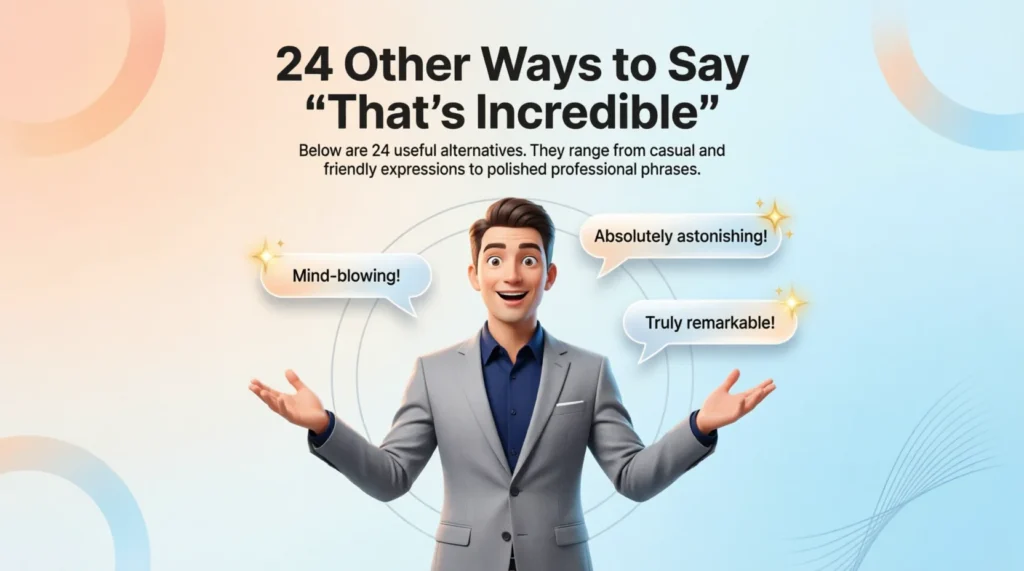
24 Other Ways to Say “That’s Incredible”
Below are 24 useful alternatives. They range from casual and friendly expressions to polished professional phrases.
1. That’s Amazing
Meaning: Something is extremely good, impressive, or surprising.
Explanation: “That’s amazing” is one of the closest alternatives to “that’s incredible.” It works well in everyday conversations and is easy for English learners to use.
Example Sentence: “You learned all those new skills in three months? That’s amazing!”
Best Use: Informal, Casual, Friendly
Worst Use: Very formal reports where a specific description is expected.
Tone: Friendly
2. That’s Awesome
Meaning: Something is very impressive or exciting.
Explanation: “That’s awesome” is common in casual American English. It shows strong enthusiasm and is often used after hearing good news.
Example Sentence: “You got tickets to the concert? That’s awesome!”
Best Use: Casual, Informal
Worst Use: Formal business letters or serious corporate reports.
Tone: Friendly
3. That’s Fantastic
Meaning: Something is extremely good or pleasing.
Explanation: This phrase shows strong approval without sounding as casual as “that’s awesome.” It can work in both personal and workplace conversations.
Example Sentence: “You completed the training early. That’s fantastic!”
Best Use: Friendly, Business
Worst Use: Situations where you need to explain exactly why something is impressive.
Tone: Emphatic
4. That’s Amazing to Hear
Meaning: The information you received is very positive or exciting.
Explanation: This is useful when someone tells you good news. It focuses on your reaction to the information.
Example Sentence: “You finally got the job? That’s amazing to hear!”
Best Use: Friendly, Informal
Worst Use: Formal reports.
Tone: Friendly
5. That’s Impressive
Meaning: Something deserves admiration because it is very good or difficult.
Explanation: “That’s impressive” is a strong choice when you want to praise someone’s ability, achievement, performance, or result.
Example Sentence: “You managed the entire event by yourself? That’s impressive.”
Best Use: Business, Formal, Friendly
Worst Use: Very emotional situations where stronger excitement is needed.
Tone: Neutral
6. That’s Remarkable
Meaning: Something is unusual and worthy of attention or admiration.
Explanation: “That’s remarkable” sounds more polished than many casual alternatives. It is useful in professional and academic settings.
Example Sentence: “The company doubled its sales in one year. That’s remarkable.”
Best Use: Formal, Business
Worst Use: Very casual conversations with close friends if you want a relaxed tone.
Tone: Formal
7. That’s Outstanding
Meaning: Something is exceptionally good.
Explanation: This phrase is useful when praising excellent work or performance. It is especially suitable in professional settings.
Example Sentence: “Your final presentation was outstanding.”
Best Use: Business, Formal
Worst Use: Casual situations where a relaxed phrase would sound more natural.
Tone: Emphatic
8. That’s Phenomenal
Meaning: Something is exceptionally impressive or successful.
Explanation: “Phenomenal” expresses very strong praise. It works well when the achievement is clearly above expectations.
Example Sentence: “The team delivered phenomenal results this quarter.”
Best Use: Business, Formal, Emphatic
Worst Use: Minor achievements that do not deserve strong praise.
Tone: Emphatic
9. That’s Incredible to See
Meaning: Something is amazing to watch or experience.
Explanation: Use this phrase when the impressive thing is happening in front of you.
Example Sentence: “Watching the team work together like that is incredible to see.”
Best Use: Spoken, Friendly
Worst Use: Formal business writing.
Tone: Friendly
10. I’m Amazed
Meaning: You feel very surprised or impressed.
Explanation: Instead of describing the thing as incredible, this phrase focuses on your personal reaction.
Example Sentence: “I’m amazed by how quickly you solved the problem.”
Best Use: Informal, Friendly, Spoken
Worst Use: Formal reports where an objective tone is required.
Tone: Emphatic
11. I’m Impressed
Meaning: You admire someone’s work, ability, or achievement.
Explanation: “I’m impressed” is useful because it sounds natural while remaining suitable for many professional situations.
Example Sentence: “I’m impressed by the quality of your research.”
Best Use: Business, Formal, Friendly
Worst Use: When you want to express extreme excitement.
Tone: Neutral
12. That’s Truly Amazing
Meaning: Something is genuinely very impressive.
Explanation: The word “truly” adds emphasis and makes the compliment sound sincere.
Example Sentence: “You helped hundreds of people through this project. That’s truly amazing.”
Best Use: Friendly, Spoken, Written
Worst Use: Highly technical reports.
Tone: Emphatic
13. That’s Quite Something
Meaning: Something is unusually impressive, surprising, or noteworthy.
Explanation: This phrase is more indirect. It can express admiration without sounding overly excited.
Example Sentence: “You built the entire website yourself? That’s quite something.”
Best Use: Informal, Spoken
Worst Use: Formal business praise where clarity is important.
Tone: Neutral
14. That’s Exceptional
Meaning: Something is far better than normal.
Explanation: “That’s exceptional” is a strong professional compliment. It is useful for discussing performance, quality, or results.
Example Sentence: “The quality of this report is exceptional.”
Best Use: Formal, Business
Worst Use: Very casual conversations where it may sound too formal.
Tone: Formal
15. That’s Extraordinary
Meaning: Something is very unusual, impressive, or remarkable.
Explanation: This is a polished alternative to “that’s incredible.” It is especially useful when something is far outside normal expectations.
Example Sentence: “Her dedication to the project is extraordinary.”
Best Use: Formal, Business, Written
Worst Use: Small everyday achievements.
Tone: Formal
16. That’s Mind-Blowing
Meaning: Something is so surprising or impressive that it is difficult to imagine.
Explanation: “Mind-blowing” is highly expressive and informal. It is best for strong reactions.
Example Sentence: “The special effects in that movie were mind-blowing.”
Best Use: Casual, Informal
Worst Use: Formal emails or professional reports.
Tone: Emphatic
17. That’s Brilliant
Meaning: Something is excellent, clever, or very effective.
Explanation: “That’s brilliant” is especially common in British English. It can describe a great idea, solution, or result.
Example Sentence: “Using a shared calendar was a brilliant idea.”
Best Use: Friendly, Business, Informal
Worst Use: When you need to explain a detailed reason for your praise.
Tone: Friendly
18. That’s Wonderful
Meaning: Something is very pleasing or excellent.
Explanation: This phrase has a warm and positive feeling. It is useful when responding to good personal or professional news.
Example Sentence: “You’re starting your new job next week? That’s wonderful!”
Best Use: Friendly, Spoken, Written
Worst Use: Situations requiring strong technical praise.
Tone: Friendly
19. That’s First-Rate
Meaning: Something is of excellent quality.
Explanation: “First-rate” is a useful way to praise quality, service, performance, or work.
Example Sentence: “The customer service we received was first-rate.”
Best Use: Business, Formal
Worst Use: Very casual conversations with young audiences.
Tone: Formal
20. That’s Next-Level
Meaning: Something is much better or more advanced than usual.
Explanation: This modern expression is popular in informal English. It suggests that something has reached a higher standard.
Example Sentence: “Your new design is next-level.”
Best Use: Casual, Informal
Worst Use: Formal reports and traditional business letters.
Tone: Friendly
21. You’ve Outdone Yourself
Meaning: You have done something even better than your usual standard.
Explanation: This phrase directly praises someone’s effort or performance. It is excellent when someone has created something impressive.
Example Sentence: “This presentation is fantastic. You’ve really outdone yourself.”
Best Use: Friendly, Business
Worst Use: When speaking to someone who has not personally created or completed the work.
Tone: Friendly
22. That’s an Impressive Achievement
Meaning: The accomplishment deserves admiration.
Explanation: This is one of the best formal ways to say “that’s incredible.” It clearly identifies the achievement as the reason for your praise.
Example Sentence: “Completing the project ahead of schedule is an impressive achievement.”
Best Use: Formal, Business, Written
Worst Use: Casual conversations where it may sound too formal.
Tone: Formal
23. That Exceeds Expectations
Meaning: Something is better than what was expected.
Explanation: This phrase is excellent for workplace communication. It gives specific praise by comparing the result with an expected standard.
Example Sentence: “The final results exceed expectations.”
Best Use: Business, Formal
Worst Use: Personal conversations where a warmer expression would be better.
Tone: Formal
24. I Can’t Believe How Amazing That Is
Meaning: Something is extremely surprising and impressive.
Explanation: This is a strong emotional response. It works best when you genuinely feel surprised or excited.
Example Sentence: “You restored that old car yourself? I can’t believe how amazing that is!”
Best Use: Casual, Informal, Spoken
Worst Use: Formal emails, reports, and business presentations.
Tone: Emphatic
Quick Comparison of the Best Alternatives
| Alternative | Tone | Best Context |
|---|---|---|
| That’s Amazing | Friendly | Everyday conversations |
| That’s Impressive | Neutral | Work and everyday English |
| That’s Remarkable | Formal | Professional writing |
| That’s Outstanding | Emphatic | Workplace praise |
| That’s Awesome | Friendly | Casual conversations |
| That’s Exceptional | Formal | Business and professional settings |
| That’s Mind-Blowing | Emphatic | Casual reactions |
How to Choose the Right Alternative
Choosing the right alternative depends on the situation.
If you are talking to a friend, “That’s awesome” or “That’s amazing” will sound natural.
If you are praising a coworker, “That’s impressive” is a safe and flexible choice.
For a formal email, “That is an impressive achievement” or “That exceeds expectations” may be better.
If something is truly exceptional, you can use “That’s phenomenal,” “That’s extraordinary,” or “That’s remarkable.”
You should also think about the strength of your reaction. Words such as “amazing,” “awesome,” and “wonderful” are common and friendly. Words such as “phenomenal,” “exceptional,” and “extraordinary” create a stronger effect.
Common Mistakes to Avoid
One common mistake is using a very casual expression in a formal setting.
For example:
“That’s mind-blowing!”
This may sound fine when talking to a friend. However, a manager or client may prefer:
“That is an impressive achievement.”
Another mistake is using strong praise for something very small. If a coworker sends a simple email, calling it “phenomenal” may sound unnatural. Choose words that match the situation.
It is also better to be specific when possible. Instead of:
“That’s incredible.”
Try:
“Your presentation was incredibly clear and well organized.”
The second sentence gives more useful feedback.
FAQs
1. What is the best alternative to “that’s incredible”?
“That’s amazing” is the closest everyday alternative. It is natural, simple, and easy to use.
2. What is a professional way to say “that’s incredible”?
You can say “That’s impressive,” “That’s remarkable,” “That’s exceptional,” or “That is an impressive achievement.”
3. Is “that’s awesome” professional?
Usually, “that’s awesome” is casual. It can work with friendly coworkers, but it is not the best choice for formal emails or reports.
4. What is a stronger synonym for “incredible”?
Words such as phenomenal, extraordinary, exceptional, and remarkable can express a very strong level of admiration.
5. Can I use “that’s incredible” in an email?
Yes. It is acceptable in friendly or less formal emails. For formal business writing, a more specific phrase such as “That is an impressive achievement” may sound more professional.
Conclusion
Learning other ways to say that’s incredible can make your English more flexible and natural.
The best phrase depends on your audience, purpose, and level of excitement.
Use friendly expressions such as “That’s amazing” in everyday conversations and professional choices such as “That’s impressive” or “That’s an impressive achievement” at work.
Stronger words like “phenomenal” and “extraordinary” can show greater admiration.
By practicing these alternatives to “that’s incredible,” you can avoid repetition and communicate your feelings with greater confidence in 2026.

Alden Rowen is the author behind Meanings Path, sharing clear and reliable insights into the meanings, origins, and significance of words, names, and phrases. His goal is to make language simple, useful, and easy to understand.