“I look forward to meeting you” is a polite way to show that you are happy or excited about meeting someone in the future.
You often see it in emails, job messages, business conversations, invitations, and professional introductions.
However, using the same phrase again and again can make your English sound repetitive.
Learning other ways to say I look forward to meeting you helps you choose words that match the situation.
Some alternatives sound formal, while others feel warm, friendly, or casual.
Your word choice can also show how excited, respectful, or confident you are.
In this guide, you will learn 19 alternatives to “I look forward to meeting you”, with simple meanings, examples, and tips.
These phrases will help you sound more natural in both professional and everyday English in 2026.
What Does “I Look Forward to Meeting You” Mean?
“I look forward to meeting you” means that you are pleased or excited about meeting someone in the future.
The phrase is common in professional and polite communication. For example:
I look forward to meeting you at the interview tomorrow.
It tells the reader that you expect the meeting positively.
Grammar Tip
The expression “look forward to” is followed by a noun or a verb ending in -ing.
Correct:
- I look forward to meeting you.
- I look forward to seeing you.
- I look forward to our meeting.
Incorrect:
- I look forward to meet you.
Here, “to” is part of the expression “look forward to,” so the next verb should normally use the -ing form.
When to Use “I Look Forward to Meeting You”
“I look forward to meeting you” works well in many situations.
Formal and Professional
Use it in job interviews, business emails, client meetings, conferences, and professional introductions.
Thank you for arranging the interview. I look forward to meeting you on Monday.
Written Communication
It is especially common in emails and other written messages. It gives your message a polite and positive ending.
Thank you for your time. I look forward to meeting you soon.
Spoken English
You can also use it when talking about a future meeting.
It was great speaking with you. I look forward to meeting you in person.
Informal Situations
The phrase is correct, but it can sound slightly formal with friends or people you know well. In casual English, you may prefer:
- Can’t wait to meet you!
- It’ll be great to meet you.
- I’m excited to meet you.
The best choice depends on your relationship with the person and the setting.
Is “I Look Forward to Meeting You” Professional and Polite?
Yes. “I look forward to meeting you” is both professional and polite.
It is a safe choice for business emails, interviews, networking, conferences, and first meetings. It shows positive interest without sounding too emotional or informal.
For example:
Thank you for inviting me to the meeting. I look forward to meeting you and discussing the project.
However, the phrase can sometimes sound standard or slightly formal because it is widely used in professional emails.
If you want a warmer message, try:
I’m excited to meet you and learn more about your work.
If you want a more formal option, try:
I look forward to our meeting.
The key is to match the phrase with the situation.
Pros and Cons of Using “I Look Forward to Meeting You”
Pros
- Polite: It creates a respectful impression.
- Professional: It works well in business communication.
- Positive: It shows that you expect the meeting to go well.
- Clear: The meaning is easy to understand.
- Versatile: You can use it in emails, conversations, interviews, and meetings.
Cons
- Can sound repetitive: It is a very common business phrase.
- May feel formal: It may not fit close friends or very casual chats.
- Can sound routine: In some emails, it may feel like a standard closing.
- Limited emotional detail: It does not clearly show strong excitement.
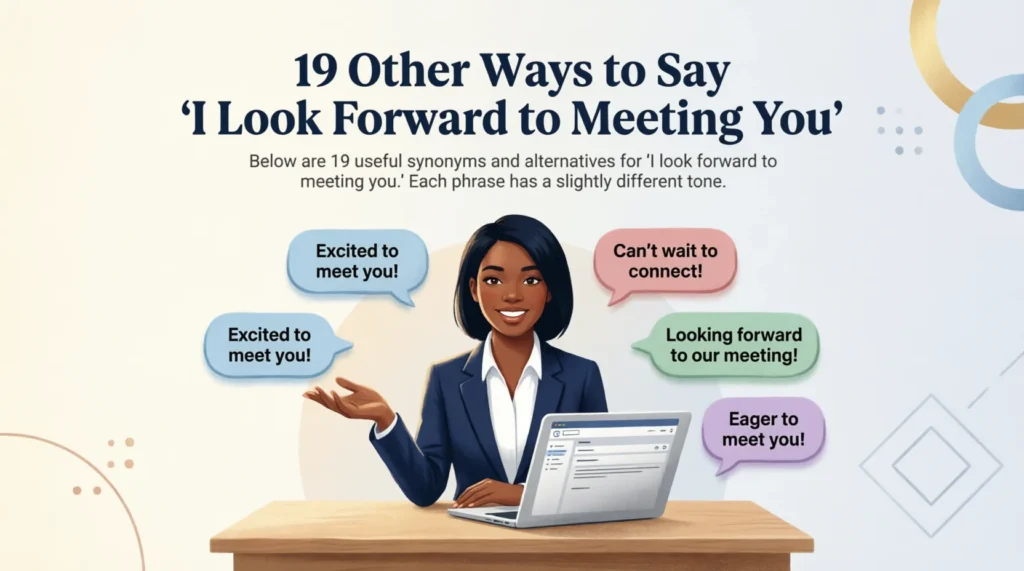
19 Other Ways to Say “I Look Forward to Meeting You”
Below are 19 useful synonyms and alternatives for “I look forward to meeting you.” Each phrase has a slightly different tone.
1. I’m Looking Forward to Meeting You
Phrase: I’m looking forward to meeting you.
Meaning: You are happy or pleased about the future meeting.
Explanation: This is a natural variation of the original phrase. It is slightly more conversational while remaining polite and professional.
Example Sentence: I’m looking forward to meeting you at the conference next week.
Best Use: Formal, Business, Professional
Worst Use: Very casual conversations where a shorter phrase would feel more natural.
Tone: Friendly / Neutral
2. I Look Forward to Our Meeting
Phrase: I look forward to our meeting.
Meaning: You are pleased about the planned meeting.
Explanation: This phrase focuses on the meeting itself rather than directly on meeting the person. It sounds polished and professional.
Example Sentence: Thank you for confirming the appointment. I look forward to our meeting.
Best Use: Formal, Business, Written English
Worst Use: Casual chats with close friends.
Tone: Formal
3. I’m Excited to Meet You
Phrase: I’m excited to meet you.
Meaning: You feel happy and enthusiastic about meeting someone.
Explanation: This sounds warmer and more energetic than “I look forward to meeting you.” It is useful when you genuinely feel enthusiastic.
Example Sentence: I’ve heard great things about your work, and I’m excited to meet you.
Best Use: Friendly, Professional, Casual
Worst Use: Very formal letters where a restrained tone is expected.
Tone: Friendly / Emphatic
4. I’m Looking Forward to Seeing You
Phrase: I’m looking forward to seeing you.
Meaning: You are happy about seeing the person in the future.
Explanation: This is especially natural when you already know the person. “Seeing you” often feels warmer than “meeting you.”
Example Sentence: I’m looking forward to seeing you at the event on Friday.
Best Use: Friendly, Professional, Personal
Worst Use: A first meeting where you have never met the person before.
Tone: Friendly
5. It Will Be Great to Meet You
Phrase: It will be great to meet you.
Meaning: You expect the future meeting to be enjoyable.
Explanation: This phrase sounds warm without being overly casual. It is a good choice when you want your email to feel personal.
Example Sentence: It will be great to meet you and discuss the new project.
Best Use: Business, Friendly, Professional
Worst Use: Highly formal legal or official documents.
Tone: Friendly / Neutral
6. I’m Glad We’ll Have the Chance to Meet
Phrase: I’m glad we’ll have the chance to meet.
Meaning: You are pleased that an opportunity to meet has been arranged.
Explanation: This is a warm and natural phrase. It focuses on the opportunity rather than simply expressing anticipation.
Example Sentence: I’m glad we’ll have the chance to meet during your visit to our office.
Best Use: Professional, Business, Friendly
Worst Use: Very short casual messages where it may sound too detailed.
Tone: Friendly / Neutral
7. I’m Eager to Meet You
Phrase: I’m eager to meet you.
Meaning: You are very interested in meeting the person.
Explanation: “Eager” shows stronger interest than “look forward to.” It can sound confident and enthusiastic.
Example Sentence: I’m eager to meet you and hear more about your experience.
Best Use: Professional, Business, Formal
Worst Use: Situations where strong enthusiasm may seem excessive.
Tone: Emphatic
8. I’m Excited About Our Meeting
Phrase: I’m excited about our meeting.
Meaning: You feel enthusiastic about the planned meeting.
Explanation: This phrase is direct and positive. It works well when you want to show genuine enthusiasm.
Example Sentence: I’m excited about our meeting and the ideas we can discuss.
Best Use: Friendly, Professional, Business
Worst Use: Very formal communication requiring a reserved tone.
Tone: Friendly / Emphatic
9. I’m Happy to Be Meeting You Soon
Phrase: I’m happy to be meeting you soon.
Meaning: You are pleased that you will meet the person shortly.
Explanation: This phrase emphasizes your positive feelings about the upcoming meeting. It can sound warm and personal.
Example Sentence: I’m happy to be meeting you soon to talk about the position.
Best Use: Friendly, Professional
Worst Use: Very formal corporate emails where a simpler phrase is better.
Tone: Friendly
10. I Can’t Wait to Meet You
Phrase: I can’t wait to meet you.
Meaning: You are very excited about meeting someone.
Explanation: This is a strong expression of excitement. Despite the literal meaning, it usually means “I’m very excited to meet you.”
Example Sentence: Your work sounds fascinating. I can’t wait to meet you!
Best Use: Casual, Friendly, Informal
Worst Use: Formal business letters or highly formal emails.
Tone: Emphatic / Friendly
11. I’m Excited About Meeting You
Phrase: I’m excited about meeting you.
Meaning: You feel enthusiastic about the future meeting.
Explanation: This is a simple and natural alternative. It sounds more personal than the standard business phrase.
Example Sentence: I’m excited about meeting you and learning more about the company.
Best Use: Friendly, Professional, Business
Worst Use: Strictly formal correspondence.
Tone: Friendly / Emphatic
12. It’ll Be a Pleasure to Meet You
Phrase: It’ll be a pleasure to meet you.
Meaning: Meeting the person will be a pleasant experience.
Explanation: This phrase is polite and respectful. It works especially well when meeting someone important or new in a professional setting.
Example Sentence: It’ll be a pleasure to meet you and discuss your upcoming project.
Best Use: Formal, Business, Professional
Worst Use: Very casual conversations with close friends.
Tone: Formal / Friendly
13. I’m Delighted to Have the Opportunity to Meet You
Phrase: I’m delighted to have the opportunity to meet you.
Meaning: You are very pleased about having a chance to meet someone.
Explanation: This is a polished and formal alternative. “Delighted” expresses stronger positive emotion than “pleased.”
Example Sentence: I’m delighted to have the opportunity to meet you and discuss the partnership.
Best Use: Formal, Business, Professional
Worst Use: Casual text messages.
Tone: Formal / Emphatic
14. I’m Pleased We’ll Be Meeting Soon
Phrase: I’m pleased we’ll be meeting soon.
Meaning: You are happy that the meeting will happen soon.
Explanation: This phrase is professional and calm. It shows positive feelings without sounding overly excited.
Example Sentence: I’m pleased we’ll be meeting soon to review the proposal.
Best Use: Formal, Business, Professional
Worst Use: Casual conversations with close friends.
Tone: Formal / Neutral
15. I’m Looking Forward to Connecting in Person
Phrase: I’m looking forward to connecting in person.
Meaning: You are looking forward to having a face-to-face conversation.
Explanation: “Connecting” is common in modern professional English. It works especially well for networking and business relationships.
Example Sentence: I’m looking forward to connecting in person at the networking event.
Best Use: Business, Networking, Professional
Worst Use: Very traditional formal letters where more direct wording may be preferred.
Tone: Professional / Friendly
16. I Look Forward to Speaking With You in Person
Phrase: I look forward to speaking with you in person.
Meaning: You are pleased about having a face-to-face conversation.
Explanation: This is useful when the purpose of the meeting is discussion rather than simply meeting socially.
Example Sentence: Thank you for arranging the appointment. I look forward to speaking with you in person.
Best Use: Formal, Business, Professional
Worst Use: Casual messages to close friends.
Tone: Formal / Neutral
17. I’m Looking Forward to Getting to Know You
Phrase: I’m looking forward to getting to know you.
Meaning: You are interested in learning more about the person.
Explanation: This phrase is warmer and more personal. It is useful when the relationship may develop beyond one meeting.
Example Sentence: Welcome to the team. I’m looking forward to getting to know you.
Best Use: Friendly, Professional, Personal
Worst Use: Very formal first-contact emails where a more neutral phrase is safer.
Tone: Friendly
18. I’m Excited for Our Meeting
Phrase: I’m excited for our meeting.
Meaning: You feel enthusiastic about the upcoming meeting.
Explanation: This is short, clear, and modern. It works well in workplace messages and friendly communication.
Example Sentence: I’m excited for our meeting tomorrow and ready to discuss the next steps.
Best Use: Business, Friendly, Casual
Worst Use: Very formal official correspondence.
Tone: Friendly / Emphatic
19. I Hope We Can Meet Soon
Phrase: I hope we can meet soon.
Meaning: You would like to meet the person in the near future.
Explanation: Unlike “I look forward to meeting you,” this phrase does not assume that a meeting is already planned. It expresses a polite wish.
Example Sentence: Thank you for connecting with me. I hope we can meet soon to discuss your ideas.
Best Use: Professional, Networking, Friendly
Worst Use: When a meeting is already confirmed and you want to clearly acknowledge it.
Tone: Friendly / Neutral
Quick Comparison of the Best Alternatives
| Alternative | Tone | Best For |
|---|---|---|
| I look forward to our meeting | Formal | Business emails |
| I’m excited to meet you | Friendly | Professional and personal |
| It’ll be a pleasure to meet you | Formal | Business introductions |
| I can’t wait to meet you | Emphatic | Casual conversations |
| I’m looking forward to connecting in person | Professional | Networking |
| I’m eager to meet you | Emphatic | Professional situations |
| I hope we can meet soon | Neutral | Networking and future plans |
How to Choose the Right Alternative
The best alternative depends on tone, relationship, and context.
For a job interview, choose:
I look forward to meeting you.
For a business meeting, you could say:
I look forward to our meeting.
For networking:
I’m looking forward to connecting in person.
For a friendly conversation:
It’ll be great to meet you.
For strong excitement:
I can’t wait to meet you!
For a person you already know:
I’m looking forward to seeing you.
This small change in wording can make your English sound more natural and appropriate.
Frequently Asked Questions
What is another way to say “I look forward to meeting you”?
Some common alternatives are “I’m looking forward to meeting you,” “I look forward to our meeting,” “I’m excited to meet you,” and “It’ll be a pleasure to meet you.”
What is a formal way to say “I look forward to meeting you”?
For formal communication, try “I look forward to our meeting,” “It’ll be a pleasure to meet you,” or “I’m delighted to have the opportunity to meet you.”
What is a casual way to say “I look forward to meeting you”?
You can say “I can’t wait to meet you,” “I’m excited to meet you,” or “It’ll be great to meet you.”
Is “I look forward to meeting you” correct English?
Yes. It is grammatically correct and widely used in polite and professional English.
Can I say “I look forward to meet you”?
No. The natural and grammatically correct form is “I look forward to meeting you.” After “look forward to,” use a noun or an -ing verb form.
Conclusion
Learning other ways to say I look forward to meeting you can make your English more flexible and natural.
The original phrase is polite, clear, and professional, but it is not your only choice.
You can use “I’m excited to meet you” for warmth, “I look forward to our meeting” for a formal tone, or “I can’t wait to meet you” for strong excitement.
The right phrase depends on the person, situation, and level of formality.
Try these 19 alternatives to “I look forward to meeting you” in emails, conversations, interviews, and networking messages.
With regular practice, you can choose words that sound confident, natural, and appropriate in 2026.

Alden Rowen is the author behind Meanings Path, sharing clear and reliable insights into the meanings, origins, and significance of words, names, and phrases. His goal is to make language simple, useful, and easy to understand.