The WTF meaning in text is most commonly “What the F*?”** It is an informal expression people use to show shock, confusion, disbelief, frustration, or surprise.
You may see WTF in text messages, WhatsApp chats, Instagram comments, TikTok videos, Snapchat conversations, and online discussions.
For example, someone might text “WTF just happened?” when something unexpected occurs.
Although the expression can be funny or playful between friends, it can also sound rude or aggressive because it contains profanity.
Its exact tone depends on the conversation, the relationship between the people, and the words or emojis used with it. In this guide, you will learn what WTF stands for, where it comes from, how people use it online, and how to respond when someone sends it to you.
WTF Meaning: Quick Reference
| Category | Explanation |
|---|---|
| Term | WTF |
| Most common meaning | What the F***? |
| Full form | What the F***? |
| Typical tone | Surprised, confused, shocked, or frustrated |
| Common usage | Text messages, social media, and online chats |
| Formal or informal? | Very informal |
| Profanity? | Yes |
| Similar expressions | What on earth? OMG, What happened? |
What Does WTF Mean in Text & Chat?
WTF means “What the F*?”** in text messages and online conversations. It is a popular internet expression used when someone experiences something surprising, confusing, strange, or frustrating.
People often use it when they cannot believe what they have just seen or heard. It can also express annoyance when something goes wrong.
For example:
- Your friend shares unexpected news.
- Someone makes a strange comment.
- You see something unbelievable online.
- A plan suddenly changes without warning.
- Something happens that makes no sense.
In these situations, a person might simply reply with “WTF?”
However, the expression does not always communicate anger. Friends sometimes use it jokingly when teasing each other or reacting to something funny.
Different Feelings Behind WTF
The meaning can change depending on the situation.
| Feeling | Example | Intended Meaning |
|---|---|---|
| Shock | WTF just happened? | I cannot believe that! |
| Confusion | WTF does this mean? | I do not understand. |
| Frustration | WTF is going on? | I am annoyed. |
| Surprise | WTF! You won? | That is unbelievable! |
| Humor | WTF 😂 | That is so funny or strange. |
| Disbelief | WTF, seriously? | Are you being serious? |
The important thing to remember is that WTF is not a polite expression. It is best suited to casual conversations with people who are comfortable with informal language.
Full Form, Stands For & Short Meaning of WTF
The full form of WTF is “What the F*?”** The final word is a swear word, which is why many people censor it when writing or explaining the abbreviation.
WTF is an initialism because each letter represents the first letter of a word in the original expression.
Here is the breakdown:
| Letter | Word |
|---|---|
| W | What |
| T | The |
| F | F*** |
Together, these letters create the expression “What the F***?”
Short Meaning of WTF
In simple English, WTF can mean:
- What is happening?
- What is going on?
- Are you serious?
- How is that possible?
- Why did that happen?
- I cannot believe this!
These are not exact full forms. They are cleaner ways to express the same feelings.
Why Do People Write WTF Instead of the Full Phrase?
People use abbreviations because they make online conversations quicker and easier.
WTF is short, recognizable, and widely understood in casual digital communication. It also allows people to react strongly without typing the entire expression.
Some people write it in capital letters, while others use lowercase.
For example:
- WTF: A direct or strong reaction.
- wtf: A casual reaction.
- WTF?!: Strong surprise or disbelief.
- wtf 😂: A humorous or playful reaction.
- wtf…: Confusion, disappointment, or disbelief.
The capitalization does not change its basic meaning, but punctuation and emojis can affect how the message feels.
Origin, History & First Known Use of WTF
WTF comes from the expression “What the F***?” It belongs to a much older style of informal English speech in which people use swear words to express strong emotions.
The exact first person or date responsible for creating the abbreviation is not clearly established. Therefore, it would be misleading to give a specific invention date.
The abbreviation became more recognizable as electronic communication developed.
How WTF Became an Internet Expression
Several changes helped make WTF familiar in online conversations:
1. Early digital communication
As people began using internet forums, chat rooms, and instant messaging, short expressions became useful for quick reactions.
2. Text messaging
Mobile phones encouraged shorter messages. WTF became a convenient way to express surprise or frustration without typing a longer sentence.
3. Online communities
Forums, gaming communities, and social platforms helped spread the abbreviation among internet users.
4. Social media
People began using WTF in comments, captions, memes, and reactions to unexpected videos or news.
Is WTF an Internet Acronym?
WTF is often called an internet acronym in everyday language. More precisely, it is an initialism because people usually pronounce the individual letters rather than saying it as one word.
Its meaning has remained closely connected to the original expression, even as its use has expanded across digital communication.
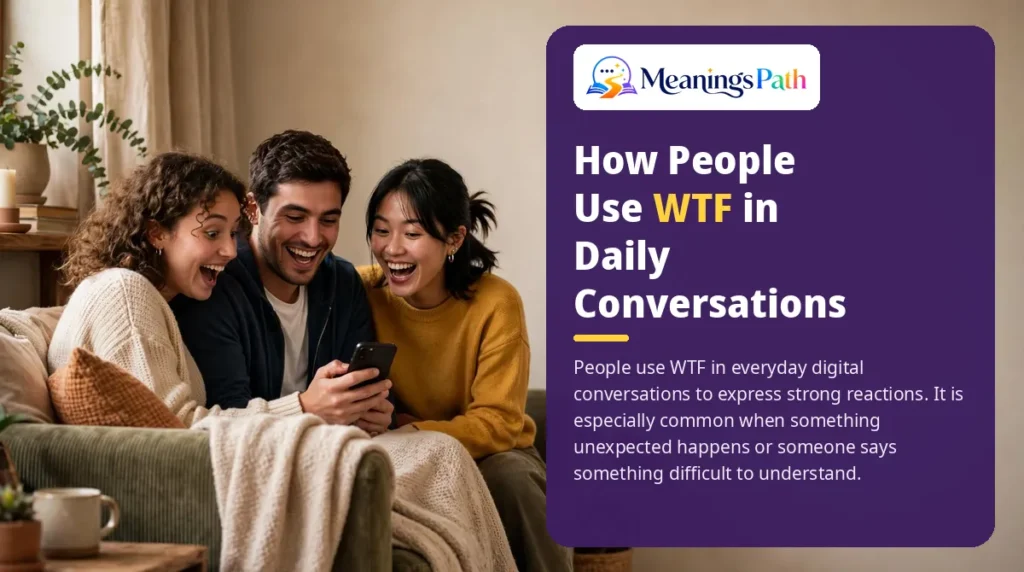
How People Use WTF in Daily Conversations
People use WTF in everyday digital conversations to express strong reactions. It is especially common when something unexpected happens or someone says something difficult to understand.
The expression can communicate different emotions without requiring a long explanation.
1. Expressing Surprise
Someone might use WTF when they receive unexpected information.
Example:
“Wait, you are moving to another country? WTF!”
Here, the sender is surprised by the news.
2. Showing Confusion
WTF can also mean that someone does not understand a situation.
Example:
“WTF is happening with this app? It keeps closing.”
The person is confused and possibly frustrated.
3. Expressing Frustration
When something goes wrong, WTF can show annoyance.
Example:
“WTF! My computer just deleted the file.”
This message communicates frustration about an unexpected problem.
4. Reacting to Something Funny
Friends sometimes use WTF as a humorous reaction.
Example:
“Bro, you wore two different shoes today? WTF 😂”
The laughing emoji makes the message feel more playful.
5. Showing Disbelief
People also use WTF when they find something difficult to believe.
Example:
“You finished the entire project in one hour? WTF?!”
The sender is impressed and surprised.
Is WTF Always Rude?
Not necessarily. Its tone depends on the situation.
However, because it contains profanity, it can offend some people. Avoid using it with teachers, managers, clients, or people you do not know well.
WTF Meaning Across WhatsApp, Instagram, TikTok & Snapchat
The meaning of WTF usually stays the same across social media platforms. It most commonly stands for “What the F***?” However, the way people use it can depend on the platform and the type of conversation.
| Platform | Common Usage | Example |
|---|---|---|
| Private chats and group conversations | WTF are you talking about? | |
| Comments, stories, and direct messages | WTF is this picture? | |
| TikTok | Reactions to unexpected videos | WTF did I just watch? |
| Snapchat | Quick reactions and casual messages | WTF 😂 |
| Comments and discussions | WTF is happening here? | |
| Discord | Gaming chats and community discussions | WTF was that move? |
WTF on WhatsApp
On WhatsApp, people often use WTF when reacting to messages from friends or family members.
For example:
“wtf bro, you forgot the tickets again?”
The sender sounds surprised or annoyed, depending on their relationship.
WTF on Instagram
On Instagram, WTF commonly appears in comments and direct messages.
Someone might comment “WTF 😂” under a strange or unexpected post.
WTF on TikTok
TikTok users may write WTF when reacting to unusual videos, unexpected endings, funny moments, or surprising content.
WTF on Snapchat
On Snapchat, WTF is often used in quick conversations between friends.
For example:
“wtf is that filter 😭”
The crying emoji can make the message sound humorous rather than genuinely upset.
Does the meaning change between platforms?
No. The basic meaning remains the same. The platform mainly changes the situation in which people use the expression.
Different Meanings of WTF in Other Fields
WTF has a widely recognized meaning in everyday texting, but its interpretation can sometimes depend on the subject being discussed.
In casual communication, “What the F***?” remains the standard meaning.
However, there are situations where the same letters may be used differently.
1. WTF in Gaming
Gamers frequently use WTF when reacting to unexpected gameplay.
Example:
“WTF was that shot?”
The player is expressing surprise, confusion, or disbelief.
2. WTF in Internet Memes
In memes, WTF is often used as a humorous reaction to strange, unusual, or unbelievable situations.
It may communicate exaggerated shock rather than genuine anger.
3. WTF in Technical or Professional Discussions
In some organizations or specialized communities, WTF may be used as an internal abbreviation or name.
Its meaning depends on the specific organization or subject. There is no single alternative technical full form that applies universally.
4. WTF in Everyday Speech
People sometimes say the individual letters “W-T-F” aloud. Others use the complete expression.
Both communicate a similar reaction, although speaking the full phrase makes the profanity more explicit.
| Context | Likely Meaning |
|---|---|
| Text messages | What the F***? |
| Gaming | Surprise or frustration |
| Memes | Humorous disbelief |
| Social media | Shock or confusion |
| Specialized groups | Context-dependent abbreviation |
Always consider the surrounding conversation before assuming that an unfamiliar use has a different meaning.
Common Confusions, Mistakes & Wrong Interpretations
Although WTF is a simple abbreviation, people sometimes misunderstand its tone or purpose.
Understanding these common mistakes can help you interpret messages more accurately.
1. Thinking WTF Always Means Anger
This is one of the most common misunderstandings.
WTF can express anger, but it can also show surprise, confusion, amusement, or disbelief.
For example:
“WTF 😂 That was hilarious!”
Here, the sender is probably laughing rather than arguing.
2. Thinking It Is a Polite Expression
WTF contains profanity. Even when someone uses it jokingly, it may sound offensive to others.
It is not a suitable choice for formal emails, workplace discussions, or professional conversations.
3. Confusing WTF With WTH
WTF and WTH are similar, but their full forms are different.
- WTF = What the F***?
- WTH = What the Heck? or What the Hell?
WTH is often used as a milder alternative, although its exact tone depends on the wording.
4. Assuming Someone Is Insulting You
If someone sends “WTF?” they may be reacting to something you said or did.
However, it does not automatically mean they are insulting you personally.
Read the complete message before deciding how to respond.
5. Ignoring Emojis and Punctuation
Emojis and punctuation can provide important clues.
Compare these messages:
- “WTF?” — Confusion or disbelief.
- “WTF 😂” — Often humorous surprise.
- “WTF!!!” — Strong shock or frustration.
- “wtf…” — Possible disappointment or confusion.
The relationship between the people also matters.
Similar Terms, Alternatives & Related Slang
Several abbreviations have meanings similar to WTF. People use them to express surprise, confusion, disbelief, or frustration.
However, some alternatives are more polite than others.
| Term | Full Form | Typical Tone |
|---|---|---|
| WTF | What the F***? | Strong, informal |
| WTH | What the Heck? | Milder |
| OMG | Oh My God | Surprise or excitement |
| SMH | Shaking My Head | Disappointment |
| BRUH | Brother / Bruh | Casual disbelief |
| FR | For Real | Agreement or disbelief |
| HUH | Huh? | Confusion |
| IDC | I Don’t Care | Indifference |
| LMFAO | Laughing My F***ing Ass Off | Strong amusement |
| TBH | To Be Honest | Honest opinion |
Polite Alternatives to WTF
If you want to express surprise without using profanity, try these alternatives:
- What on earth?
- What is going on?
- Are you serious?
- What just happened?
- I cannot believe it!
- What in the world?
- How did that happen?
- That is unexpected!
These expressions are more suitable for everyday conversations where you want to avoid offensive language.
Which Alternative Should You Use?
Choose an expression based on your situation.
- For surprise: OMG!
- For confusion: What is happening?
- For disbelief: Are you serious?
- For humor: BRUH!
- For a polite reaction: What on earth?
- For frustration: What is going wrong?
The best alternative is one that communicates your feelings without making the other person uncomfortable.
Examples of WTF in Real Chat Situations
The easiest way to understand WTF is to see how people use it in real conversations.
Below are original examples showing different meanings and tones.
1. Expressing Surprise
Person A: “I just found out that our school is closed tomorrow.”
Person B: “WTF?! Seriously? 😂”
Meaning: Person B is surprised by the unexpected announcement.
2. Showing Confusion
Person A: “The meeting has been moved to 7 AM.”
Person B: “WTF? I thought it was at 10.”
Meaning: Person B is confused about the schedule change.
3. Reacting to Something Funny
Person A: “My little brother put sunglasses on the cat.”
Person B: “WTF 😂 I need to see that!”
Meaning: The sender finds the situation funny and unusual.
4. Expressing Frustration
Person A: “The internet stopped working again.”
Person B: “WTF! It was working perfectly five minutes ago.”
Meaning: Person B is frustrated by the unexpected problem.
5. Showing Disbelief
Person A: “She completed the whole assignment in 20 minutes.”
Person B: “WTF?! How is that even possible?”
Meaning: Person B finds the achievement difficult to believe.
6. Using WTF Playfully
Person A: “I ate pizza for breakfast today.”
Person B: “WTF bro 😂 That’s a new level of breakfast!”
Meaning: Person B is jokingly reacting to an unusual food choice.
7. Reacting to Unexpected News
Person A: “Our favorite singer is coming to town next week.”
Person B: “WTF no way!! That’s amazing!”
Meaning: The sender is excited and surprised.
8. Using WTF in a Potentially Rude Message
Person A: “I changed the design without asking.”
Person B: “WTF is wrong with you?”
Meaning: Person B sounds angry and confrontational. This wording may offend the other person.
These examples show that WTF does not always communicate the same emotion. The complete message helps you understand what the sender really means.
How to Reply When Someone Says WTF
Your response should depend on why the other person used WTF.
They might be confused, surprised, joking, or genuinely upset. Instead of reacting negatively, consider the conversation first.
Here are some natural ways to respond.
1. When Someone Is Confused
If someone writes “WTF?” because they do not understand something, explain the situation.
Examples:
- “Let me explain.”
- “Sorry, I should have been clearer.”
- “I mean that the plan has changed.”
- “Here’s what happened.”
2. When Someone Is Surprised
If someone is reacting to unexpected news, you can respond casually.
Examples:
- “I know, right?”
- “I couldn’t believe it either!”
- “mistaken, isn’t it?”
- “I was surprised too.”
3. When Someone Is Joking
If the conversation is playful, a funny response may work well.
Examples:
- “Don’t ask me 😂”
- “Long story, bro!”
- “I know it looks inexplicable!”
- “Even I don’t understand it 😭”
4. When Someone Sounds Angry
If the message seems aggressive, stay calm and avoid making the situation worse.
Examples:
- “What’s bothering you?”
- “Can you explain what upset you?”
- “Let’s talk about it calmly.”
- “I didn’t mean to upset you.”
5. When You Do Not Understand Their Message
If you cannot figure out why someone sent WTF, ask for clarification.
Examples:
- “What do you mean?”
- “Did something happen?”
- “Why are you surprised?”
- “Is everything okay?”
Quick Reply Guide
| Situation | Suitable Reply |
|---|---|
| Confusion | “Let me explain.” |
| Surprise | “I know, right?” |
| Humor | “Don’t ask me 😂” |
| Frustration | “What’s wrong?” |
| Disbelief | “I couldn’t believe it either!” |
| Unclear message | “What happened?” |
A calm and suitable response can prevent a simple misunderstanding from turning into an argument.
Is WTF Still Popular? Trends & Online Usage
WTF remains a recognizable expression in online communication. People use it in casual text messages, social media comments, gaming conversations, memes, and everyday digital discussions.
Its usefulness comes from its ability to communicate a strong reaction with just three letters.
Why People Continue Using WTF
There are several practical reasons why the abbreviation remains familiar:
1. It is short and easy to type.
People can express surprise or confusion without writing a complete sentence.
2. Most online users recognize it.
WTF has a widely understood meaning in casual internet conversations.
3. It works in different situations.
It can express shock, frustration, humor, disbelief, or confusion.
4. It fits social media reactions.
Short expressions are convenient for comments, captions, and quick replies.
Is WTF Appropriate for Everyone?
Not always. Some people are comfortable with profanity, while others find it disrespectful.
Consider your audience before using it.
- With close friends: Usually acceptable if they are comfortable with it.
- With family: Depends on family preferences.
- With coworkers: Better to choose a polite alternative.
- With teachers: Avoid using it.
- In professional writing: Use a neutral expression instead.
Although WTF is familiar in digital communication, its use should depend on the audience and situation rather than assumptions about age or internet culture.
Frequently Asked Questions
1. What does WTF mean in text messages?
WTF means “What the F***?” in text messages. People use it to express surprise, shock, confusion, frustration, or disbelief when something unexpected happens.
2. Is WTF a bad word?
Yes. WTF contains a swear word, which makes it profanity. However, people sometimes use it casually or jokingly with friends. It is best avoided in formal and professional conversations.
3. What does WTF mean from a girl?
When a girl sends WTF, she usually means “What the F***?” She might be surprised, confused, annoyed, or joking. Her exact feelings depend on the conversation and how she uses the expression.
4. What does WTF mean from a guy?
When a guy texts WTF, it generally has the same meaning: “What the F***?” He may be reacting to something surprising, confusing, funny, or frustrating. The surrounding message helps explain his tone.
5. What is the difference between WTF and WTH?
WTF stands for “What the F***?” while WTH commonly stands for “What the Heck?” or “What the Hell?” WTF is generally stronger, while WTH is often a milder alternative.
6. What does WTF mean on WhatsApp?
On WhatsApp, WTF usually means “What the F***?” People use it in private messages and group chats to show surprise, confusion, disbelief, or frustration. Its meaning does not change on WhatsApp.
7. How should I reply when someone texts WTF?
You can reply according to the situation. Try “I know, right?” for surprise, “Let me explain” for confusion, or “Don’t ask me 😂” for a playful conversation.
8. Does WTF mean something romantic?
No. WTF is not normally a romantic expression. It usually communicates surprise, confusion, shock, or frustration. Its use between romantic partners may be playful, but the abbreviation itself does not express love or affection.
9. Can WTF be used jokingly?
Yes. Friends often use WTF jokingly when reacting to something strange, funny, or unexpected. Adding emojis such as 😂 or 😭 can make the message feel more playful.
10. What is a polite alternative to WTF?
You can use “What on earth?”, “What is happening?”, “Are you serious?”, or “What just happened?” These expressions communicate surprise or confusion without using strong profanity.
11. Does WTF have the same meaning on Instagram and TikTok?
Yes. WTF generally means “What the F***?” on both platforms. People use it in comments, direct messages, and video reactions to express surprise, confusion, or disbelief.
Conclusion
The WTF meaning in text is most commonly “What the F***?” It is a popular informal expression used to show surprise, confusion, frustration, shock, or disbelief.
People use it in WhatsApp messages, Instagram comments, TikTok reactions, Snapchat conversations, and other online discussions.
Although it can sound funny or playful between friends, it contains profanity and may seem rude in certain situations. Always consider the surrounding words, emojis, and your relationship with the sender before interpreting its tone.
If you want a more polite alternative, expressions like “What on earth?” or “Are you serious?” work well.
Understanding abbreviations like WTF makes online conversations easier to follow. Explore more text-message meanings and internet slang to improve your everyday digital communication.

Alden Rowen is the author behind Meanings Path, sharing clear and reliable insights into the meanings, origins, and significance of words, names, and phrases. His goal is to make language simple, useful, and easy to understand.