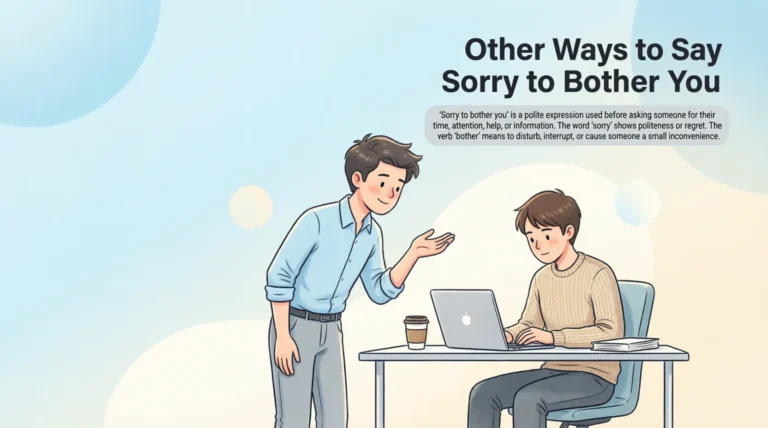
Sometimes, you need to interrupt someone, ask for help, or start a conversation at a busy moment.
Saying “sorry to bother you” is a polite way to show that you respect the other person’s time.
However, using the same phrase again and again can make your English sound repetitive.
Learning other ways to say sorry to bother you can help you sound more natural and confident.
Some alternatives are better for work emails, while others are better for friends, colleagues, or casual conversations.
Your choice of words can also change the tone.
For example, “Excuse me for interrupting” sounds more formal, while “Sorry to interrupt” feels simple and friendly.
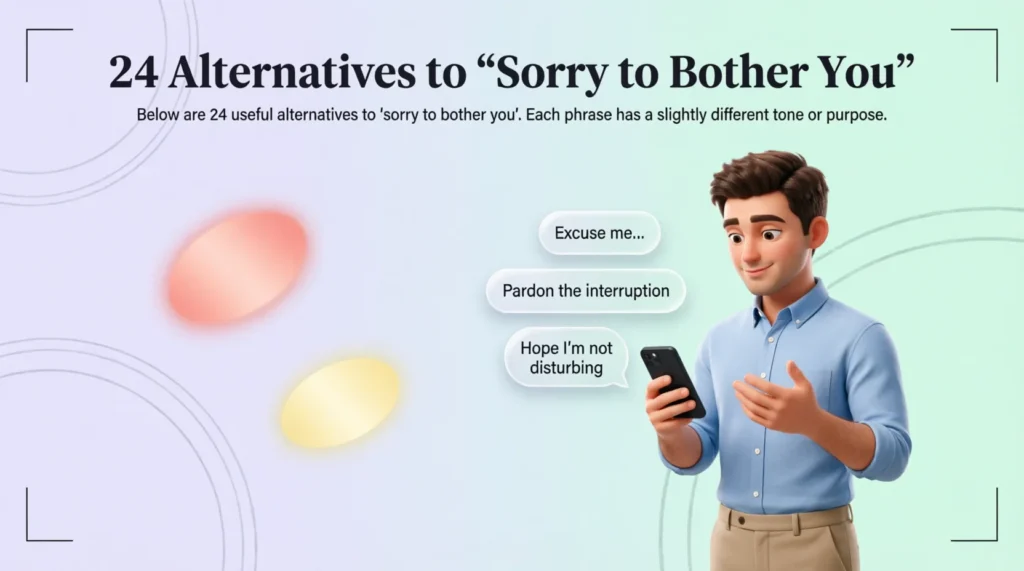
In this guide, you will learn 24 alternatives to “sorry to bother you”, including formal, professional, friendly, and casual options.
Each phrase includes its meaning, explanation, example, best use, worst use, and tone.
What Does “Sorry to Bother You” Mean?
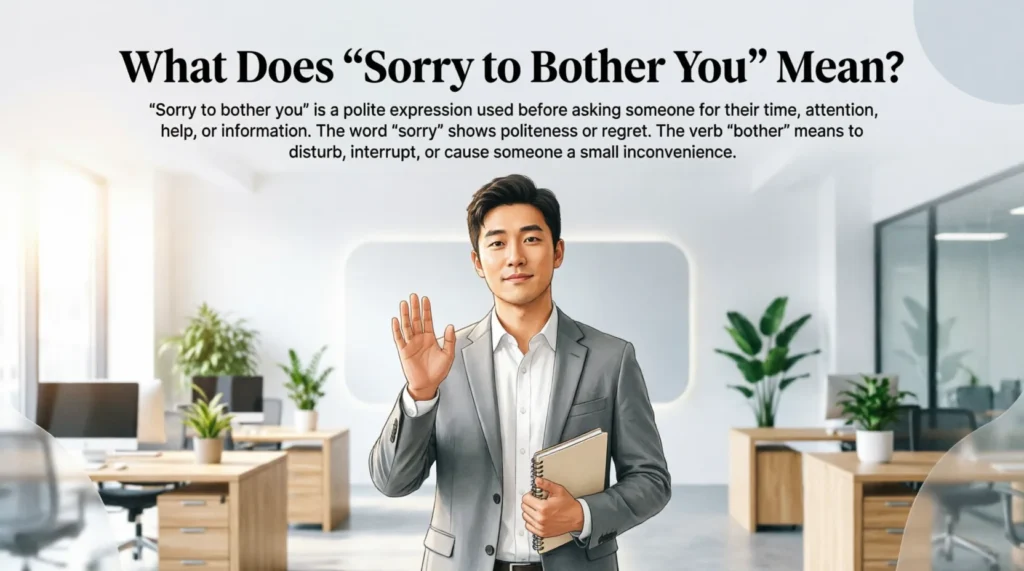
“Sorry to bother you” is a polite expression used before asking someone for their time, attention, help, or information.
The word “sorry” shows politeness or regret. The verb “bother” means to disturb, interrupt, or cause someone a small inconvenience.
For example:
“Sorry to bother you, but could you help me with this report?”
The phrase can be used in both spoken and written English. It is common in everyday conversations, workplace communication, emails, messages, and customer service.
However, the phrase does not always mean that you have done something wrong. Often, it simply shows that you understand the other person may be busy.
When to Use “Sorry to Bother You”
You can use “sorry to bother you” in many situations.
Formal Situations
You may use it when speaking to someone you do not know well, a manager, a client, or another professional.
Example:
“Sorry to bother you, but could I ask you a quick question?”
Informal Situations
It can also work with friends, classmates, and coworkers.
Example:
“Sorry to bother you, but do you know where my keys are?”
Written Communication
The phrase is common in emails and messages.
Example:
“Sorry to bother you. I wanted to ask if you had a chance to review the document.”
Spoken Communication
You can use it when approaching someone, interrupting them, or asking for help.
Example:
“Sorry to bother you, could you tell me where the station is?”
Is It Professional or Polite to Say “Sorry to Bother You”?
Yes. “Sorry to bother you” is generally polite and professional. It shows that you recognize the other person’s time and attention have value.
However, the phrase can sometimes sound too apologetic. If you use it for every small request, you may sound less confident than necessary.
In a professional setting, alternatives such as “Excuse me for interrupting”, “May I ask a quick question?”, or “I hope I’m not catching you at a bad time” can sound more polished.
The best phrase depends on your relationship with the person and the situation. You should not apologize heavily when you are simply doing your job or asking a normal question.
Pros and Cons of Using “Sorry to Bother You”
Pros
- It sounds polite and respectful.
- It shows awareness of another person’s time.
- It works in both formal and informal situations.
- It is easy for English learners to use.
- It can make an interruption feel less direct.
- It is suitable for many workplace situations.
Cons
- It can sound overly apologetic.
- Repeating it may make your speech feel less confident.
- It may suggest that your request is an unnecessary inconvenience.
- It is not always the best choice for professional emails.
- Some situations need a more direct and confident expression.
24 Alternatives to “Sorry to Bother You”
1. Excuse Me for Interrupting
Meaning: A polite apology for interrupting someone.
Explanation: This is one of the best formal alternatives to “sorry to bother you.” It clearly tells the listener that you know you are interrupting.
Example Sentence: “Excuse me for interrupting, but may I ask a quick question?”
Best Use: Formal, Business, Professional
Worst Use: Very casual conversations with close friends
Tone: Formal
2. Sorry to Interrupt
Meaning: An apology for stopping or interrupting someone.
Explanation: This phrase is shorter and more natural in conversation. It works well when someone is speaking or concentrating on something.
Example Sentence: “Sorry to interrupt, but I have an important update.”
Best Use: Business, Spoken, Everyday
Worst Use: Situations where no interruption is actually happening
Tone: Friendly
3. Excuse Me
Meaning: A polite way to get someone’s attention or interrupt briefly.
Explanation: “Excuse me” is one of the most useful English expressions. It can be used when asking a question, getting attention, or interrupting.
Example Sentence: “Excuse me, could you help me find this address?”
Best Use: Formal, Casual, Spoken
Worst Use: When you need to explain a serious interruption
Tone: Neutral
4. I Hope I’m Not Disturbing You
Meaning: A polite way to ask if you are causing an interruption.
Explanation: This phrase shows consideration for the other person’s situation. It is useful when you are unsure whether they are busy.
Example Sentence: “I hope I’m not disturbing you, but could we discuss the project?”
Best Use: Formal, Business
Worst Use: Very quick casual requests
Tone: Polite
5. I Hope I’m Not Interrupting
Meaning: A polite way to check whether you are interrupting someone.
Explanation: This sounds considerate and professional. It is especially useful when approaching someone who appears to be working or talking.
Example Sentence: “I hope I’m not interrupting, but could I speak with you for a moment?”
Best Use: Business, Formal, Spoken
Worst Use: When you already know the person is not busy
Tone: Friendly
6. May I Ask You a Quick Question?
Meaning: A polite request for someone’s attention.
Explanation: This phrase avoids apologizing and sounds confident. It is excellent when your question will take only a short time.
Example Sentence: “May I ask you a quick question about the schedule?”
Best Use: Formal, Business, Professional
Worst Use: When you need a long discussion
Tone: Formal
7. Could I Ask You Something?
Meaning: A polite request to ask a question.
Explanation: This is simple and natural. It can be used with coworkers, friends, teachers, or people you do not know well.
Example Sentence: “Could I ask you something about tomorrow’s meeting?”
Best Use: Formal, Informal, Business
Worst Use: When you need to give a detailed explanation immediately
Tone: Neutral
8. Do You Have a Moment?
Meaning: A polite way to ask whether someone has time to talk.
Explanation: This phrase is very useful at work. It lets the other person decide whether they are available.
Example Sentence: “Do you have a moment to discuss the new proposal?”
Best Use: Business, Professional, Spoken
Worst Use: When you need an immediate response
Tone: Friendly
9. Do You Have a Minute?
Meaning: A casual request for a short amount of someone’s time.
Explanation: This is a common workplace expression. It does not always mean exactly one minute.
Example Sentence: “Do you have a minute? I need your advice on something.”
Best Use: Informal, Business, Coworker Conversations
Worst Use: Formal letters or highly formal communication
Tone: Friendly
10. I’m Sorry to Disturb You
Meaning: A polite apology for disturbing someone’s activity or attention.
Explanation: This sounds slightly more formal than “sorry to bother you.” It works well when contacting someone who may be busy.
Example Sentence: “I’m sorry to disturb you, but I need your approval.”
Best Use: Formal, Business
Worst Use: Relaxed conversations with close friends
Tone: Formal
11. I Apologize for the Interruption
Meaning: A formal apology for interrupting.
Explanation: This is a strong professional alternative. It is suitable for meetings, presentations, emails, and other formal settings.
Example Sentence: “I apologize for the interruption, but we have received an important update.”
Best Use: Formal, Business, Professional
Worst Use: Casual texting
Tone: Formal
12. Pardon the Interruption
Meaning: A polite request for forgiveness for interrupting.
Explanation: “Pardon the interruption” sounds polished and formal. It is useful when speaking to a group or interrupting a discussion.
Example Sentence: “Pardon the interruption, but could I add one important point?”
Best Use: Formal, Business, Public Speaking
Worst Use: Casual messages to close friends
Tone: Formal
13. Sorry to Take Up Your Time
Meaning: An apology for using someone’s time.
Explanation: This phrase focuses on the person’s time rather than the interruption itself. It is useful when you need someone’s help or attention.
Example Sentence: “Sorry to take up your time, but I wanted to discuss the proposal.”
Best Use: Business, Formal, Professional
Worst Use: Very short questions
Tone: Polite
14. I Don’t Mean to Disturb You
Meaning: A polite statement showing that you do not want to cause an inconvenience.
Explanation: This expression is useful when you want to sound considerate before making a request.
Example Sentence: “I don’t mean to disturb you, but could you check this document?”
Best Use: Formal, Business
Worst Use: When you need to sound direct and confident
Tone: Friendly
15. I Hope This Isn’t a Bad Time
Meaning: A way to ask whether someone is available to talk.
Explanation: This phrase gives the listener an easy chance to say they are busy. It is useful for phone calls, meetings, and workplace conversations.
Example Sentence: “I hope this isn’t a bad time. Could we discuss the report?”
Best Use: Business, Professional, Spoken
Worst Use: When you already know the person is available
Tone: Friendly
16. Is Now a Good Time?
Meaning: A direct but polite question about someone’s availability.
Explanation: This is confident and respectful. It is especially useful when you want to discuss something important.
Example Sentence: “Is now a good time to talk about the project?”
Best Use: Business, Formal, Informal
Worst Use: When the matter is extremely urgent
Tone: Neutral
17. When You Have a Moment
Meaning: A polite way to ask someone to respond when they are free.
Explanation: This expression does not pressure the listener to respond immediately. It works very well in professional communication.
Example Sentence: “When you have a moment, could you review the attached file?”
Best Use: Business, Email, Professional
Worst Use: Emergencies
Tone: Polite
18. If You’re Not Too Busy
Meaning: A polite way to check whether someone has time.
Explanation: This phrase recognizes that the other person may have other responsibilities. It is natural in friendly workplace conversations.
Example Sentence: “If you’re not too busy, could you help me with this task?”
Best Use: Informal, Friendly, Workplace
Worst Use: Formal business requests where a more polished phrase is better
Tone: Friendly
19. If You Have a Moment
Meaning: A polite request for a little of someone’s time.
Explanation: This phrase is gentle and flexible. It does not sound as apologetic as “sorry to bother you.”
Example Sentence: “If you have a moment, I’d like to ask about the schedule.”
Best Use: Business, Formal, Informal
Worst Use: Urgent matters
Tone: Neutral
20. Could I Trouble You for a Moment?
Meaning: A polite request for someone’s time or help.
Explanation: “Trouble you” means asking someone to make a small effort for you. It sounds formal and somewhat traditional.
Example Sentence: “Could I trouble you for a moment to review this document?”
Best Use: Formal, Professional
Worst Use: Casual texting
Tone: Formal
21. May I Trouble You for a Moment?
Meaning: A formal request for someone’s attention.
Explanation: This is similar to “Could I trouble you for a moment?” It is respectful but can sound old-fashioned in some modern conversations.
Example Sentence: “May I trouble you for a moment? I need your opinion.”
Best Use: Formal, Professional
Worst Use: Casual conversations with friends
Tone: Formal
22. I Hate to Bother You
Meaning: A phrase showing reluctance about asking someone for something.
Explanation: This expression sounds more emotional than “sorry to bother you.” It can be useful when you genuinely feel uncomfortable asking for help.
Example Sentence: “I hate to bother you, but could you help me with this?”
Best Use: Informal, Friendly, Workplace
Worst Use: Repeatedly asking for normal work assistance
Tone: Friendly
23. Sorry to Trouble You
Meaning: A polite apology for asking someone to help or do something.
Explanation: This phrase is common in polite English and can sound more formal than “sorry to bother you.”
Example Sentence: “Sorry to trouble you, but could you send me the updated report?”
Best Use: Formal, Business, Professional
Worst Use: Very casual conversations where it may sound too formal
Tone: Polite
24. I Appreciate Your Time
Meaning: A way to show gratitude for someone’s attention or time.
Explanation: Unlike an apology, this phrase focuses on appreciation. It is especially useful after a request, meeting, or conversation.
Example Sentence: “I appreciate your time and your help with this matter.”
Best Use: Business, Formal, Professional
Worst Use: As the opening phrase for a very casual question
Tone: Formal
Quick Comparison of the Best Alternatives
| Alternative | Tone | Best Setting |
|---|---|---|
| Excuse me for interrupting | Formal | Professional |
| Sorry to interrupt | Friendly | Everyday & Work |
| Do you have a moment? | Friendly | Workplace |
| May I ask a quick question? | Formal | Business |
| Is now a good time? | Neutral | Professional & Casual |
| I hope I’m not disturbing you | Polite | Formal |
| Excuse me | Neutral | Everyday |
How to Choose the Right Alternative
Choosing the right synonym for “sorry to bother you” depends on the situation.
If you are speaking with a manager, client, or senior professional, choose a more polished phrase such as “May I ask you a quick question?” or “Excuse me for interrupting.”
If you are speaking with a coworker, “Do you have a moment?” sounds natural and confident.
For friends, you can use “Sorry to interrupt” or “Could I ask you something?”
For emails, phrases such as “When you have a moment” and “I appreciate your time” can sound professional without being overly apologetic.
The key is to match your words with the relationship, purpose, and urgency of the conversation.
FAQs
1. What is a polite way to say “sorry to bother you”?
“Excuse me,” “Sorry to interrupt,” “Do you have a moment?” and “I hope I’m not disturbing you” are all polite alternatives.
2. What is a formal way to say “sorry to bother you”?
For formal situations, try “I apologize for the interruption,” “Pardon the interruption,” or “May I ask you a quick question?”
3. Is “sorry to bother you” professional?
Yes. “Sorry to bother you” is polite and professional. However, using confident alternatives can sometimes sound more natural in workplace communication.
4. What can I say instead of “sorry to bother you” in an email?
You can write “When you have a moment,” “I hope this isn’t a bad time,” or “I appreciate your time.”
5. How can I sound less apologetic?
Instead of apologizing, ask politely and directly. For example, use “Do you have a moment?” or “May I ask a quick question?”
Conclusion
Learning other ways to say sorry to bother you gives you more control over your English.
You can choose a formal phrase for a client, a friendly expression for a coworker, or a casual option for a friend.
Good word choice helps you communicate with confidence while still showing respect for other people’s time.
You do not need to stop using “sorry to bother you.” Instead, add new alternatives to your vocabulary.
Practice phrases such as “Do you have a moment?”, “Sorry to interrupt,” and “May I ask a quick question?” Then choose the one that best matches the situation.
This simple variation can make your English sound more natural, clear, and professional.

Alden Rowen is the author behind Meanings Path, sharing clear and reliable insights into the meanings, origins, and significance of words, names, and phrases. His goal is to make language simple, useful, and easy to understand.